Sales tax filing frequency by state in 2026
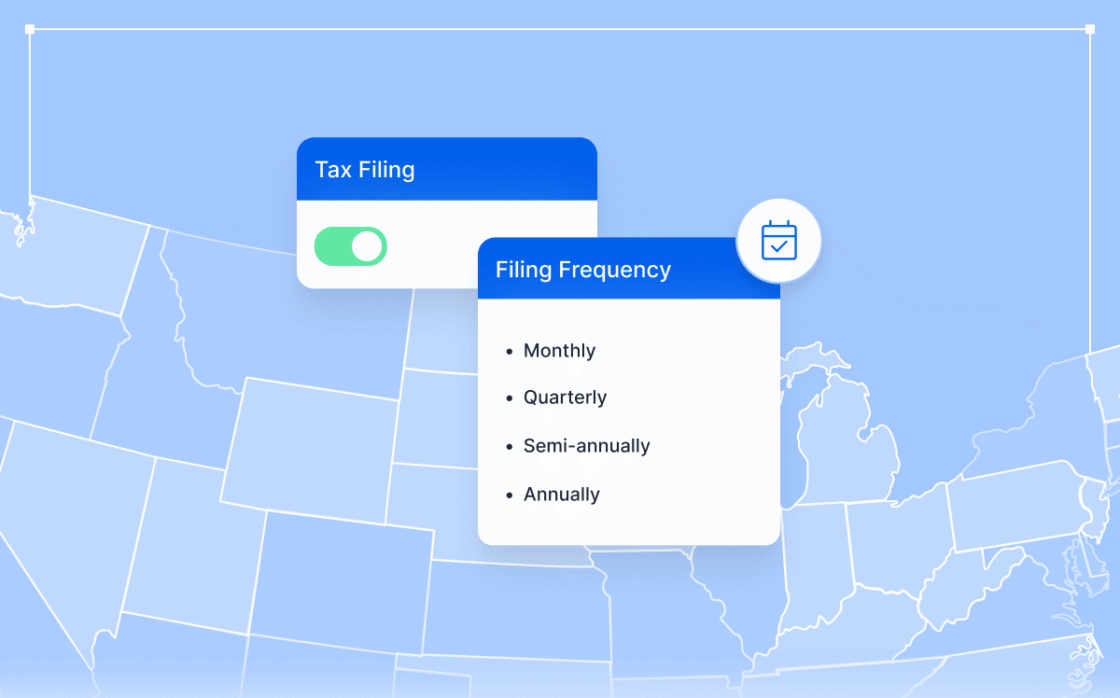


Sales tax filing frequency: how to manage multi-state filing schedules
Managing sales tax filing frequency gets complicated once you’re registered in more than one state. Filing cadence isn’t standardized, it’s assigned and adjusted independently by each state based on your historical sales or tax liability.
As a result, multi-state sellers often file monthly in some states, quarterly or annually in others, and face mid-year changes they didn’t plan for.
After reading this guide, you’ll know how to:
- Check your filing sales tax filing frequency in each state
- Understand what causes filing frequency changes
- Track and manage sales tax return filing schedules across multiple states
- Avoid missed filings, including zero-sales returns and mid-year changes
Note: This guide focuses on managing sales tax filing frequency by state. If you’re looking for sales tax filing due dates in each state, read Sales Tax Due Dates 2026.
Sales tax filing frequency by state (2026 chart)
Filing frequency is assigned by each state based on reported or estimated sales and tax liability. States may assign monthly, quarterly, or annual filing at registration and may reassess frequency over time. Always confirm your assigned cadence in the state’s filing portal or notice. Filing frequency is commonly tied to sales volume or tax liability and may change over time as your business grows.
| State | Typical assigned filing frequency | Quarterly cadence | SST member state | Monthly filing frequency threshold |
|---|---|---|---|---|
| Alabama | Monthly | Jan/Apr/Jul/Oct | Monthly filing required if annual tax liability exceeds $2,400 | |
| Alaska | Monthly | None | All registered sellers file monthly | |
| Arizona | Monthly | Jan/Apr/Jul/Oct | Monthly filing required if estimated annual tax liability exceeds $8,000 | |
| Arkansas | Monthly | None | ✅ | All registered sellers file monthly |
| California | Sales-based | Jan/Apr/Jul/Oct | Monthly prepayments required if monthly tax liability averages $17,000+ | |
| Colorado | Monthly | Jan/Apr/Jul/Oct | Monthly filing required if tax liability exceeds $600 per month | |
| Connecticut | Sales-based | None | Filing frequency assigned by the state based on prior activity | |
| Delaware | None | No sales tax | ||
| District of Columbia | Monthly | Jan/Apr/Jul/Oct | Filing frequency assigned by the district based on prior activity | |
| Florida | Quarterly | Jan/Apr/Jul/Oct | Monthly filing required if annual tax liability exceeds $1,000 | |
| Georgia | Monthly | Jan/Apr/Jul/Oct | ✅ | Quarterly filing allowed if average liability is under $200 per month |
| Hawaii | Monthly | Jan/Apr/Jul/Oct | Filing frequency assigned by the state based on prior activity | |
| Idaho | Sales-based | Jan/Apr/Jul/Oct | Quarterly filing allowed if tax liability is under $750 per quarter | |
| Illinois | Sales-based | Jan/Apr/Jul/Oct | Effective Jan 1, 2026: Frequencies are now evaluated on a rolling quarterly basis based on the preceding 12 months of activity. Monthly if tax liability > $200/mo. | |
| Indiana | Monthly | None | ✅ | Monthly Filers for sales tax and companion taxes are defined as those having less than $1,000 average monthly tax liability for the prior fiscal year ending on June 30 of the previous calendar year. |
| Iowa | Monthly | None | ✅ | Monthly filing required if annual sales and use tax exceeds $1,200 |
| Kansas | Monthly | Jan/Apr/Jul/Oct | ✅ | Filing frequency assigned based on prior sales or tax liability |
| Kentucky | Monthly | None | ✅ | Filing frequency assigned based on prior sales or tax liability |
| Louisiana | Monthly | None | Filing frequency assigned based on prior sales or tax liability | |
| Maine | Sales-based | Jan/Apr/Jul/Oct | Filing frequency assigned based on prior sales or tax liability | |
| Maryland | Quarterly | Jan/Apr/Jul/Oct | Filing frequency assigned based on prior sales or tax liability | |
| Massachusetts | Sales-based | Jan/Apr/Jul/Oct | Filing frequency assigned based on prior sales or tax liability | |
| Michigan | Monthly | Jan/Apr/Jul/Oct | ✅ | Filing frequency assigned based on prior sales or tax liability |
| Minnesota | Monthly | Jan/Apr/Jul/Oct | ✅ | Filing frequency assigned based on prior sales or tax liability |
| Mississippi | Monthly | Jan/Apr/Jul/Oct | Monthly filing required if annual tax remittance exceeds $3,599 | |
| Missouri | Sales-based | Jan/Apr/Jul/Oct | Filing frequency assigned based on prior sales or tax liability | |
| Montana | None | No sales tax | ||
| Nebraska | Monthly | None | ✅ | Filing frequency assigned by the state based on prior activity |
| Nevada | Monthly | Jan/Apr/Jul/Oct | ✅ | Note: Starting Jan 2026, NV sales and use tax returns are due on the 20th. Monthly if taxable sales exceed $10,000/mo; quarterly if under $10,000; annual if under $1,500 in prior-year sales. |
| New Hampshire | None | No sales tax | ||
| New Jersey | Monthly | Jan/Apr/Jul/Oct | ✅ | Monthly filing required if prior-year sales tax collected exceeds $30,000 |
| New Mexico | Monthly | Jan/Apr/Jul/Oct | Monthly filing required if tax liability exceeds $200 per month | |
| New York | Quarterly | Mar/Jun/Sep/Dec | Monthly filing required if taxable sales exceed $300,000 in a quarter; quarterly resumes after four consecutive quarters below threshold | |
| North Carolina | Monthly | Jan/Apr/Jul/Oct | ✅ | Monthly filing required if monthly tax liability is consistently more than $100 but less than $20,000 per month |
| North Dakota | Monthly | Jan/Apr/Jul/Oct | ✅ | Filing frequency assigned by the state based on prior activity |
| Ohio | Monthly | Jan/Apr/Jul/Oct | ✅ | Filing frequency assigned by the state based on prior activity |
| Oklahoma | Monthly | None | ✅ | Filing frequency assigned by the state based on prior activity |
| Oregon | None | No sales tax | ||
| Pennsylvania | Monthly | None | Filing frequency assigned by the state based on prior activity | |
| Puerto Rico | Monthly | None | Filing frequency assigned by the territory based on prior activity | |
| Rhode Island | Monthly | None | ✅ | Filing frequency assigned by the state based on prior activity |
| South Carolina | Monthly | Jan/Apr/Jul/Oct | Filing frequency assigned by the state based on prior activity | |
| South Dakota | Monthly | None | ✅ | Filing frequency assigned by the state based on prior activity |
| Tennessee | Monthly | Jan/Apr/Jul/Oct | Filing frequency assigned by the state based on prior activity | |
| Texas | Quarterly | Jan/Apr/Jul/Oct | Filing frequency assigned by the state based on prior activity | |
| Utah | Monthly | Jan/Apr/Jul/Oct | ✅ | Filing frequency assigned by the state based on prior activity |
| Vermont | Monthly | None | ✅ | Filing frequency assigned by the state based on prior activity |
| Virginia | Monthly | Jan/Apr/Jul/Oct | Filing frequency assigned by the state based on prior activity | |
| Washington | Monthly | Jan/Apr/Jul/Oct | ✅ | Filing frequency assigned by the state based on prior activity |
| West Virginia | Monthly | None | ✅ | Filing frequency assigned by the state based on prior activity |
| Wisconsin | Monthly | Jan/Apr/Jul/Oct | ✅ | Filing frequency assigned by the state based on prior activity |
| Wyoming | Monthly | Jan/Apr/Jul/Oct | ✅ | Filing frequency assigned by the state based on prior activity |
Note: Filing frequency is assigned by each state based on reported or estimated sales and tax liability. The “typical assigned filing frequency” shown above reflects how states commonly assign cadence, but your actual filing schedule may differ at registration and may be reassessed over time. Always confirm your assigned cadence in the state’s filing portal or notice.
SST: For businesses participating in the Streamlined Sales Tax (SST) program as a Model 1 seller, filing cadence is standardized across participating states. This significantly reduces tracking complexity compared to non-SST states, where filing rules remain fragmented and independently enforced.
How does each state decide your filing frequency?
While some states default new registrants to monthly filing, heavyweights like New York and Florida typically start you on a quarterly schedule. The safest bet is to check your registration approval letter immediately.
After you’ve been filing for a period of time, states begin to re-evaluate your filing frequency based on recent activity, not your original registration settings.
In most states, that review looks at a lookback period of 6 to 12 months. The exact window varies by state, but the decision logic is consistent.
What states evaluate
- Tax liability: How much sales tax you actually owed or remitted.
- Gross or taxable sales: Some states base filing cadence on sales volume instead of tax due.
- Consistency over time: Whether activity stays above or below a threshold for multiple periods.
Why filing frequency changes
- Sustained increases in liability can trigger a move from quarterly or annual to monthly filing.
- Sustained decreases may allow a move from monthly to quarterly or annual, depending on the state.
- A single strong or weak month usually isn’t enough, states look for a pattern.
Because each state applies its own thresholds, lookback periods, and evaluation timing, multi-state sellers rarely end up with the same filing cadence everywhere. One state may still treat you as a new filer, while another has already adjusted your frequency based on recent data.
What happens when your filing frequency changes?
When a state changes your filing frequency, it usually doesn’t happen quietly, but it also isn’t always obvious.
How states notify you
- A notice sent by mail, often to the legal or registered address on file
- An alert or message inside the state tax portal
- In some cases, an email, though many states still rely on paper notices
There is no single standard. Sellers managing multiple states often receive notices in different formats, at different times, and through different channels.
When the change takes effect
- Filing frequency changes typically take effect at the start of a new filing period, not retroactively
- Some states apply the change immediately for the next return, while others wait until the next quarter
- The notice will usually specify the effective period, but it’s easy to miss
What sellers commonly miss
- Continuing to file on the old schedule after a change takes effect.
- Missing a newly required monthly return because they were previously filing quarterly.
- Assuming a lower frequency automatically applies after a slow period; it usually does not without state confirmation.
- Prepayment or accelerated payment requirements (select states). In some high-volume states, moving to monthly filing can also trigger an accelerated or prepayment obligation once specific sales or liability thresholds are met. These programs require sellers to remit a portion of the next filing period’s estimated tax before the current period ends. The rules, thresholds, and payment percentages vary by state and apply only at higher volumes. Examples include:
- California — Businesses with average taxable sales of $17,000 or more per month are required to make tax prepayments [1] to the California Department of Tax and Fee Administration (CDTFA).
- North Carolina — Sellers with consistently high sales tax liability (≈ $20,000+ per month) may be assigned monthly filing with prepayment. [1]
These obligations are separate from standard filing frequency rules and are typically communicated through state notices or portal alerts.
Missing a return because your filing cadence changed can trigger late filing penalties, even if the tax due is small or zero. For multi-state sellers, these changes often compound, especially when multiple states adjust schedules at different times of the year.
How to track sales tax filing frequency obligations across multiple states
Once you’re registered in more than a few states, tracking filing frequency becomes an ongoing operational task. Frequencies change, notices arrive inconsistently, and missing a return can trigger penalties even if no tax is due. Here are the realistic ways sellers keep track.
1. Use sales tax software that can file and remit
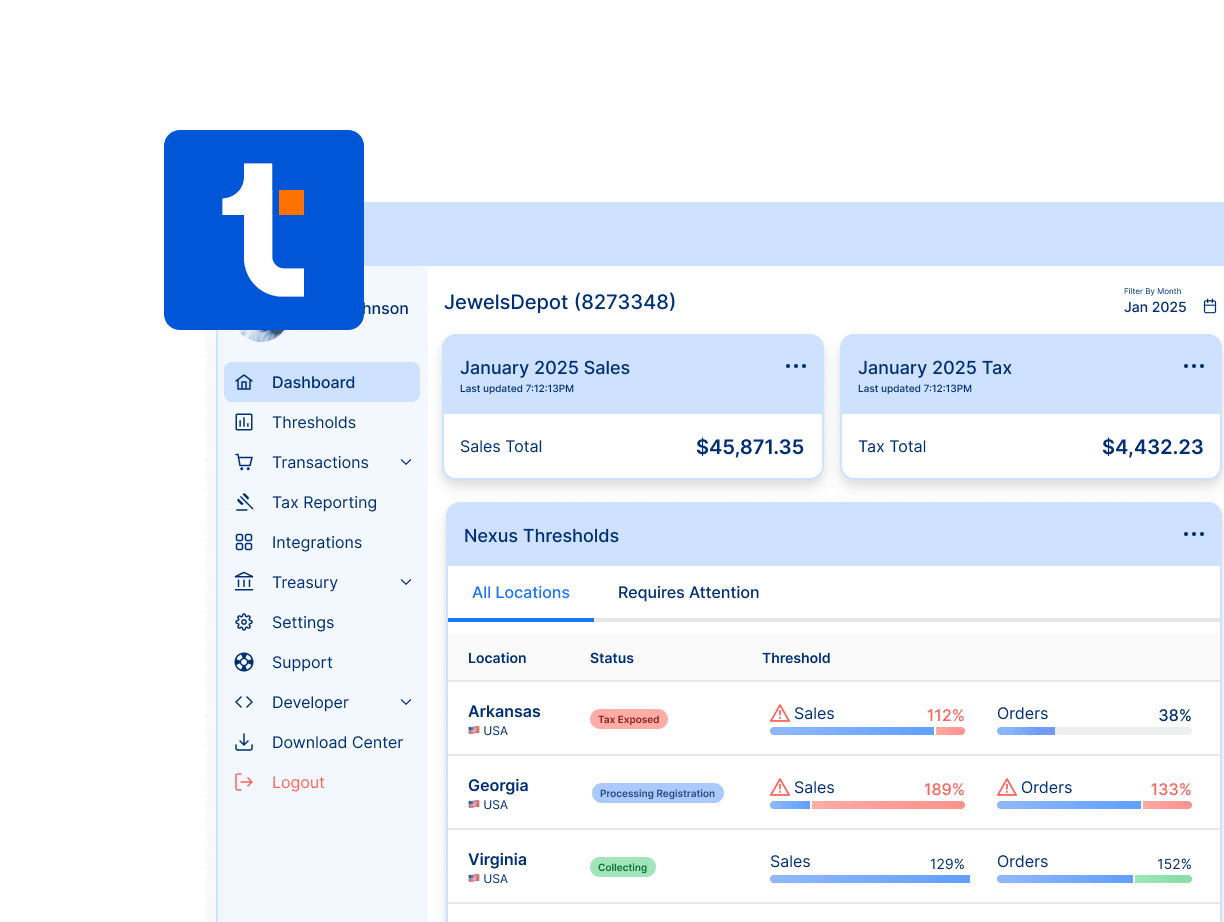
One of the most reliable ways to manage sales tax filing is to use software that can turn your store sales data into return-ready reports. Platforms like TaxCloud sync directly with online stores to automatically generate the sales tax reports required by each state. Businesses can choose to file those returns themselves or delegate the entire filing and remittance process to TaxCloud.
Another advantage of using sales tax software as your filing partner is built-in nexus tracking. The software monitors state-by-state thresholds, alerts you when registration is required, and ensures filings begin when necessary. This helps businesses reduce compliance risk and save significant time and cost as business expands. If you’re comparing tools, you can also explore our full 2026 review of the top tools for filing sales tax returns to see how different solutions stack up.
2. Monitor state portals and notices manually
Some sellers rely on state tax portals and mailed or emailed notices to stay informed. This works at low scale, but breaks down as states notify differently and changes can take effect before you see them.
3. Maintain a manual tracking system
Others use spreadsheets to track filing frequency by state, review cycles, and thresholds. This requires constant upkeep and regular portal checks, and is vulnerable to missed updates and mid-year changes.
4. Hire a CPA or accounting firm
Another common approach to filing sales tax is outsourcing compliance to a CPA or accounting firm. This can be a good option for businesses that already work with a financial partner for bookkeeping or accounting. The challenge with this approach is typically cost and time. Many firms charge a flat fee per return or per state, which means expenses can grow quickly as filing requirements expand. In many cases, businesses are still responsible for collecting sales data and sharing it with their accountant — especially when selling across multiple platforms.
While CPAs can help navigate sales tax complexity, the process itself is rarely automated. In practice, many firms rely on sales tax software to prepare return-ready reports and then handle the filing on the client’s behalf.
Whatever method you choose, the goal is the same: reduce time spent tracking state-by-state rules and avoid missed or late filings as your business grows.
Do you still need to file if you had no sales?
In most states, yes. If you’re registered for sales tax, you’re usually required to file a return for every filing period, even if you made no sales and collected no tax.
These are commonly called zero-sales or zero-dollar returns.
Missing a zero-sales return can still trigger:
- Late filing penalties
- Interest charges
- Compliance notices or audits
- In some cases, account suspension or forced monthly filing
This is where multi-state sellers get caught. It’s easy to assume that no sales means no action, especially when filing frequencies differ by state and can change mid-year.
Key things sellers miss:
- Zero-sales returns are required on the same schedule as regular returns
- Filing frequency changes do not pause zero-return obligations
- States rarely waive penalties just because no tax was due
If you’re registered in a state, you should assume a return is required unless the state explicitly tells you otherwise.
This is also why tracking filing frequency and registration status together matters. Filing obligations don’t disappear just because activity slows down.
Remove the operational burden of manual sales tax filing with TaxCloud
Sales tax compliance shouldn’t pull you away from running your business. But once you’re registered in multiple states, filing frequency becomes a moving target.
Here’s how TaxCloud helps you manage that complexity as you scale.
- Track economic nexus across all sales channels. Know when you’re approaching or have crossed an economic nexus threshold in any state, without manually monitoring sales totals or transaction counts.
- Register for sales tax in new states without manual setup. When expansion triggers new filing obligations, TaxCloud completes sales tax registrations on your behalf so filing schedules are set correctly from the start.
- Calculate and collect the correct tax on every transaction. Apply the right sales tax rate based on your customer’s location, even as rates and rules vary by state and jurisdiction.
- File and remit sales tax on the correct schedule in every state. From monthly to quarterly to annual returns, TaxCloud files on the cadence each state assigns and adjusts automatically when filing frequency changes.
If you’re scaling across multiple states or selling into Canada and compliance is starting to feel like a second job, talk to a sales tax expert to see how TaxCloud can simplify filing frequency, registration, and ongoing compliance.
TaxCloud manages registration and filing for you
TaxCloud tracks your obligations and nexus thresholds in each state, alerts you when new registrations or filings are required, and files returns on the schedule each state assigns — reducing missed filings, late penalties, and manual tracking as you scale. Filing services are subscription-based, with per-return pricing that scales down as volume increases.
Sales tax filing frequency 2026 — FAQs
Yes. Many states review your tax liability or sales activity on a rolling basis. If you cross a threshold, your filing frequency can change immediately or in the next reporting period. States will notify you, but the timing and method vary.
Usually by mail, sometimes through your online tax portal, and occasionally by email. Notices are not always obvious, which is why changes are easy to miss for multi-state sellers.
Yes. Most states require a zero-sales (zero-dollar) return for every filing period, even if you made no taxable sales. Missing a zero return can still trigger penalties and notices.
It depends on the state. Some look at gross or taxable sales, others look at tax liability, and some use a combination of both. This is why filing frequency can differ across states even with similar sales levels.
In some states, yes. If your activity drops below certain thresholds for a sustained period, you may be able to request a move from monthly to quarterly or annual filing. Approval is not automatic and varies by state.
Yes. For sellers participating in SST as a Model 1 seller, filing schedules are often standardized across participating states, which reduces variability and administrative overhead compared to non-SST states.
Indirectly. Filing frequency determines how often you file, while due dates determine when each return is due. For specific calendar deadlines, see our 2026 Sales Tax Due Dates by State guide.
Sources:
- 1.