Utah sales tax rates 2026: Calculator, nexus, and due dates
- Utah state base rate
- 4.85%
- Combined rate range
- 6.35% - 9.55%
- Local / District rate range
- 1.5% - 4.7%
- Utah nexus (sales / transactions)
- $100,000 gross / None
- Utah SaaS taxability
- Taxable
- State tax authority
- tap.tax.utah.gov/TaxExpress/
Utah sales tax calculator
Enter a U.S. address to find the exact sales tax rate, powered by TaxCloud's Sales Tax API.
At the state level, Utah’s sales tax system is straightforward. The statewide base rate is 4.85%, but the rate you’ll actually charge depends on where your customer is located. When you add on local taxes, the combined rate can climb as high as 9.55%. Local taxes in certain cities and resort areas tend to be higher, so a small change in delivery address can change the rate you charge.
Here’s what this guide covers:
- Current state and local tax rates, plus a street-level calculator so you can look up a precise address.
- Economic and physical nexus thresholds, so you know exactly when you need to register.
- Product tax guidance for digital goods, SaaS, groceries, and more.
- Common exemptions, including wholesale, medical, or religious organization purchases.
- Utah State Tax Commission filing frequencies, due dates, and key compliance rules
Utah sales tax rates by city and county
Utah starts with a statewide sales tax rate of 4.85%. From there, cities and counties can add local sales tax on top of the state rate, which means the total rate can change depending on where your customer takes delivery.
In Utah, you charge sales tax based on your customer’s delivery address, instead of your business address, store, or warehouse. Even a few miles can change the rate. For example, if your customer has a Salt Lake City address, the sales tax rate is 8.45%. If they live in St. George, the rate is 6.75%. In resort areas, the rate can climb even higher.
Even though the local sales tax rate varies across the state, you don’t need to file separate city or county returns. The Utah State Tax Commission centralizes everything through the Taxpayer Access Point. You’ll submit one return for all your sales through this portal.
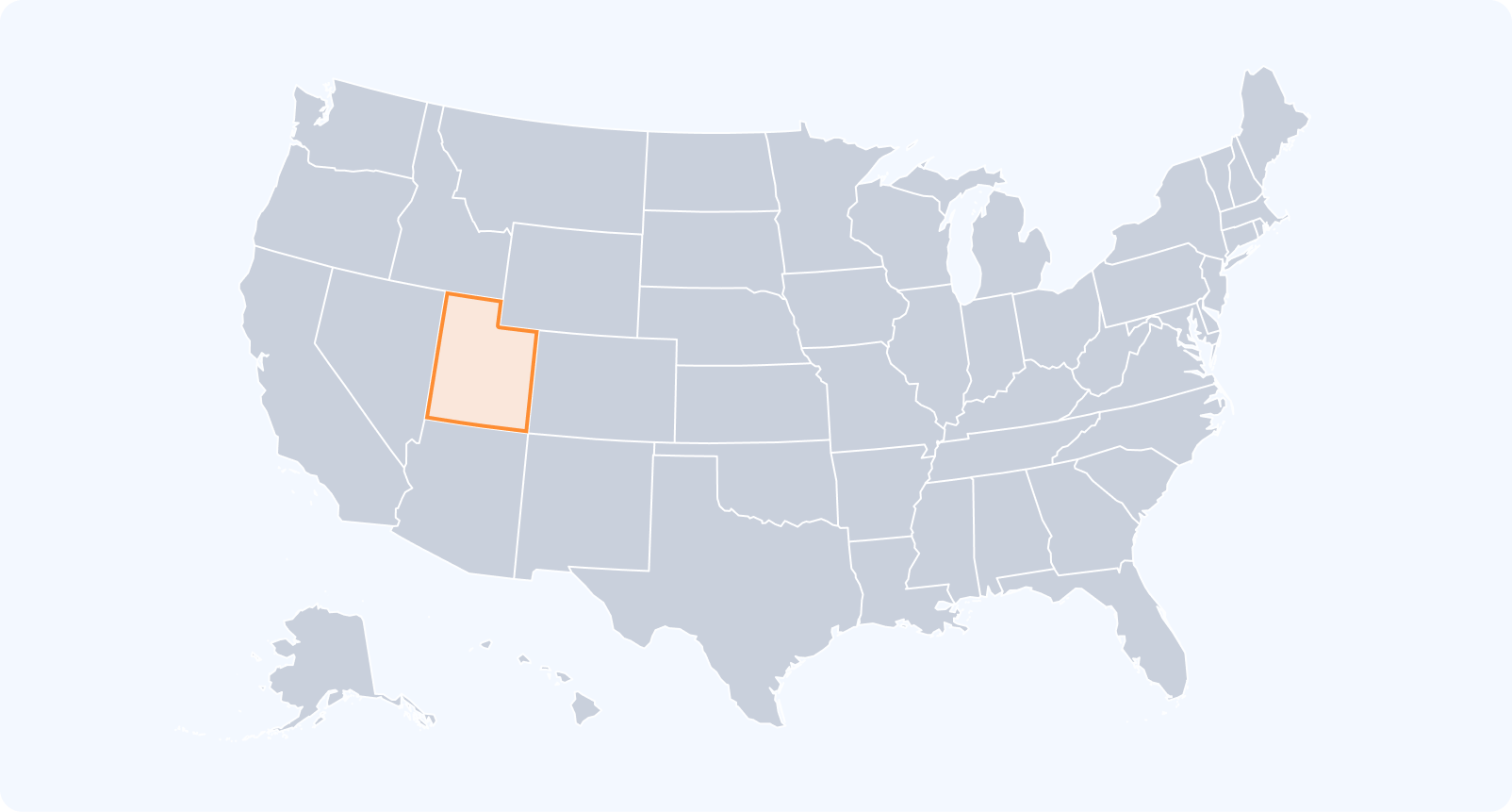
Major Utah cities and their 2026 combined rates:
| City | 2026 Combined Rate |
| Salt Lake City | 8.45% |
| West Valley City | 7.45% |
| West Jordan | 7.45% |
| Provo | 7.45% |
| St. George | 6.75% |
| Orem | 7.45% |
| Sandy | 7.45% |
| Ogden | 7.25% |
| Layton | 7.25% |
Resort communities such as Park City and Alta are subject to additional district taxes that can push the combined sales tax rate above the standard statewide range.
Utah sales tax calculator
Can’t find your city? Use our Utah sales tax calculator to look up the exact sales tax rate for any Utah address.
TaxCloud’s sales tax calculation engine calculates to the rooftop level — because rates can vary within the same ZIP code, and zip-level estimates aren’t accurate enough for compliance.
Calculate your sales tax rate
Enter a U.S. address to find the sales tax rate for that location, or allow us to 📍Use your current location to look up the rate instantly.
- State
- -.--%
- County
- -.--%
- City
- -.--%
- District
- -.--%
Minimum combined sales tax rate for

Utah nexus thresholds
Every business with customers in Utah is subject to its nexus laws. You are required to register and collect sales tax if you trigger “nexus” through a physical presence in the state or by exceeding specific economic thresholds as a remote seller.
Utah economic nexus
You will trigger Utah economic nexus if you exceed the following thresholds in either the previous calendar year or the current calendar year:
- Sales threshold: $100,000 in total gross sales (including marketplace sales) during the current or previous calendar year.
- Transaction threshold: None.
Utah physical nexus
You will trigger Utah physical nexus (and must register from dollar one) if you have:
- Inventory in Utah: Storing products in a warehouse, fulfillment center, or Amazon FBA facility in Utah.
- Employees or representatives in Utah: Remote employees, independent contractors, sales representatives, or other employees operating in Utah.
- Property or business locations in Utah: Owning or leasing office space, storefronts, retail locations, equipment, or other property in Utah.
- In-state services: Performing taxable services, deliveries, or installations in Utah.
Already triggered nexus but haven’t registered yet? The longer you wait, the larger the potential back-tax exposure. Talk to a TaxCloud expert to review your nexus footprint and handle Utah registration — and any other states where you’re exposed.
How to register for a Utah sales tax permit
Once you trigger nexus, you must register with the Utah State Tax Commission using Form TC-69 before you can legally collect sales tax.
Operating without a permit after crossing the threshold exposes you to back taxes, penalties, and interest from the date nexus was established — not the date you registered.
- Gather info: You’ll need your FEIN, estimated sales, business structure details, and bank account information.
- Submit: Use the Utah State Tax Commission’s TAP Business Registration portal to apply for your Seller’s Permit.
- Note your effective date: Utah requires you to begin collecting sales tax on the date nexus was triggered — not the date you registered. If there’s a gap, you may owe back taxes for that period.
If you have questions about your Utah registration or compliance history, TaxCloud’s U.S.-based support team typically responds within 2 hours and can review your setup directly.
Filing in more than one state?
If you’ve triggered nexus in multiple states, our multi-state sales tax registration service can handle the entire paperwork trail for you in a single workflow.

How to calculate sales tax in Utah
Utah’s sales tax is straightforward once you know two things: where the sale occurs and who has to collect the tax. The tax rate depends on the customer’s delivery address, not your business or warehouse address. Even though rates vary by city or county, the Utah State Tax Commission handles sales tax filings and payments through the Taxpayer Access Point. You don’t need to file multiple local returns.
| Sourcing logic | Utah is a destination-based state. You collect tax based on where the customer receives the product. |
| Marketplace rules | Utah requires marketplace facilitators (Amazon, eBay) to collect and remit tax on your behalf.
Note: These sales do not count toward your economic nexus threshold. |
| Home rule | None. Utah does not require separate local filings for cities or counties. |
| Sales tax holidays | None. Utah does not currently have any scheduled 2026 sales tax holidays. |
What is taxable in Utah?
Taxability in Utah is determined by how a product is classified under state law. Below is a high-level summary of how major categories are generally treated for 2026:
- Tangible personal property: Most physical goods, like furniture, electronics, tools, and home goods, are taxable. Unless Utah carves out an exemption, you should assume all retail goods are taxable.
- SaaS, software, and digital products: Utah generally taxes digital goods (eBooks, music) and Software as a Service (SaaS).
- Food & groceries: Utah typically taxes grocery staples at a reduced rate of 3.0%. However, prepared or heated food sold for immediate consumption is generally taxable at the full combined rate.
- Clothing: Clothing and footwear are generally taxable at standard rates, with no exceptions for specific price thresholds or holiday events.
What is tax exempt in Utah?
Below is a high-level summary of items that are generally tax-exempt in Utah:
- Essential exemptions: Utah provides specific exemptions for items such as prescription medicine and certain medical devices and wholesale or resale items.
Sales tax rules are subject to frequent legislative change. To ensure you are applying the correct rate at the SKU level, TaxCloud uses TIC (Taxability Information Codes) to automate these rules for your specific product catalog.
Utah sales tax return due dates and filing frequency
Filing frequency is assigned by the Utah State Tax Commission based on your reported or estimated sales volume. In Utah, returns are generally due on the 30th of the month following the reporting period.
| Frequency | Due Date |
| Monthly | Last day of following month |
| Quarterly | Last day of month after quarter end (Apr 30, Jul 31, Oct 31, Jan 31) |
Critical 2026 compliance notes:
- Due dates for filing are based on the previous year’s tax liability.
- If a due date falls on a weekend or legal holiday, the due date is the next business day.
- New businesses must estimate the amount of sales and use tax liability when applying for a license and are assigned a filing status.
See our full 2026 sales tax calendar for every state, and let TaxCloud handle your sales tax filing so you never miss a deadline again.
Utah and the SST program
Yes, Utah is a member state of the Streamlined Sales Tax (SST) program.
Because TaxCloud is an SST Certified Service Provider, we can handle your registration and filing at no cost to your business in Utah and all other SST-member states.

Multi-state filings made simple with SST — here’s what it looks like
“Having our SST filings come through as a single transaction really kind of helps simplify the accounting process too.” — Brett Goodson, Founder, Almond Cow
See how TaxCloud, as a Certified Service Provider in the Streamlined Sales Tax program, helped Almond Cow streamline multi-state filings — saving both time and money compared to their previous setup.
The latest Utah sales tax changes
We track Utah’s shifting sales tax landscape so you don’t have to.
Here are latest updates:
- Utah expands sales tax to streaming services, subscriptions, and seller-hosted software: Effective July 1, 2026, Utah expanded its sales and use tax to cover streaming-only digital content and formally codified the taxability of seller-hosted prewritten software, including SaaS. Businesses selling digital content, subscriptions, or cloud-based software to Utah customers should review their sales tax collection and compliance obligations.:
- Utah Eliminates 200-Transaction Nexus Threshold – What Remote Sellers Should Know: Beginning July 1, 2025, Utah repealed its 200-transaction threshold for remote seller economic nexus. After that date, only the $100,000 gross revenue threshold will remain.
Already using another sales tax compliance platform?
Switching is easier than most businesses expect. TaxCloud handles the full transition — including historical order imports, registration cleanup, and ongoing compliance — so there’s no gap in coverage and no starting from scratch. Read the migration guide.

Frequently asked questions about Utah sales tax
You have nexus in Utah if your business has a physical presence in the state or if you exceed the economic nexus threshold. Utah’s economic nexus rule applies when your gross revenue from sales delivered into Utah exceeds $100,000 in the current or previous calendar year. This does not include marketplace sales. If you store inventory, have employees, lease property, or perform services in Utah, you likely have physical nexus and must register from your first taxable sale.
Utah generally does not tax separately stated shipping charges if the shipping occurs after the sale and is listed clearly on the invoice. However, if shipping is bundled into the sales price or combined with handling or other taxable charges, the entire amount could become taxable. Proper invoice formatting matters.
Yes. Utah taxes prewritten software and products transferred electronically. That includes many digital goods and most SaaS offerings that provide access to prewritten software. If your product involves remote access to standardized software, you should treat it as taxable unless a specific exemption applies.
Yes. TaxCloud handles Utah sales tax calculation, filing, and remittance for ecommerce and SaaS businesses selling into the state.
Table of Contents
State-by-State Sales Tax (2026 Update)
Click on a state to find its current sales tax rate, including any applicable local taxes.
- Alabama
- Alaska
- Arizona
- Arkansas
- California
- Colorado
- Connecticut
- Delaware
- Florida
- Georgia
- Hawaii
- Idaho
- Illinois
- Indiana
- Iowa
- Kansas
- Kentucky
- Louisiana
- Maine
- Maryland
- Massachusetts
- Michigan
- Minnesota
- Mississippi
- Missouri
- Montana
- Nebraska
- Nevada
- New Hampshire
- New Jersey
- New Mexico
- New York
- North Carolina
- North Dakota
- Ohio
- Oklahoma
- Oregon
- Pennsylvania
- Rhode Island
- South Carolina
- South Dakota
- Tennessee
- Texas
- Utah
- Vermont
- Virginia
- Washington
- West Virginia
- Wisconsin
- Wyoming