TaxCloud, Stripe Tax, or both? Which solution makes the most sense for growing businesses?
Stripe Tax is a powerful international tax compliance solution but only works with payments processed by Stripe and requires third-party sales tax partners for full compliance.
TaxCloud works with multiple payment processors and offers unique savings opportunities when filing in the U.S. Combining these two platforms guarantees 100% sales tax compliance.
|
Stripe Tax
Tax Basic (pay as you go)
|
TaxCloud
Starter
|
Stripe Tax
Tax Complete
|
TaxCloud
Premium
|
|
|---|---|---|---|---|
|
Price
|
0.5% per transaction for no-code integration / $.50 per transaction with API integration |
$199/year |
Starting at $90/month; cost increases with additional transactions |
$799/year |
|
Orders included
|
None |
1,200/year |
200/month |
2,400/year |
|
Automated sales tax filing
|
3rd party only |
$39 per return (as low as $19.99 with volume pricing) |
3rd party only |
$39 per return (as low as $19.99 with volume pricing) |
What two platforms offer
|
Stripe Tax
|
TaxCloud
|
|
|---|---|---|
|
Exemption certificate support
|
Not included
3rd party |
Included
|
|
Address verification
|
Included
|
Included
|
|
Economic nexus monitoring
|
Included
(Stripe transactions only) |
Included
(support all channels) |
|
Economic nexus notifications
|
Included
|
Included
|
|
Single state tax filing
|
Not included
3rd party |
Included
$39/filing |
|
Nationwide audit support
|
Not included
|
Included
Starting at $99/month |
|
Not included
|
Included
|
|
|
Transaction detail reports
|
Included
|
Included
|
|
Jurisdiction-level reports
|
Included
|
Included
|
|
CSV import
|
Included
|
Included
|
|
Email support
|
Included
|
Included
|
|
Phone support
|
Not included
|
Included
|
How Stripe Tax and TaxCloud fit into your tax workflow
When Stripe Tax makes the most sense
Stripe Tax is a strong fit for SaaS organizations already using Stripe as a payment provider and need real-time sales tax calculation at checkout.
Because Stripe Tax is already embedded directly into Stripe Payments, setup is straightforward and only requires minor changes to operational overhead. Users only need to purchase a plan and enable tax collection within the Stripe dashboard to begin calculating taxes.
Stripe Tax is particularly useful for teams that:
- Already process transactions via Stripe.
- Need international, multi-regional tax support.
- Want to implement tax collection with minimal setup.
- Want to checkouts and payments in a unified ecosystem.
Businesses seeking to expand internationally can also use Stripe Tax to simplify VAT and GST calculations across multiple countries, extending the reach of the brand while maintaining compliance with local tax regulations.
When businesses add TaxCloud
For most companies, TaxCloud becomes especially valuable when growth extends beyond the Stripe ecosystem.
Stripe Tax is designed to calculate and collect tax for transactions processed through Stripe. However, as a brand extends to other channels, different calculation tools may be required to support those transactions.
That creates a new challenge: Each tax engine only has visibility into the transactions that it processes, making it more difficult for companies to monitor nexus exposure, prepare filings, and maintain a complete view of compliance activity.
To solve the issue, companies need to work with a platform that can consolidate all transaction data into a single, unified dashboard.
TaxCloud solves both problems.
Using TaxCloud’s Stripe integration, companies can import Stripe transaction data alongside sales from other platforms and payment processors. In this scenario, TaxCloud acts as a centralized layer to track obligations, manage U.S. filings, and maintain visibility across sales channels.
Plus, for marketplaces that don’t have a built-in tax engine, TaxCloud can also integrate and calculate tax for those transactions without interfering with the Stripe ecosystem.
TaxCloud becomes a good addition when a business wants to do any of the following:
- Automate U.S. sales tax filing and remittance.
- Consolidate tax obligations across multiple sales channels.
- Access Streamlined Sales Tax (SST) benefits.
- Manage exemption certificates and audit documentation outside of Stripe Tax.
- Separate filing costs from transaction processing costs.
This approach allows businesses to continue using Stripe Tax where it performs best while enabling companies to create a more complete view of their U.S. tax obligations as they grow.
Using Stripe Tax and TaxCloud together
Stripe Tax and TaxCloud have overlap in some areas, but each is designed to solve different aspects of the compliance process. Working together, both platforms help to keep the compliance process simple and scalable as operations grow.
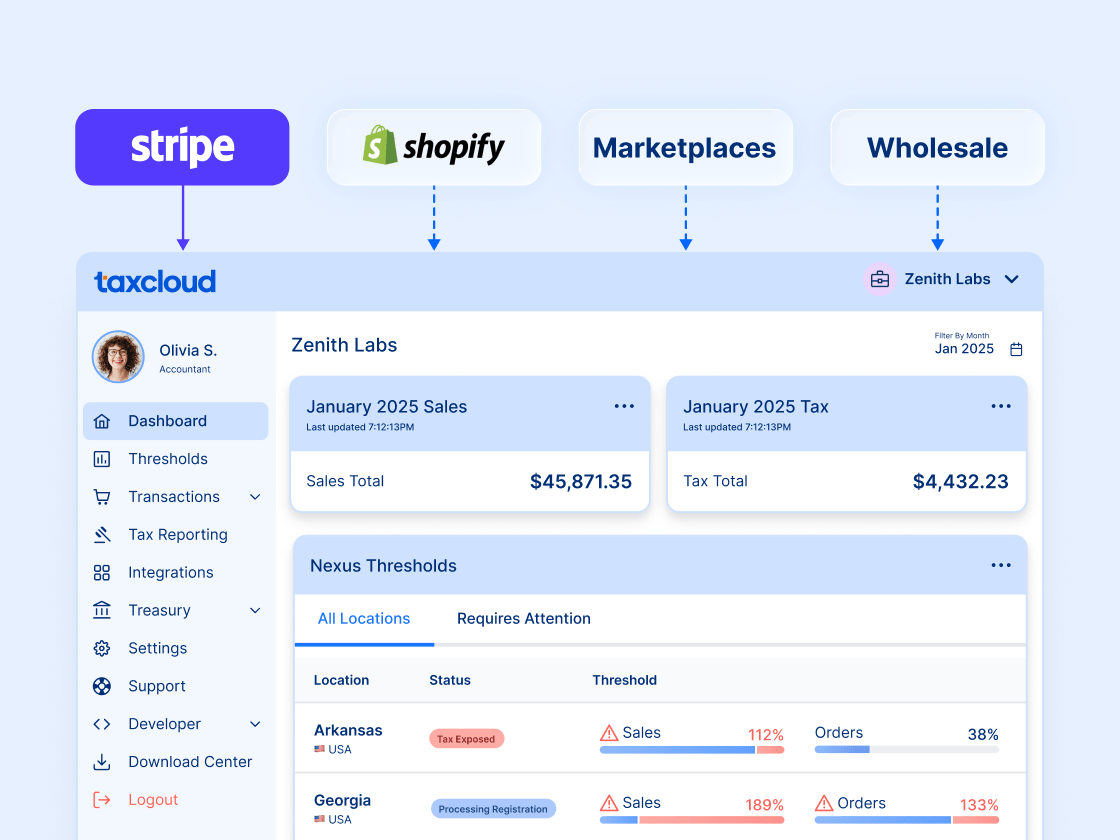
Expand compliance beyond Stripe
Stripe Tax calculates and collects tax for transactions processed via Stripe, but growing businesses will eventually move into marketplaces where Stripe may not be supported.
When that happens, companies can continue to process transactions via Stripe and pull that information into TaxCloud via our Stripe integration. For sales outside of Stripe, teams can use TaxCloud’s own calculation engine to calculate accurate tax and create a unified compliance workflow.
This approach allows companies to continue using Stripe where it makes sense to do so while relying on TaxCloud to consolidate reporting, track nexus obligations, and manage U.S. tax filings.
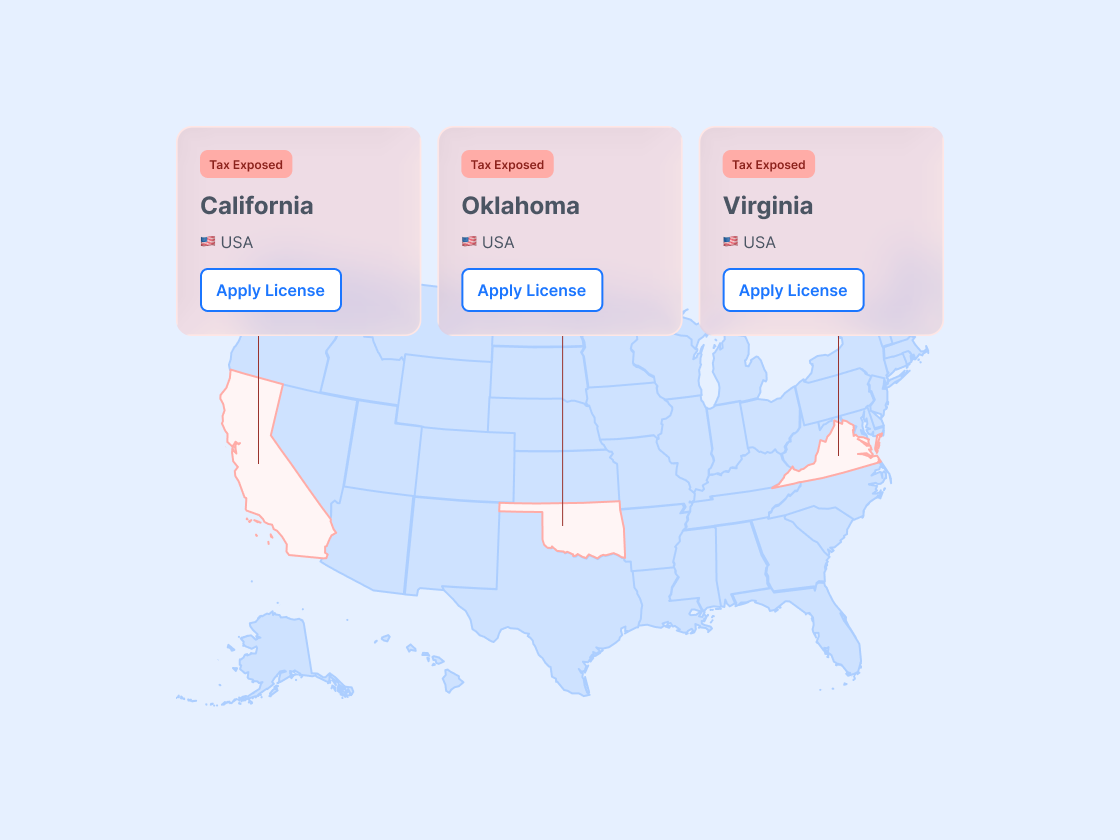
Sales tax complexity in the US
While the U.S. represents a huge market for ecommerce and SaaS businesses, trying to sell at scale introduces a huge amount of complexity to the compliance process. With over 13,000 state and local tax jurisdictions, the number of filing requirements, registration obligations, and compliance flows can quickly overwhelm growing businesses.
Stripe Tax can provide accurate calculations, but that’s only one part of compliance. Even with accurate tax data, the company still has to manage the consolidation and delivery of those details to the appropriate authorities in a given state or region.
Using Stripe and TaxCloud together allows a company to continue using Stripe’s native tax engine while gaining access via TaxCloud to automation solutions for things like registration, reporting, remittance, and other ongoing compliance management obligations.
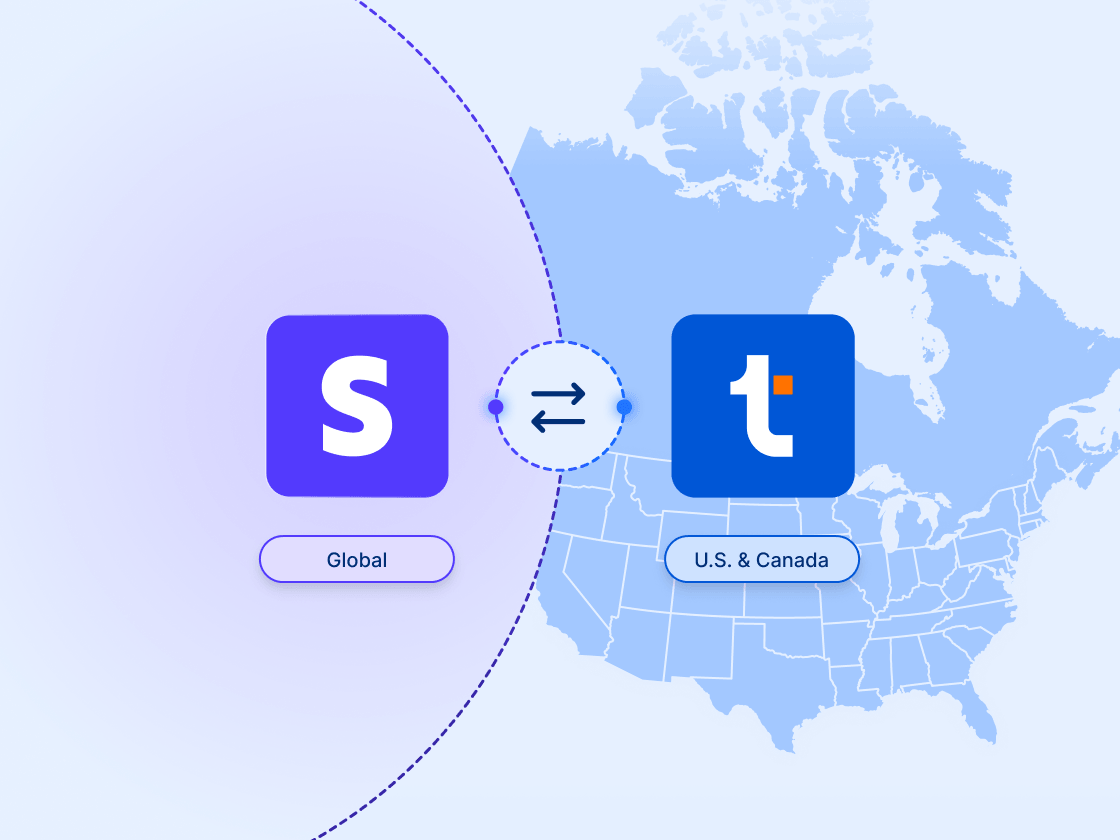
International and multi-marketplace support
TaxCloud focuses on U.S. and Canadian sales tax compliance while Stripe supports calculations at a global scale. For companies selling globally, using both platforms creates a more flexible operating model.
In this scenario, Stripe Tax handles tax calculations for international transactions, all of which are processed through Stripe Payments. Because Stripe Tax’s paid plans come with a set number of filings, users can spend those credits to stay compliant in international markets.
Meanwhile, all domestic transaction data can flow into TaxCloud, where it will be combined with data from other marketplaces, added to the company’s nexus profile, and used in TaxCloud’s automated filing processes.
Using this strategy, teams can make the most use of Stripe Tax to expand their reach on the global stage while using TaxCloud to simplify tax operations at home.
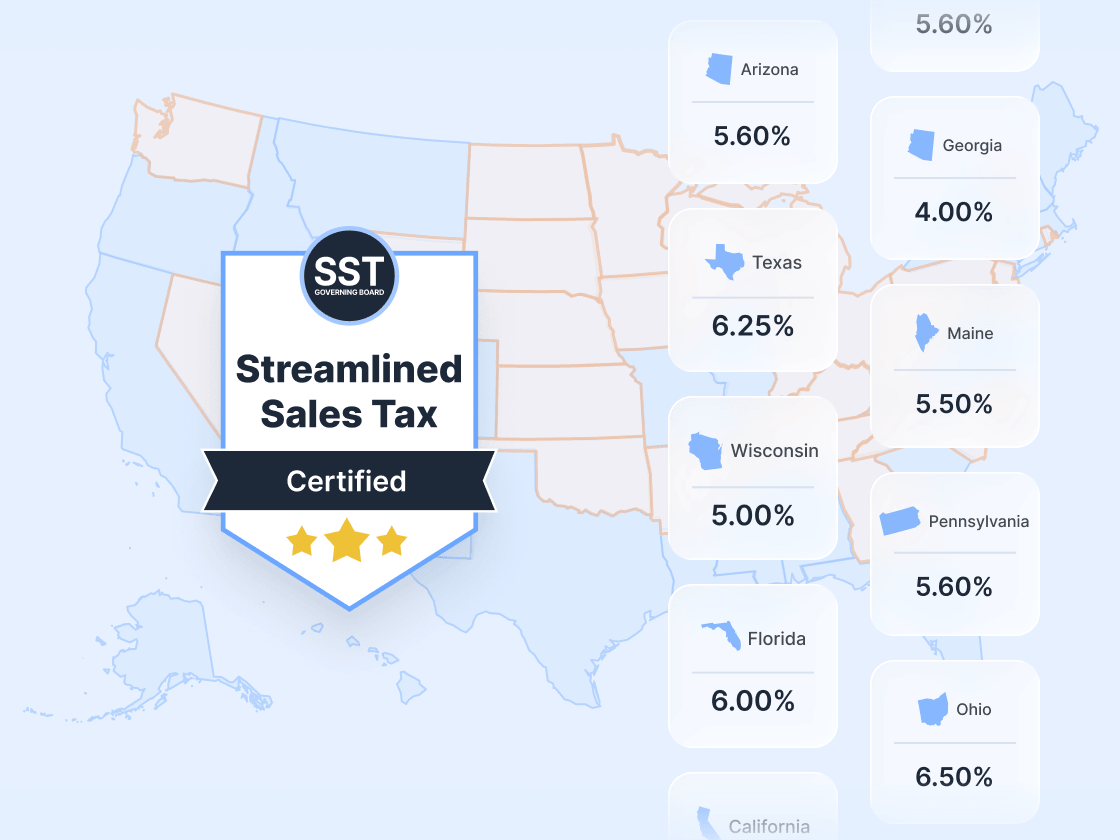
Lower filing costs and built-in audit support
Stripe Tax users leveraging TaxCloud can take advantage of unique, cost-savings opportunities via the Streamlined Sales Tax (SST) program.
As a Certified Service Provider (CSP) in the SST program, TaxCloud can help companies file for free in up to 24 member states. These savings are available on every TaxCloud plan and can reduce filing costs by tens of thousands each year for participating businesses.
Beyond filing, TaxCloud also offers audit support solutions and can assist companies in the event of a state audit. As your CSP, TaxCloud becomes the first point of contact when auditors have questions. For non-SST states, paid audit coverage allows TaxCloud to dedicate additional time and support to teams responding to audit requests.
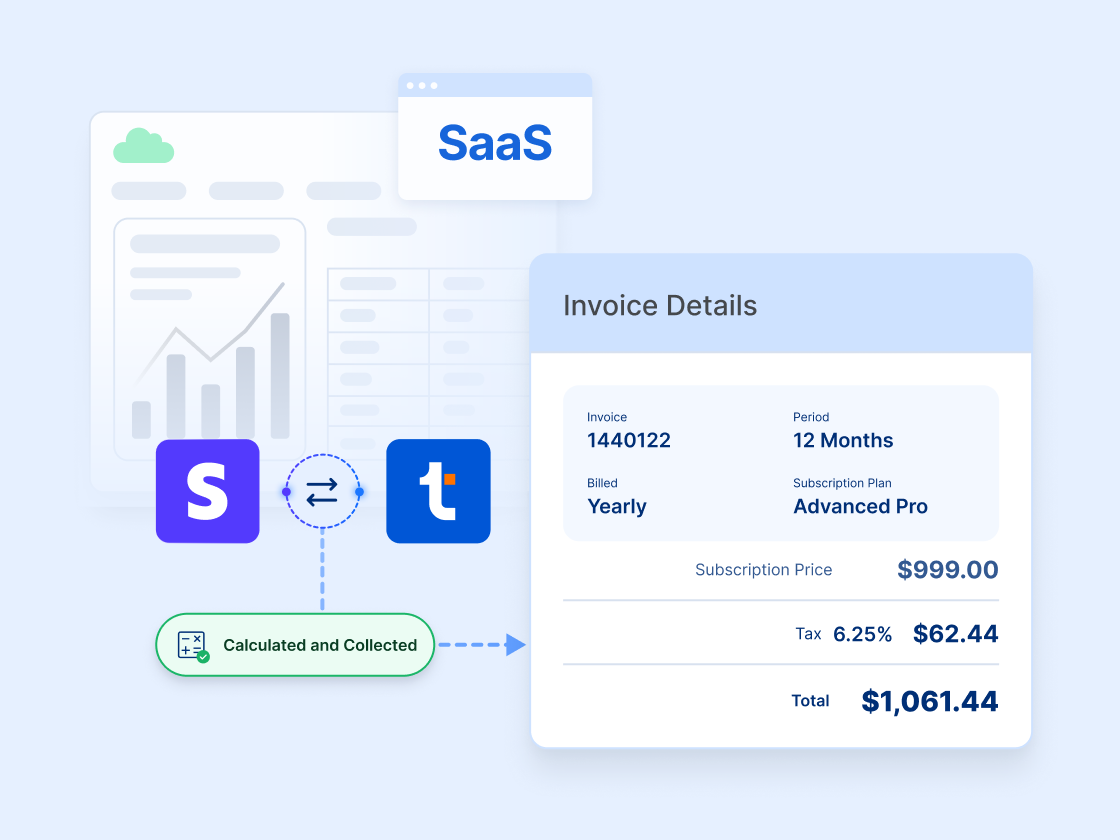
Support for SaaS, software and digital companies
Like other business models, sales tax compliance for SaaS companies evolves with growth. The problem that many SaaS teams experience is that the model scales quickly and growth can be explosive. A viral campaign or good press coverage can cause subscriptions — and associated tax obligations — to skyrocket practically overnight.
With Stripe Tax and TaxCloud, teams will have a solution in place to handle sudden growth spikes as the business becomes more popular. That can be critical during heavy growth, when compliance takes a backseat to the influx of demand that the company needs to accommodate in a short amount of time.
Plus, as compliance becomes more sophisticated, additional services like VDA support and audit support can assist with historical exposure and evolving filing requirements. Both can be tricky to navigate without the right solutions in place.
TaxCloud and Stripe Tax — FAQs
Yes. Stripe users seeking to leverage Stripe Tax for calculations and TaxCloud for filing and compliance will need to select one plan from each provider based on transaction volume and functionality.
For example, users on the Stripe Tax Complete plan can continue using Stripe Tax for calculations while selecting a TaxCloud plan to consolidate transaction data, automate filing, and support compliance across additional sales channels.
Keep in mind that orders included in your TaxCloud plan aren’t used for transactions calculated through Stripe Tax but can be used to calculate transactions using non-Stripe payment systems where TaxCloud’s calculation engine is enabled.
Yes, but which platform handles the calculation would depend on how payments are processed and which systems are enabled in each sales channel.
Stripe Tax will always calculate transactions processed via Stripe Payments while TaxCloud can integrate with multiple ecommerce platforms, marketplaces, and payment systems.
If a platform doesn’t offer built-in calculations, TaxCloud can also support tax calculation directly while continuing to work alongside Stripe.
Companies working with tax-exempt customers might need an additional process for collecting and maintaining exemption documentation.
TaxCloud includes built-in exemption certificate management tools for storing and supporting documentation as part of a broader compliance workflow, but Stripe Tax only supports exemptions via a third-party app.
When using Stripe and TaxCloud together, companies can establish exempt customer status within their transaction workflow and use TaxCloud to manage any supporting documentation. That way, transaction data and exemption documents are held in the same, centralized workspace without the need for additional, third-party support.
Yes. Stripe Tax always uses third-party filing solutions, but the solution used depends on where you’re filing.
For example, Stripe Tax uses TaxJar when filing in the U.S. while Taxually is used for international filings. The same is true for exemption certificate management and a few other core compliance tools.
By working with TaxCloud, Stripe Tax users will simply outsource that third-party support to one vendor. TaxCloud would handle all U.S. and Canadian filings and has tools for exemption certificate management for non-Stripe transactions, nexus tracking, and more.
For international filings, users can still use Stripe Tax’s filing credits to support international filings via Taxually, as TaxCloud is only focused on domestic markets.
No, and we don’t recommend it.
Because Stripe Tax is deeply integrated with Stripe, we recommend using Stripe Tax for all Stripe-related processing.
However, TaxCloud can help you calculate taxes from other marketplaces, many of which don’t provide built-in tax calculation options.
All transaction data will flow into TaxCloud in real time via integrations and API connections, so you’ll be able to get a bird’s eye view of your tax obligations and automate the filing process from one dashboard.
This depends on your use case.
TaxCloud’s Stripe integration is available on both the Starter and Premium plans, but some TaxCloud features — such as the TaxCloud API — are only available on the Premium plan.
If you only need to integrate with Stripe and don’t plan to use TaxCloud API, the Starter plan is a good fit. However, if you need the API, more advanced features or want to integrate TaxCloud’s tax engine more fully into your workflow, we’d recommend the Premium plan.
Not sure? Get in touch with one of our product specialists for additional guidance.
Disclaimer
Parties other than TaxCloud may provide products, services, recommendations, or views on TaxCloud’s site (“Third Party Materials”). TaxCloud is not responsible for examining or evaluating such Third Party Materials, and does not provide any warranties relating to the Third Party Materials. Links to such Third Party Materials are for your convenience and does not constitute an endorsement of such Third Party Materials.