California sales tax rates 2026: Calculator, nexus, and due dates
- California state base rate
- 7.25%
- Combined rate range
- 7.25% – 10.75%
- Local / District rate range
- 0.00% – 3.50%
- California nexus (sales / transactions)
- $500,000 gross / None
- California SaaS taxability
- Non-taxable
- State tax authority
- cdtfa.ca.gov
California has one of the most complex sales tax structures in the U.S. — a 7.25% statewide sales tax rate layered with county, city, and district taxes that push combined rates as high as 10.75% depending on where your customer receives the order (per TaxCloud’s sales tax engine).
Here’s what this guide covers:
- Current state and local rate ranges, plus a street-level calculator for precise address-based lookups
- Economic and physical nexus thresholds to determine when registration is required
- Product taxability guidance, including SaaS, digital goods, and common exemptions
- CDTFA filing frequencies, due dates, and key compliance rules
California sales tax rates by city and county
California’s sales tax structure is layered. The 7.25% state base rate applies everywhere, but counties, cities, and special districts add their own local sales tax rates on top — meaning the combined rate can vary significantly by location.
Because California is a destination-based state, you charge the rate based on where your customer receives the product, not where your business is located.
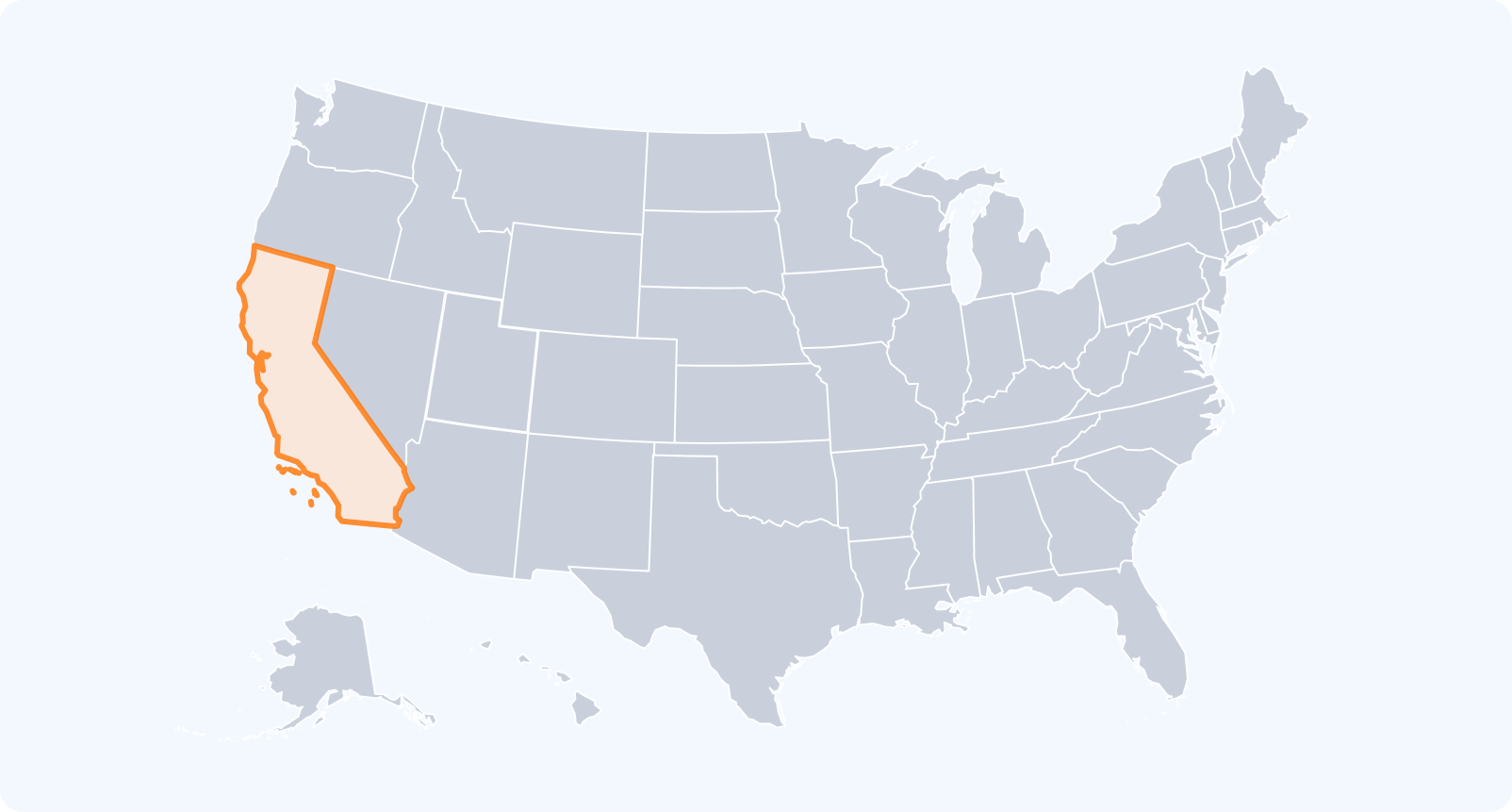
A sale shipped to Los Angeles requires 10.25%, while a sale shipped to San Diego requires 7.75%. California centralizes all filings with the CDTFA, so you only file one return regardless of how many jurisdictions you sell into.
Major California cities and their 2026 combined rates:
| City | 2026 Combined Rate |
| Los Angeles | 10.25% |
| San Francisco | 8.625% |
| San Diego | 7.75% |
| San Jose | 9.375% |
| Oakland | 10.75% |
| Sacramento | 8.75% |
| Long Beach | 10.25% |
| Bakersfield | 8.25% |
| Fresno | 8.35% |
Can’t find your city? Use our sales tax calculator to look up the exact rate for any California zip code.
Calculate your sales tax rate
Enter a U.S. address to find the sales tax rate for that location, or allow us to 📍Use your current location to look up the rate instantly.
- State
- -.--%
- County
- -.--%
- City
- -.--%
- District
- -.--%
Minimum combined sales tax rate for

California nexus thresholds
Every business with customers in California is subject to nexus laws. You are required to register and collect sales tax if you trigger “nexus” through a physical presence in the state or by exceeding specific economic thresholds as a remote seller.
California economic nexus
You will trigger California economic nexus if you exceed the following thresholds in the current or previous calendar year:
- Sales threshold: $500,000 in total gross sales (including marketplace sales)
- Transaction threshold: None (California is dollar-volume only).
California physical nexus
You have physical nexus (and must register from dollar one) if you have:
- Inventory: Storing goods in a 3PL or Amazon FBA warehouse in California.
- Personnel: Remote employees, contractors, or sales reps based in the state.
- Property: Leasing tangible property like physical offices, stores, or sample rooms.
Already triggered nexus but haven’t registered yet? The longer you wait, the larger the potential back-tax exposure. Talk to a TaxCloud expert to review your nexus footprint and handle California registration — and any other states where you’re exposed.
Registering for a California tax permit
Once you trigger nexus, you must register with the California Department of Tax and Fee Administration (CDTFA) before you can legally collect sales tax. Operating without a permit after crossing the threshold exposes you to back taxes, penalties, and interest from the date nexus was established — not the date you registered.
- Gather your information. You’ll need your FEIN, estimated annual sales, business structure details, and bank account information.
- Submit your application. Use the CDTFA’s Online Services portal to apply for your Seller’s Permit. Most applications are approved immediately or within a few business days.
- Note your effective date. California requires you to begin collecting sales tax on the date nexus was triggered — not the date you registered. If there’s a gap, you may owe back taxes for that period.
If you have questions about your California registration or compliance history, TaxCloud’s U.S.-based support team typically responds within 2 hours and can review your setup directly.
Filing in more than one state?
If you’ve triggered nexus in multiple states, our multi-state sales tax registration service can handle the entire paperwork trail for you in a single workflow.

Understanding California sales tax calculations
California’s calculation rules are straightforward compared to states with home rule complexity — but destination-based sourcing and marketplace reporting requirements trip up sellers who are new to the state.
| Sourcing logic | California is a destination-based state. You collect tax based on where the customer receives the product at their specific address. |
| Marketplace rules | Platforms collect sales tax your behalf. However, if you sell on your own site (e.g. Shopify, WooCommerce), you must report your total gross sales (including marketplace sales) on your California tax returns, then deduct the marketplace portion so you aren’t taxed twice. |
| Home rule | None. California does not require separate local filings; the CDTFA centralizes all state and local collection. |
| Sales tax holidays | None. California currently has no sales tax holidays scheduled for 2026. |
What is taxable in California?
Taxability in California is determined by how a product is classified under state law. Below is a high-level summary for 2026:
- Tangible personal property: Most physical goods — such as furniture, electronics, and standard retail items — are subject to sales tax unless a specific exemption applies.
- Digital products, software, and SaaS: California generally does not tax digital goods (eBooks, music) and Software as a Service (SaaS). For more, read our guide to California SaaS Sales Tax.
- Food and groceries: California typically exempts grocery staples. However, prepared or heated food sold for immediate consumption is generally taxable.
- Clothing: Clothing and footwear are generally taxable at standard state and local rates.
What is tax exempt in California?
California provides sales tax exemptions for essential goods and specific categories:
- Essential exemptions: California provides specific exemptions for items such as prescription medications, diapers, and menstrual hygiene products.
- Additional exemptions: Most groceries (excluding hot prepared food), cold prepared food sold to-go, certain medical devices, and purchases made with CalFresh benefits are also exempt from sales tax.
Sales tax rules are subject to frequent legislative change. To ensure you are applying the correct rate at the SKU level, TaxCloud uses TIC (Taxability Information Codes) to automate these rules for your specific catalog.
California sales tax due dates and filing frequency
Filing frequency is assigned by the CDTFA based on your reported or estimated sales volume. In California, sales tax returns are generally due on the last day of the month following the reporting period.
| Frequency | Due Date |
| Monthly | Last day of following month |
| Quarterly | Last day of month after quarter end (Apr 30, July 31, Oct 31, Jan 31) |
| Annual | January 31st |
Critical 2026 compliance notes:
- The “prepay” trap: If your tax liability exceeds $17,000 per month, California moves you to a “Quarterly Prepay” schedule. You must make two prepayments (due on the 24th of the first two months) before filing your final quarterly return.
- Zero-return requirement: If you are registered but had $0 in sales this period, you must still file. Failure to file a “Zero-Tax” return is the #1 cause of unnecessary “Forgetfulness Penalties” for ecommerce founders.
- Weekend rule: If the due date falls on a weekend or state holiday, your return is due the next business day.
See our 2026 sales tax calendar and let TaxCloud handle your sales tax filing so you never miss a deadline again.
California and the SST program
No, California is not a member of the Streamlined Sales Tax (SST) program.
However, as Certified Service Provider of the SST program, TaxCloud can save your business time and money on state registration and filing costs in 24 SST-member states and handle your California compliance.

SST can eliminate thousands in annual filing costs — here's proof
“It would have cost us around $40,000 a year to go with a company that wasn’t an SST program participant.”
Learn how Cable Bullet saved tens of thousands in compliance costs annually by working with TaxCloud and taking full advantage of the SST program.
2025-26 California sales tax changes
We track California’s shifting sales tax landscape so you don’t have to.
Recent and upcoming changes (effective 2026):
- California will tax SaaS and prewritten software starting January 1, 2027: Governor Newsom signed SB 122 in June 2026, the biggest expansion of California’s sales tax base in decades. SaaS and downloaded software become taxable; custom software and digital media stay exempt.
- Santa Clara County sales tax increase on April 1, 2026
- The following California cities will see sales tax rate changes starting April 1, 2026: Campbell, Dunsmuir, Los Gatos, McFarland, Milpitas, Santa Fe Springs, and San Jose.
- The City of Delano’s existing 8.25% district tax has been extended with no expiration, effective April 1, 2026.
- California cooking class sales tax guidance 2025: A reminder for service-based businesses that mandatory “ingredient fees” or materials are often taxable even if the instruction itself is exempt.
Frequently asked questions about California sales tax
California does not charge sales tax on shipping costs if they are separately stated and reasonable. However, if you charge a combined “shipping and handling” fee that includes packaging materials or other services, the entire fee may be taxable. Always itemize shipping charges separately on your invoice.
If you store inventory in a California FBA warehouse, you have physical nexus and must collect California sales tax from dollar one — even if Amazon collects tax on your behalf for marketplace sales. You are still responsible for collecting tax on sales made through your own website (Shopify, WooCommerce, etc.) to California customers.
California assesses a 10% penalty on the unpaid tax amount, plus interest. If you’re more than 90 days late, additional penalties may apply. Even if you had zero sales for the period, you must still file a zero-return — failure to file is treated more harshly than filing late with a balance due.
No. California does not tax Software as a Service (SaaS) or digital products like eBooks, music downloads, or streaming services. Only tangible personal property and certain specified services are subject to California sales tax.
You trigger California economic nexus if your total gross sales to California customers exceed $500,000 in the current or previous calendar year.
This includes all sales — even those made through marketplaces like Amazon, where the marketplace collects tax on your behalf. Use TaxCloud’s nexus tracking to monitor your exposure across all states in real time.
Yes. TaxCloud handles California sales tax calculation, filing, and remittance for ecommerce and SaaS businesses selling into the state. While California is not an SST member state, TaxCloud manages California compliance alongside your SST-funded states — meaning you get a single provider for your entire multi-state footprint.
TaxCloud integrates directly with Shopify, WooCommerce, BigCommerce, and other major platforms, and handles rooftop-level rate calculation across all 500+ California jurisdictions.
State-by-State Sales Tax (2026 Update)
Click on a state to find its current sales tax rate, including any applicable local taxes.
- Alabama
- Alaska
- Arizona
- Arkansas
- California
- Colorado
- Connecticut
- Delaware
- Florida
- Georgia
- Hawaii
- Idaho
- Illinois
- Indiana
- Iowa
- Kansas
- Kentucky
- Louisiana
- Maine
- Maryland
- Massachusetts
- Michigan
- Minnesota
- Mississippi
- Missouri
- Montana
- Nebraska
- Nevada
- New Hampshire
- New Jersey
- New Mexico
- New York
- North Carolina
- North Dakota
- Ohio
- Oklahoma
- Oregon
- Pennsylvania
- Rhode Island
- South Carolina
- South Dakota
- Tennessee
- Texas
- Utah
- Vermont
- Virginia
- Washington
- West Virginia
- Wisconsin
- Wyoming