The best sales tax economic nexus solutions for mid-market brands


Key takeaways
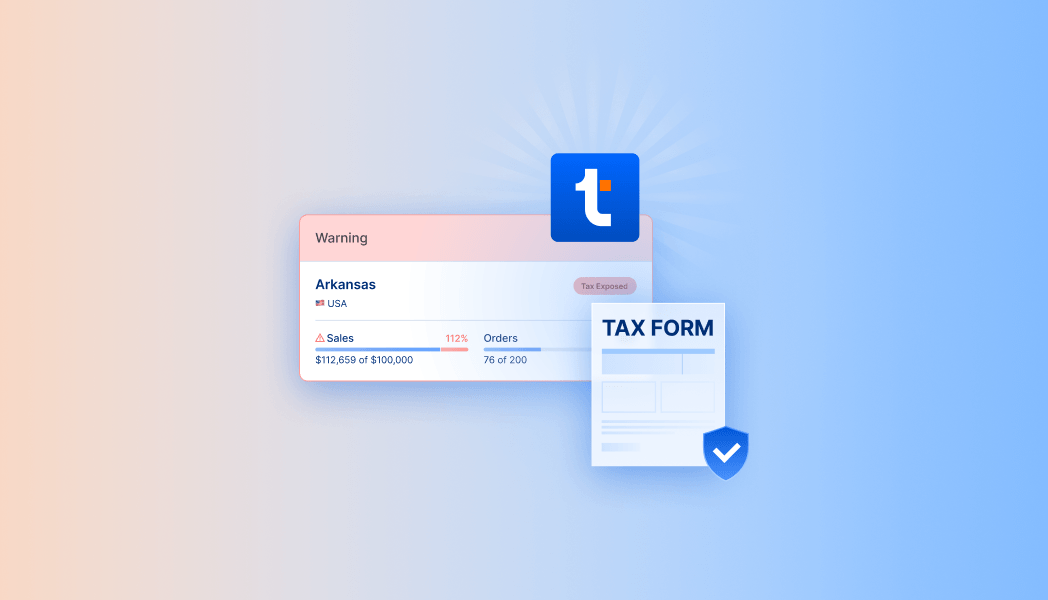
- Economic nexus tracking is typically not a standalone tax solution. It’s a feature within many sales tax compliance solutions and accounting tools, and sometimes within billing platforms.
- For your business to be 100% compliant, economic nexus tracking must provide multi-channel tracking. Otherwise, you risk undercounting your total sales, falling behind on sales tax obligations, and exposing your business to costly penalties.
- Key features to look for in economic nexus tracking software include marketplace and ecommerce platform integrations, direct or non-direct filing (through the SST program), responsive support, and scalable pricing.
- TaxCloud is our top choice for growing mid-size ecommerce businesses. It connects directly with the most popular ecommerce platforms and stores, supports orders from marketplaces (including niche ones through manual CSV upload), and provides an API that can be used to automate specific tax workflows. It also provides tax support beyond tracking nexus, such as registration and filing, sales tax calculation and collection, voluntary disclosure agreements, and audit support.
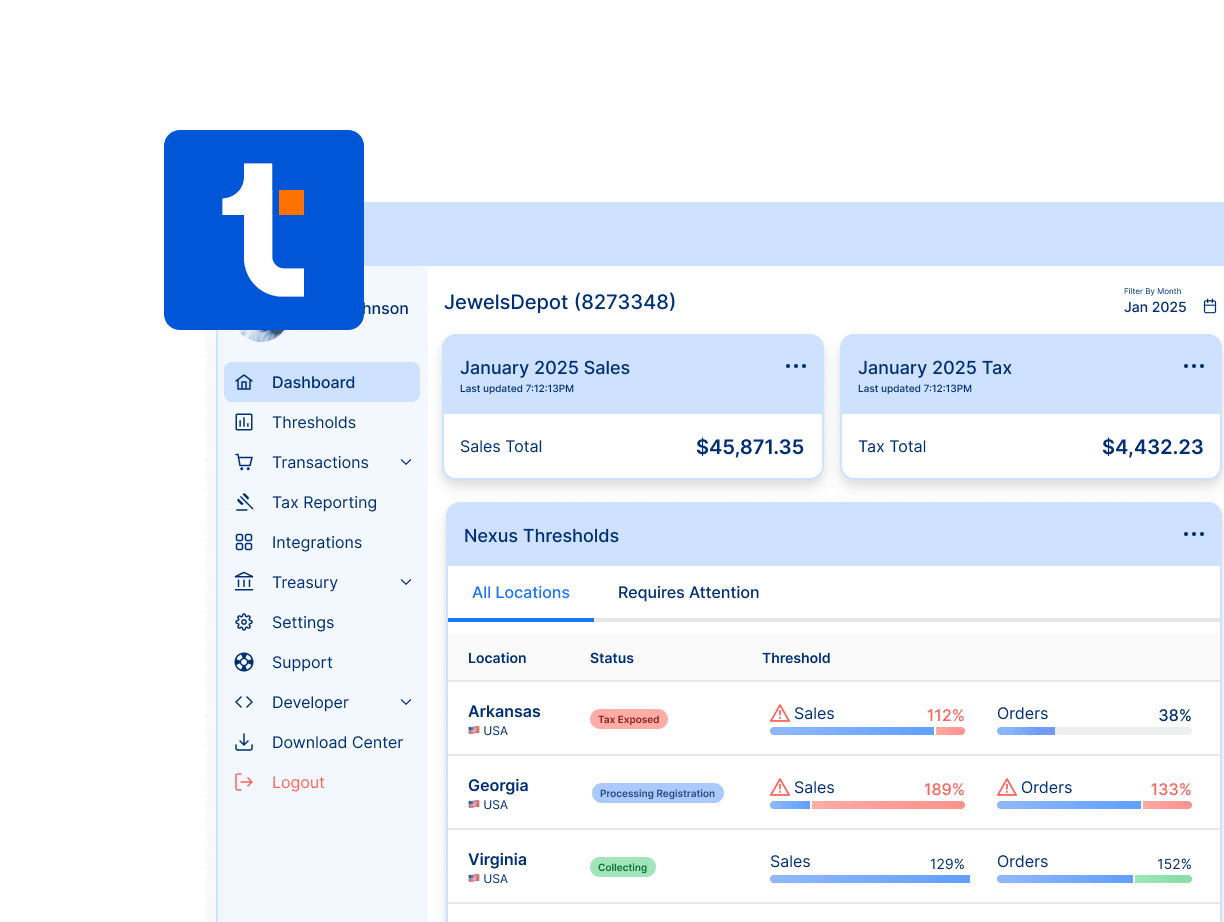
TaxCloud is the best mid-market software for economic nexus tracking because it offers tracking across your sales channels. Whether you’re selling on an ecommerce platform, a self-built website, or marketplaces like Amazon and eBay, all your orders are counted inside TaxCloud so you know when and where you need to file tax returns.
While tracking all sales in one place is crucial, it isn’t enough on its own. It’s also important what your sales tax software does when economic nexus thresholds are crossed. Without comprehensive post-threshold support, your business is at risk of penalties and audits.
The TaxCloud team reviewed the top sales tax vendors on the market and their economic nexus tracking features so you can choose the right software based on the size, stage, and breadth of your business.
Best software for tracking economic nexus in 2026 compared
Here’s an overview of the economic nexus features offered by different sales tax providers.
| Best for | Key nexus tracking features | Pricing for nexus tracking | |
|---|---|---|---|
| TaxCloud | Mid-market ecommerce businesses | Daily nexus recalculation, automated filing, comprehensive audit support |
Economic nexus tracking included across all TaxCloud plans 30-day free trial with historical order data upload to identify nexus exposure After trial, paid plans at $19/month for continued access |
| Avalara | Global enterprise-scale businesses | Sales tax tracking across 190+ countries, physical nexus tracking, exemption management |
Economic nexus tracking included with AvaTax suite Volume-based pricing available by quote only No free trial available |
| TaxJar | Small marketplace sellers | Sales tax reports, daily nexus recalculation, marketplace integrations |
Economic nexus tracking included with all plans 30-day free trial with historical order data upload Paid plans start at $39/month + $50/filing |
| Anrok | SaaS companies with a global workforce | Physical nexus tracking, subscription billing integrations, e-invoicing |
Economic nexus tracking included with all plans Paid plans start at $100/market/month No free trial available |
| Kintsugi | Startups that want quick compliance | Global tax coverage, AI product classification, live chat support |
Free plan includes economic nexus tracking with historical order upload Filing requires paid plan starting at $75/filing |
| Numeral | Small businesses operating in a few states | Automatic registration, exemption management, live chat support |
Free plan includes economic nexus tracking with historical order upload Filing requires paid plan starting at $150/registration and $75/filing |
Economic nexus monitoring isn’t enough on its own
Economic nexus tracking is an absolute baseline for sales tax compliance software. It’s something every platform offers. But knowing you have nexus is just the first step in your business’s compliance journey.
Economic nexus is the trigger that determines if your business has sales tax obligations in a state. Once you have nexus, your tax liability begins and you’re required to register with state tax agencies, navigate filing deadlines, prepare return-ready reports, and defend your business when a state’s department of revenue inevitably asks for more records.
That’s why managing economic nexus involves much more than just tracking. Your software should provide comprehensive support both before and after you cross a threshold.
It’s also crucial to get the right software in place as soon as possible, especially if your business is growing from small to mid-size. Attempting to migrate sales data and catch up on taxes in the middle of a growth spurt is a sure way to fall behind and trigger penalties. You need software that puts your compliance on autopilot from day one so you can feel confident scaling your business.
State-level variation in sales tax obligations
Economic nexus is complex because every state has its own tax rules. Here are the key things you need to know.
- Economic nexus thresholds vary by state. Some states apply economic nexus based on the number of sales you make in that state, while others base thresholds on gross receipts. So, it’s essential to track economic nexus rules on a state-by-state basis.
- Your tax obligations after reaching nexus vary by state. Some states require you to start collecting sales tax on the very next transaction once you cross an economic nexus threshold. Others give you a grace period of up to several months. It’s important to have software in place that flags your obligations immediately and helps you meet them.
- Economic nexus can overlap with physical nexus. Some states also have physical nexus thresholds, which apply if you have any employees located in a state. You may have to file tax returns in these states even if you remain below economic nexus thresholds.
Key economic nexus tracking features to look for in tax software
How do you make sure the software you choose will help you stay compliant rather than just track thresholds? Here are the key features your economic nexus tracking software should have.
Order tracking
- Multi-channel sales tax order tracking: If you sell through your website, on social media, and across online marketplaces, your software needs to capture all those sales. Missing a sales channel could result in undercounting your tax obligations.
- Marketplace order tracking: Look for software that automatically captures orders from all the marketplaces your business sells on, including Amazon, Etsy, eBay, and Walmart.
- Accounting and ERP integrations: Integrations for your accounting software and ERP platform make it easier to share accurate tax data across your systems. Look for both pre-built integrations for popular platforms and a sales tax API to support custom integrations.
Threshold monitoring
- Daily nexus calculations: Economic nexus tools like TaxCloud and TaxJar update your threshold calculations daily, while other tools only recalculate weekly. Daily recalculation is key since some states require you to start collecting sales tax immediately once you reach nexus.
- Proactive threshold alerts: Look for software that notifies you when you’re approaching a nexus threshold — not just after you’ve crossed it. Early warnings give you time to prepare registrations and filing workflows before obligations kick in.
- Historic nexus tracking: Your tax software should also allow you to upload historical sales data via CSV so you can determine if you previously crossed a nexus threshold. Many states offer voluntary disclosure agreements (VDAs) so you can retroactively pay sales taxes without a penalty.
Post-threshold tax support
- Registration and filing: Once you reach economic nexus, your tax software should assist you with state registration and auto-file on your behalf so you never miss a deadline.
- Real-time rate calculation: Your sales tax software should automatically calculate tax rates for every order and apply those rates across your sales channels.
- Automated compliance: Your sales tax compliance partner should respond to document requests and audits on your behalf so you can focus on running your business.
Growth-oriented functionality
- SST participation: Using a Certified Service Provider (CSP) for the SST program like TaxCloud means you could be eligible for free tax filing in 24 states. It’s a huge money-saver.
- VAT and GST tracking: If your business sells internationally, make sure to choose a software that tracks economic nexus and files returns across multiple countries. However, global-ready platforms are often more expensive, so U.S. businesses may be better served by U.S.-focused compliance software.
The best software for economic nexus tracking in 2026: A closer look at top tools
1. TaxCloud
Best for: Mid-market ecommerce businesses that want scalable integrations, SST cost savings, and reliable support.
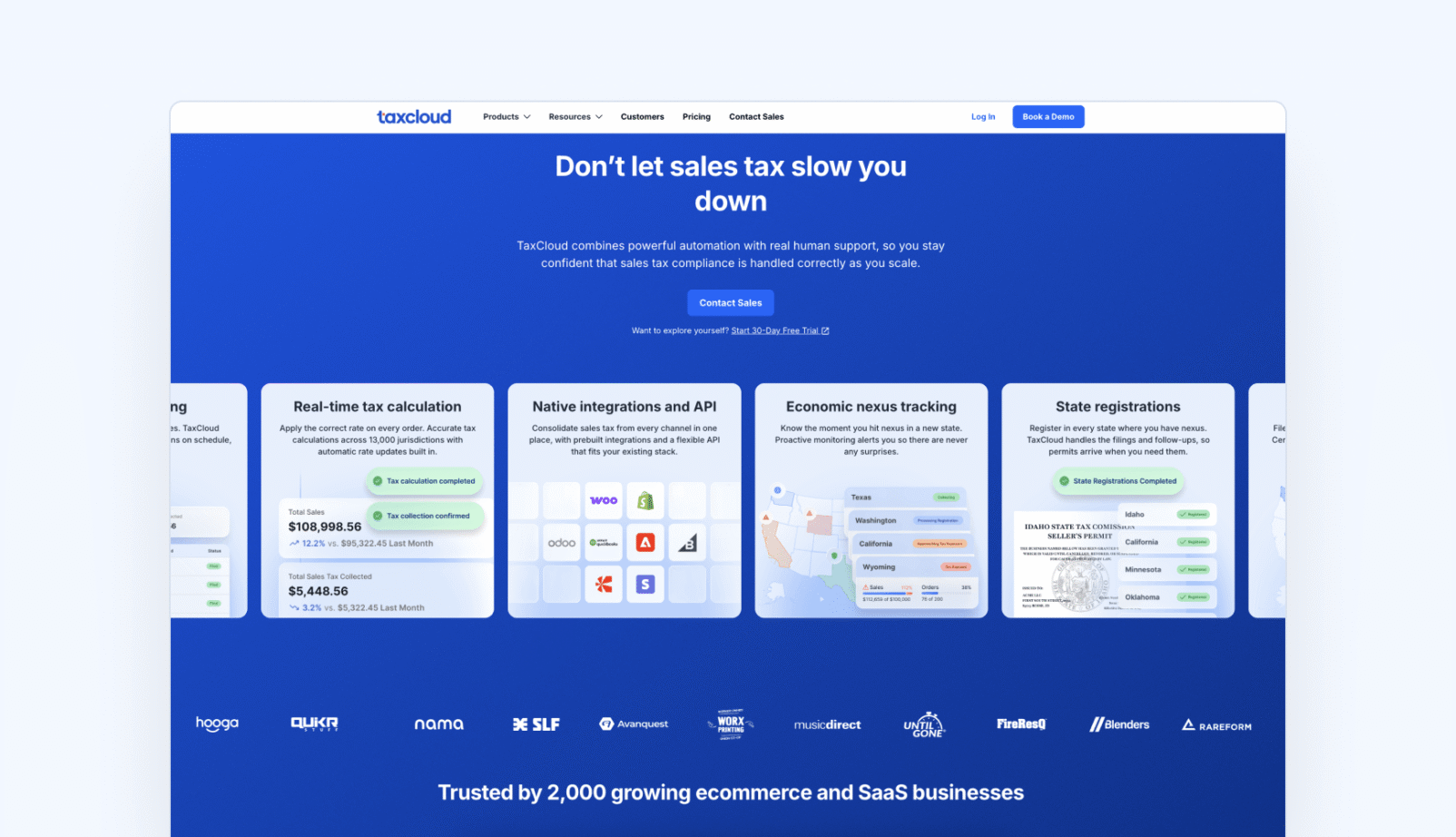
Overview: TaxCloud is sales tax compliance software built for growing multi-state ecommerce businesses in the U.S. and Canada. Its core strength is giving businesses a complete picture of their nexus obligations: consolidating orders from direct integrations, marketplaces, CSV uploads, and API connections across all sales channels. Unlike enterprise platforms that add complexity as you scale, TaxCloud removes it, combining automated tracking, filing, and SST savings with responsive U.S.-based support from real sales tax experts.
Key features:
- Multi-channel sales tax tracking: TaxCloud integrates with ecommerce platforms like Shopify, WooCommerce, and BigCommerce, captures your orders across marketplaces (including Amazon, Walmart, Etsy, and eBay) and more.
- Daily nexus recalculation: TaxCloud recalculates economic nexus daily, so you never risk falling behind on collecting sales tax.
- Automated sales tax registration and filing: TaxCloud streamlines the process of registering your business with states where you have nexus and automatically files sales tax returns on your behalf.
- SST program benefits: TaxCloud is a Certified Service Provider (CSP) for the Streamlined Sales Tax Program. Working with an SST CSP can reduce your compliance burden and give you access to free filing in 24 states.
- U.S.-based support: TaxCloud’s responsive U.S.-based support team is available by phone and email and steps in to provide comprehensive sales tax audit support.
Limitations:
- U.S. and Canada only: TaxCloud focuses on U.S. and Canadian sales tax compliance. Businesses with VAT obligations in other regions will need a separate solution.
- Some integrations do not support real-time tax calculation: Real-time calculation is available but scope varies by integration. Speak with a TaxCloud representative for details.
Pricing:
- Economic nexus tracking included across all TaxCloud plans.
- 30-day free trial with historical order data upload to identify nexus exposure.
- After trial, paid plans at $19/month for continued access.
Bottom line: TaxCloud is our top pick for mid-market ecommerce businesses that want sales tax handled correctly in the background — without enterprise pricing or the risk of navigating compliance alone. It’s the rare platform that combines automation with real human accountability.
Learn how TaxCloud helped sustainable apparel brand Rareform reduce filings by 60% and focus on growth instead of taxes.
Avalara purposefully hid SST savings to have us pay more. Just on principle, I was like — okay, I’m switching. The onboarding and support process has been great. And TaxCloud really feels like an ethical company that wants to partner with other companies and wants what’s best for them. I couldn’t think of one reason to not switch over.
2. Avalara

Best for: Enterprise-scale businesses with global operations and highly complex tax needs.
Overview: Avalara is an enterprise-grade sales tax compliance software built for global businesses that need to track economic nexus in the U.S., E.U., and beyond. It supports sales tax tracking across 190+ countries and offers an enormous range of integrations, including for industry-specific ERP systems. However, Avalara is highly complex and its pricing is opaque, so it’s not the best choice for most SMBs and mid-size sellers that don’t need enterprise-level features or fees.
Key features:
- Global sales tax tracking: Avalara tracks economic nexus and calculates real-time sales tax, VAT, and GST obligations across the U.S. and 190+ countries worldwide.
- SST participation: Avalara is a CSP for the SST program, so you get free filing in 24 states.
- Large integration library: Avalara offers direct integrations for 150+ ERPs (including NetSuite, Odoo, and SAP) as well as all major ecommerce and accounting platforms.
- Additional compliance services: Avalara offers tools for tracking physical nexus, cross-border exemption certificates, and property taxes, which could be useful for enterprise businesses that have physical locations overseas.
Limitations:
- Weekly nexus recalculation: Avalara only recalculates sales tax nexus on a weekly basis, so you could cross a threshold without realizing it. (Source: https://knowledge.avalara.com/bundle/dqa1657870670369_dqa1657870670369/page/tpp1742975435843.html)
- Complex platform structure: Many small businesses pay for features they don’t use and face long implementation timelines.
- Not transparent about filing fees: Avalara doesn’t proactively tell customers about the SST program and doesn’t include city and county tax filings with its basic plans.
Pricing:
- Economic nexus tracking included with AvaTax suite.
- Avalara pricing is volume-based and available by quote only.
- No free trial available.
Bottom line: Avalara remains the leader for enterprise-scale businesses that need to manage global tax obligations that stretch beyond just sales taxes and VAT. But for small and medium-sized businesses focused on the U.S. market, Avalara is unnecessarily complex and expensive.
3. TaxJar

Best for: Small digital businesses that need to track economic nexus from marketplace sales.
Overview: TaxJar is a small business-focused economic nexus tracking tool that’s a sister software to Stripe Tax and works well for marketplace sellers. It integrates with all major ecommerce marketplaces and automates sales tax filings while keeping sales tax tracking as simple as possible. However, TaxJar isn’t an SST participant and offers limited customer support, so it’s not the best choice for fast-growing businesses.
Key features:
- Marketplace sales tax tracking: TaxJar integrates with Amazon, Walmart, Etsy, and eBay for simple sales tax tracking across all major marketplaces.
- Real-time sales tax calculation: TaxJar automatically calculates sales tax at checkout in ecommerce platforms like Shopify, BigCommerce, and WooCommerce.
- Daily nexus recalculation: TaxJar recalculates economic nexus daily so you never fall behind on collecting sales tax.
- Automated filing and reporting: TaxJar files taxes for your business automatically and offers detailed reports that break down taxes by state, county, and city.
Limitations:
- Not an SST participant: TaxJar isn’t a CSP for the SST program, so you have to pay filing fees even in SST member states.
- Limited support: TaxJar offers customer service by email only and doesn’t provide audit support.
- U.S. tax tracking only: TaxJar doesn’t track economic nexus in Canada or the rest of the world.
Pricing:
- Economic nexus tracking included with all plans.
- 30-day free trial with historical order data upload.
- Paid TaxJar plans start from $39/month + $50/filing.
Bottom line: TaxJar is a user-friendly solution for small marketplace sellers that only sell within the U.S. and only cross sales tax nexus thresholds in a few states. Filings are relatively expensive and TaxJar isn’t an SST participant, so growing businesses could see their costs quickly spiral out of control.
4. Anrok

Best for: Well-funded SaaS and subscription companies.
Overview: Anrok offers sales tax compliance software built to meet the specific needs of subscription software businesses. It handles subscription invoicing and sales tax, VAT, and GST across 100+ countries worldwide. Anrok also tracks physical nexus, making it a strong solution for businesses with a remote, global workforce.
Key features:
- Billing integrations: Anrok integrates with Stripe, Xero, Chargebee, Bill, and more to automate sales tax collection on subscription payments.
- E-invoicing: Anrok offers e-invoicing specifically designed for subscription-based billing so you can meet VAT reporting requirements in real-time.
- HR integrations: Anrok integrates with HR and payroll software like ADP, Rippling, and BambooHR to automatically track where you have physical nexus in addition to economic nexus.
- Exemption tracking: Anrok offers B2B-focused exemption certificate management for hundreds of jurisdictions.
Limitations:
- Only relevant for subscription businesses: Anrok’s nexus tracking tools aren’t suitable for ecommerce sales or B2C exemption management.
- Email support only: Anrok offers support by email only and priority support requires an upgraded plan.
- Opaque pricing: Most companies will need a custom plan and pricing is generally more expensive than for SMB-focused tools.
Pricing:
- Economic nexus tracking included with all plans.
- Paid plans start at $100/market/month.
- No free trial available.
Bottom line: Anrok is an excellent compliance solution for SaaS businesses with remote employees around the globe. But its tools aren’t designed to support ecommerce and the pricing structure is prohibitive for many U.S.-focused companies.
5. Kintsugi

Best for: Startups and small businesses that want to achieve compliance quickly.
Overview: Kintsugi caters specifically to SaaS and ecommerce startups that want to automate sales tax compliance quickly and keep costs to a minimum. It offers lightning-fast setup for ecommerce sales tax tracking, fully automated registration and filing, and even a free starter plan. However, Kintsugi isn’t as mature as some other economic nexus tracking tools, which can be limiting for mid-market businesses.
Key features:
- Global sales tax coverage: Kintsugi tracks economic and physical nexus across 100+ countries.
- Tax notification mailbox: Kintsugi collects all your tax notices and filing reminders in a single inbox and uses AI to alert you to important messages.
- AI-powered product classification: Kintsugi uses AI to classify your goods and services into sales tax categories, saving significant time compared to manual classification.
Limitations:
- Missing integrations: Kintsugi has 30+ integrations, but it’s missing key integrations for marketplaces like Walmart Marketplace and ecommerce platforms like WooCommerce and Magento.
- Expensive filing fees: Kintsugi charges $75 per registration and filing, and it isn’t an SST participant so you also have to pay state filing fees.
- Limited customer support: Kintsugi’s live chat support only connects you with an AI chatbot, and the company won’t help defend you during an audit.
Pricing:
- Free plan includes economic nexus tracking with historical order upload.
- Filing requires paid plan starting at $75/filing.
Bottom line: Kintsugi makes it easy and affordable for startups to track economic nexus, especially if you sell internationally. But it’s much less attractive once your business begins growing because of missing integrations and expensive filing fees.
6. Numeral
Best for: Small ecommerce businesses operating in a limited number of states
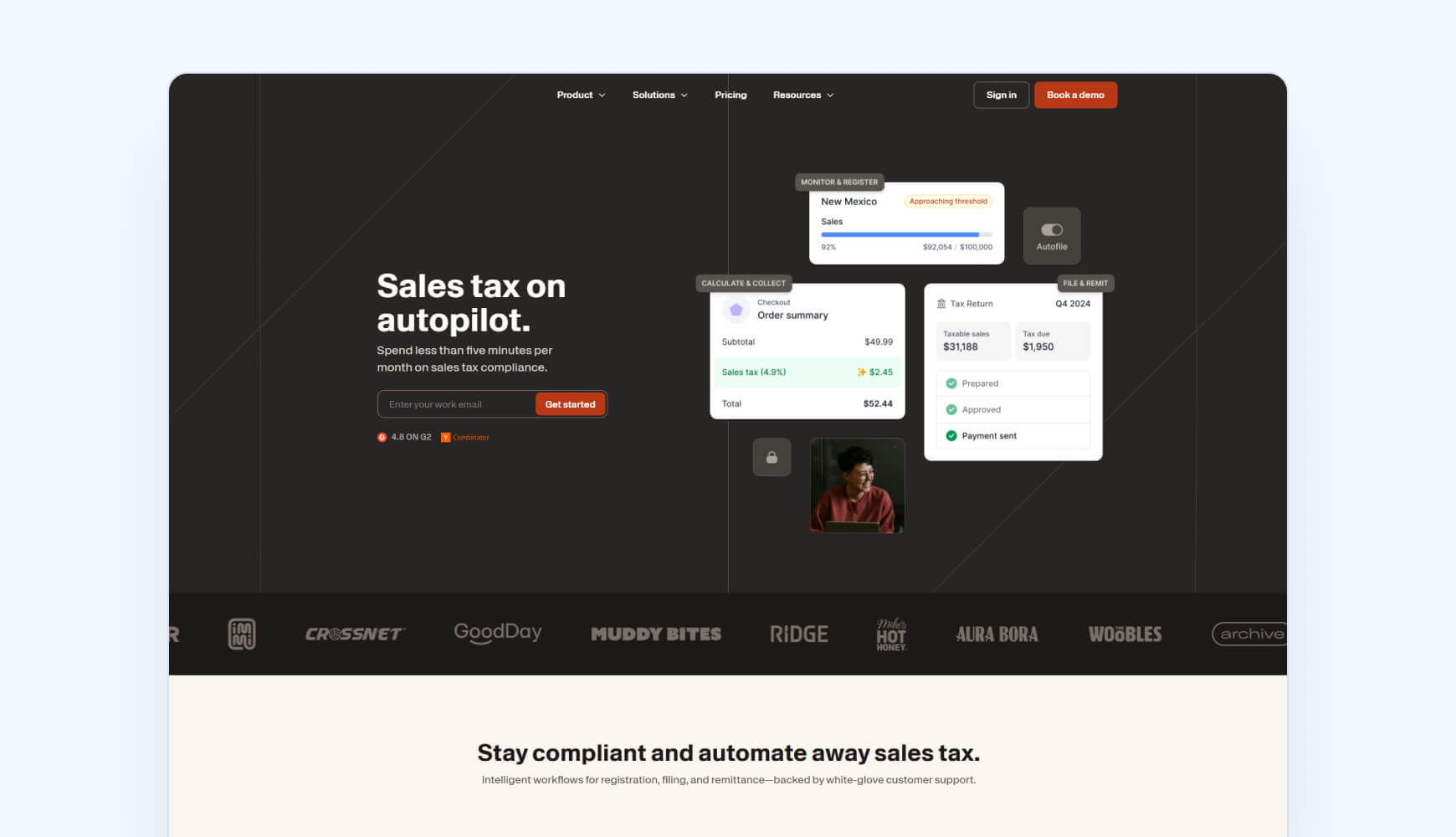
Overview: Numeral is a small business-focused sales tax software that offers free economic nexus tracking and integrations for all major ecommerce marketplaces. It fully automates registrations and filings in states where you have nexus and guarantees the accuracy of your filings. However, Numeral’s pricing is expensive and the platform isn’t an SST participant, so it’s most suitable if you only need to file sales taxes in a small number of states.
Key features:
- Automatic registration: Numeral automatically registers your business with each state where you have nexus, so you never have to contact state agencies to get sales tax permits.
- International nexus tracking: Numeral tracks sales tax nexus in 70+ countries and automates VAT and GST filings.
- Exemption certificate management: Numeral enables customers to upload exemption certificates directly to the platform and automatically applies exemptions when calculating sales tax.Responsive customer support: Numeral’s support team is readily available by live chat or email.
Limitations:
- Limited integrations: Numeral integrates with major ecommerce marketplaces, but it has only a few pre-built connectors for ecommerce and ERP platforms.
- API access requires upgrade: You must sign up for the top-tier Pro plan in order to access Numeral’s API.
- Not an SST participant: Numeral isn’t a CSP for the SST program, so you’ll pay registration and filing fees even in SST states.
Pricing:
- Free plan includes economic nexus tracking with historical order upload.
- Filing requires paid plan starting at $150/registration and $75/filing.
Bottom line: Numeral can be extremely convenient for small ecommerce businesses that primarily sell on marketplaces and only have nexus in a few states. But we don’t recommend it for growing businesses because of the steep filing costs and limited integrations.
Get a full economic nexus picture with TaxCloud
TaxCloud is the overall best software for economic nexus tracking in 2026 because of its ecommerce integrations, tax automations, and comprehensive customer support. It makes compliance simple so you can focus on growing your business.
Even better, TaxCloud offers transparent, usage-based pricing that scales with your business. It’s one of just six CSPs for the SST program, so you’ll pay no registration or filing fees in 24 member states.
Ready to simplify economic nexus tracking?
Talk to our team to see how TaxCloud tracks thresholds across all your sales channels and automates multi-state compliance for your business.
Economic nexus tracking — FAQs
Yes, in most cases you need separate software for tracking economic nexus even if your marketplace collects sales tax. Marketplaces don’t collect sales tax or file returns for sales made through your own website. In addition, since each marketplace only tracks sales on its own platform, you could cross sales tax thresholds across your sales channels without any one marketplace flagging the change.
It’s possible to track economic nexus manually using Shopify’s built-in reporting tools, but it’s a lot of work. You must break down your taxable sales by state and compare them with each state’s nexus threshold. Economic nexus tracking software like TaxCloud integrates with Shopify to automate this process and automatically register and file returns once you cross a threshold.
Most nexus tracking platforms will automatically register and file sales tax returns for your business once you trigger economic nexus. It’s important that your software integrates with all your sales channels, including ecommerce marketplaces, so it doesn’t undercount your transaction volume.
You can use different software for tracking economic nexus and filing sales tax returns, but it’s not recommended. Using multiple software tools increases the likelihood of undercounting sales, which could lead to back taxes and penalties. Using a comprehensive sales tax compliance software like TaxCloud is the best way to stay ahead of your tax obligations.
Economic nexus thresholds don’t change on a set schedule. However, states occasionally modify their thresholds and there could be several states making adjustments in any given year.
For example, Kentucky recently removed its 200-transaction limit for economic nexus. Using economic nexus tracking software like TaxCloud helps you stay ahead of these tax changes.
Yes, a VDA allows your business to address past sales tax obligations over a limited lookback period without penalties. However, you are responsible for monitoring economic nexus and knowing your sales tax obligations in each state where you have a VDA going forward.