Keep calm and be audit ready: Best sales tax audit compliance solutions


What’s the best sales tax software with audit protection?
In most cases, audit defense is simply out of scope for automation-focused sales tax platforms.
Most tax solutions are designed to integrate with an online marketplace to calculate accurate rates, automatically file returns, monitor sales tax nexus obligations across multiple states. However, if a state challenges those returns and initiates an audit, these services don’t provide tools to help businesses navigate that process.
That distinction matters when choosing a tax partner. During an audit, the quality of your documentation and the level of support available can determine how quickly the audit is concluded.
Audit defense services vary by platform. While many tax solutions limit their role strictly to data accuracy, a few offer structured help or audit response services.
In this guide, we’ll take a closer look at the leading sales tax software vendors and the level of audit protection that each one provides.
| Audit Readiness | Audit Defense | Audit Guarantee | Market Focus | |
|---|---|---|---|---|
| TaxCloud | ✅ | ✅ (add-on) | ❌ | Mid-market |
| Avalara | ✅ | ❌ | ❌ | Enterprise |
| TaxJar | ✅ | ❌ | ❌ | SMB |
| Anrok | ✅ | ❌ | ❌ | SaaS / SMB |
| Kintsugi | ✅ | ❌ | ❌ | Startup |
| Numeral | ✅ | ❌ | ❌ | SMB / Mid-market |
| Sovos Taxify | ✅ | ❌ | ❌ | Enterprise |
| Stripe Tax | ✅ | ❌ | ❌ | SMB / Global |
| TaxValet | ✅ | ✅ (add-on) | ✅ (TaxValet errors only) | Enterprise |
| Vertex | ✅ | ❌ | ❌ | Enterprise / Global |
Before diving into software comparisons, it helps to clarify what “audit protection” means in the context of sales tax calculation, capture, and remittance.
Sales tax platforms use these terms in different ways, and this causes confusion for shoppers. For the purposes of this article, we’ve broken this terminology into three separate categories:
- Audit readiness. The platform provides organized records, filings, and certificates that make audits easier to manage.
- Audit defense. The platform provides hands-on help by preparing documentation on the client’s behalf or, in unique cases, by responding directly to state requests as a primary contact.
- Audit guarantees. Rarely, a platform may offer to cover any tax penalties if its own calculations caused the error.
When doing your own research, please note that our definitions may not align with the vendor’s own terminology. However, we’ve done our best to standardize this language for clarity and comprehension.
Lastly, keep in mind that audit protections should be in place long before an auditor calls, because being selected for an audit is largely out of your control (even if your filings are flawless). A reliable sales tax platform will minimize risk through accuracy, automation, and transparent record-keeping. In other words, audit protection should be built into many of the systems and tools the platform provides.
For example, many brands offer real-time rate calculations and nexus tracking but don’t offer exemption certificate management, which is essential in many markets. If you choose to work with a platform that doesn’t provide features essential to your business model, note those gaps and take steps to compensate for them.
With those basics out of the way, let’s take a closer look at how different platforms handle audit protection.
1. TaxCloud
- Audit support level: Audit defense
- Cost: Paid plans start at $19/month. Audit defense available as a separate add-on. (Details here.)
- Audit-relevant features: Real-time calculations, nexus tracking, exemption certificate storage, SST filing, reconciliations.
- Best for: SMBs and ecommerce sellers seeking affordable compliance with hands-on audit protection.
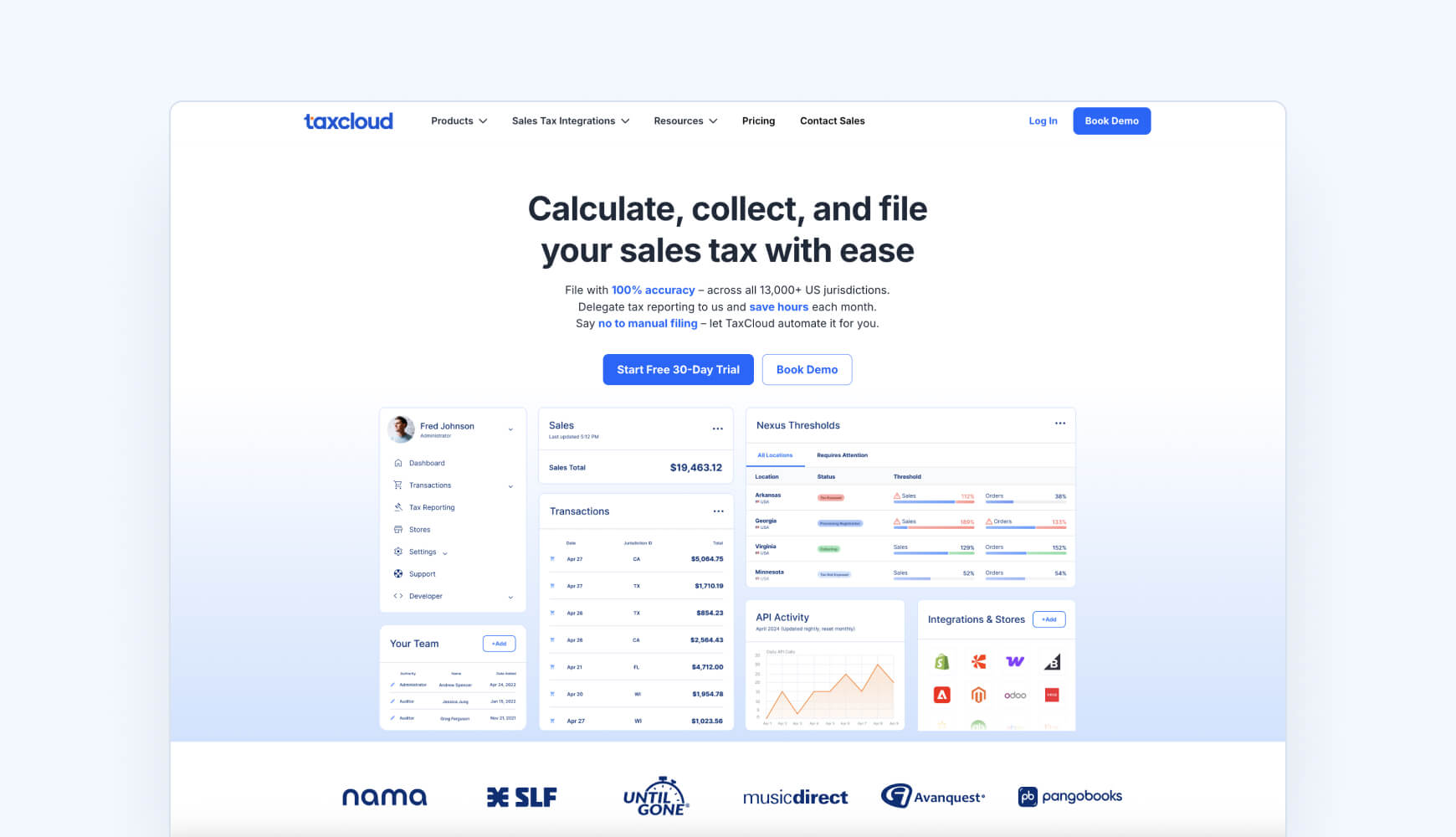
TaxCloud is one of the few sales tax platforms designed for small- and mid-sized businesses that includes a true audit defense program. While most automation tools stop at tax calculation and nexus tracking, TaxCloud customers can add dedicated audit support for a flat monthly fee.
With the Audit Support add-on, our specialists will gather and organize documentation, including up to 12 amended returns, so that companies can respond to state requests in an efficient manner. They can also help with reconciliation processes to help spot discrepancies. For customers engaged with the SST program via TaxCloud, we can also act as a primary contact for the duration of the audit.
However, as with most brands on this list, there are a few things that are out of scope for TaxCloud’s audit defense. TaxCloud cannot provide audit or tax advice, coordinate an audit strategy, or assist with transactions managed outside the TaxCloud platform.
Because TaxCloud’s Audit Support is built on top of our tax engine, nexus tracking, and reconciliation tools, customers benefit from complete visibility into their tax data. That integration helps prevent exposure in the first place and simplifies audit responses when needed.
Try TaxCloud for free
First-time signups receive a 30-day trial of our Premium subscription plan!
2. Avalara

- Audit support level: Audit readiness (no formal support)
- Cost: Variable based on volumes and services. (Details here.)
- Audit-relevant features: Automated calculations, managed returns filing, exemption certificate management, detailed reporting.
- Best for: Mid-market and enterprise brands looking for large-scale integrations.
Avalara is one of the most widely recognized names in the sales tax software industry and is known for its robust capabilities and wide collection of integrations. The platform provides real-time tax calculations, managed filings services, strong reconciliation tools, and more.
Unfortunately, when it comes to audit defense, Avalara doesn’t have much to offer beyond the basics. While the platform offered audit defense as recently as 2022, the company sold its audit defense line and associated client list to Ryan, a global tax services firm, in 2023. Since then, Avalara has not offered direct audit representation or defense within its core platform.
Instead, Avalara customers rely on the platform’s record-keeping, calculation engine, and document archives to prepare for audits. For teams who need added support, working with a third-party advisor or dedicated accounting firm is the only viable option.
As a platform, Avalara’s strength lies in its ability to automate and scale its processes. While it’s still a great fit for companies looking for wide coverage and strong integrations, direct audit defense now falls outside of its current scope of service.
3. TaxJar

- Audit support level: Audit readiness (no formal support)
- Cost: Varies based on order volume. (Details here.)
- Audit-relevant features: Real-time sales tax calculations, automated returns filings, nexus rackings, detail transaction reporting.
- Best for: Small to mid-sized e-commerce sellers who need simple automation for Shopify, WooCommerce, or Amazon storefronts.
TaxJar, one of two Stripe-owned sales tax brands on our list, is best known for its ease of use and deep e-commerce integrations. The platform automates sales tax calculations and filings across multiple states, making it a popular option for online sellers who need to minimize manual compliance tasks.
Similar to Avalara, TaxJar’s audit protection stops at the transparency and reporting provided by its sales tools. If audited, brands can leverage the reports and records stored as part of TaxJar’s automated services, but the platform provides no assistance in preparing documentation or communicating with state agencies. If an audit notice is issued, users are expected to manage the process directly or through external accounting firms and tax professionals.
TaxJar’s customers enjoy strong automation and filing support. The platform’s built-in services (calculations, nexus tracking, automated filings, etc.) make it a reliable compliance tool, but companies who want hands-on audit defense or guidance will need to look elsewhere for support.
4. Anrok
- Audit support level: Audit readiness (no formal support)
- Cost: Variable based on selected plan.
- Audit-relevant features: Automated calculations for SaaS subscriptions, billing integrations, nexus tracking, exemption certificate collection, real-time reporting.
- Best for: SaaS and digital service companies managing complex subscription or usage-based revenue.
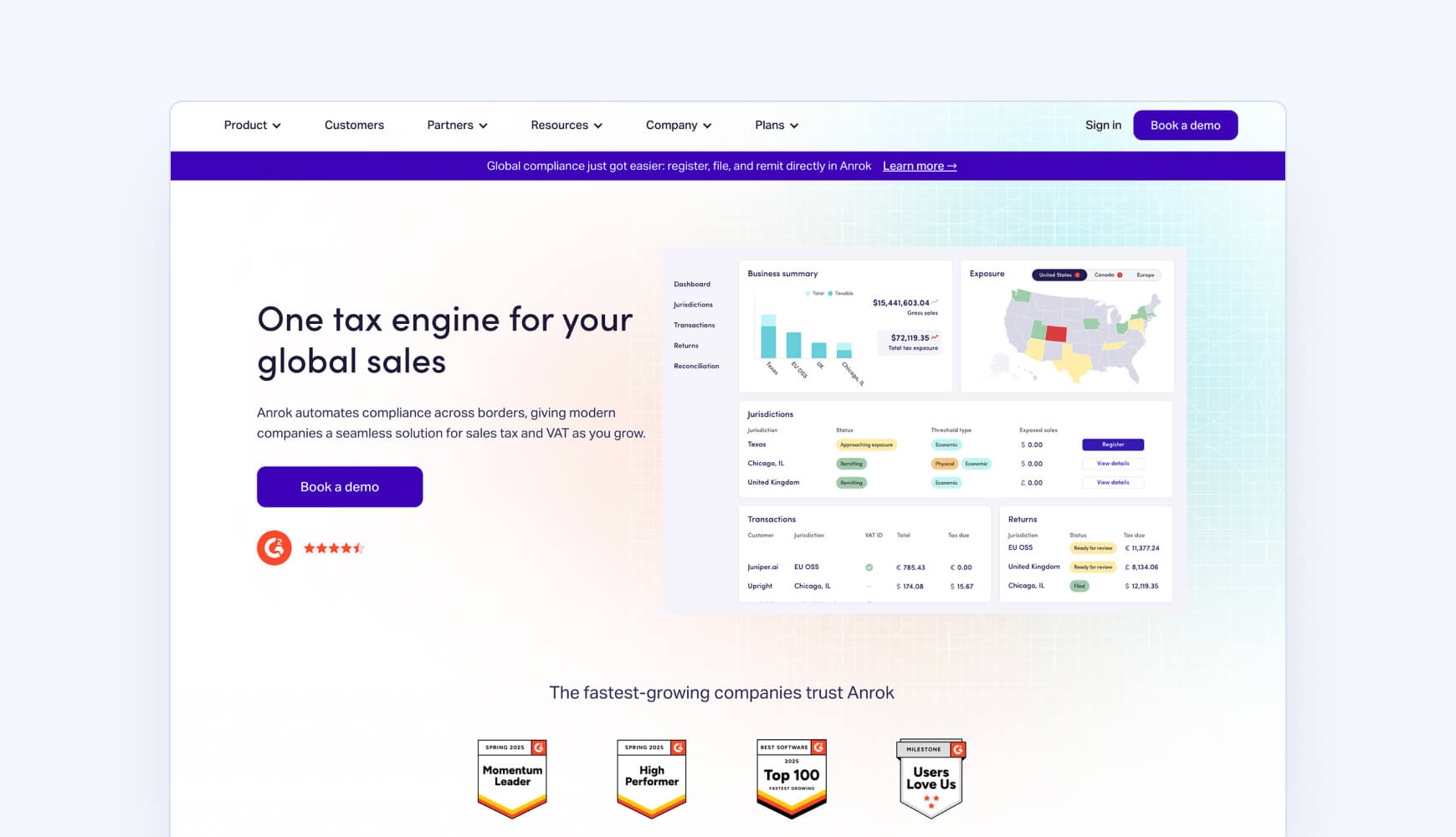
Anrok is a newer player in the sales tax automation space and is primarily focused on SaaS and digital-first businesses. The platform integrates directly with billing solutions like Stripe, Chargebee, and Recurly so that finance teams can automate calculations, filings, and nexus tracking in one system. (Taxcloud can do this too via our Chargebee integration.)
In terms of audit protection, Anrok is limited to readiness. The platform can provide detailed transaction records, certificate tracking, and jurisdiction-level reporting to simplify audits, but it doesn’t offer any kind of audit defense or direct assistance when an audit is triggered. Customers are responsible for managing state correspondence or hiring external accounting support when an audit is triggered.
Overall, Anrok stands out as a great brand for Saas companies. Its feature list is particularly well-suited to recurring-revenue companies that need precise and scalable automation. However — specifically for audit defense — Anrok users will need to partner with external accountants and advisors or in-house experts when dealing with an audit.
5. Kintsugi
- Audit support level: Audit readiness (no formal support)
- Cost: Custom pricing based on revenue and transaction volume.
- Audit-relevant features: Real-time tax calculation, transaction analytics, nexus tracking, multi-jurisdiction reporting.
- Best for: Lean startups and growth-stage companies using automation to keep costs and headcount low.
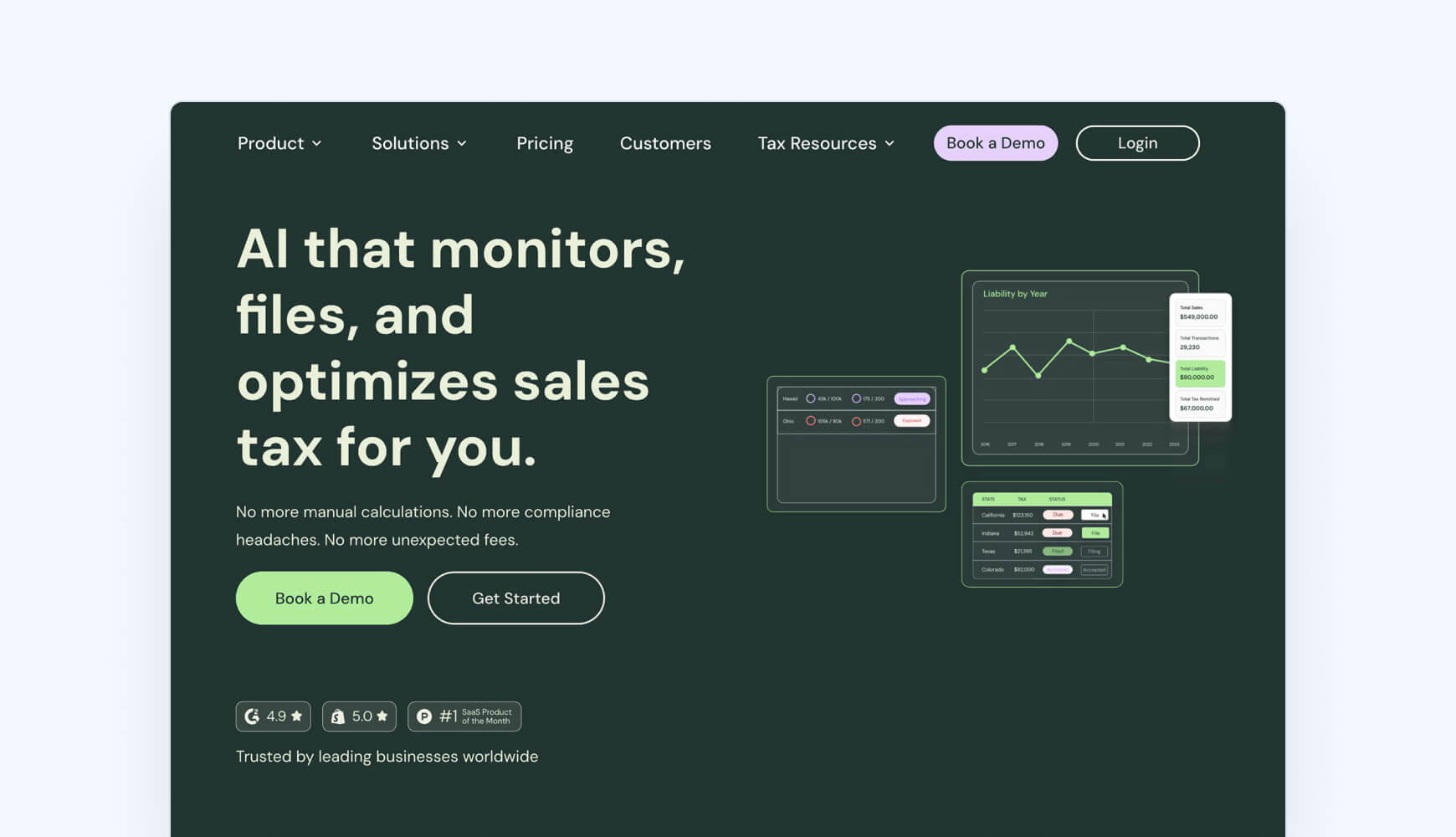
Kintsugi is one of several modern sales tax automation platforms built for speed, transparency, and real-time reporting. The software focuses on simplifying rate calculations, nexus tracking, and analytics for companies that operate across multiple states or sales channels. The platform also introduces AI-powered support for every paid plan and offers end-to-end integrations for billing, e-commerce, and HR/payroll systems.
Like most automation-first providers, Kintsugi’s audit protection is limited to readiness. While the platform helps brands maintain accurate records and provides detailed reporting that can simplify audit preparation, it doesn’t offer audit defense or assistance when responding to state requests. In the event of an audit, customers are expected to manage the process independently or via a CPA firm.
Kintsugi’s advantage lies in its ease of use and reporting capabilities. The modern interface and built-in analytics tools make it a good fit for startups and fast-growing companies that need visibility into sales tax obligations without the overhead costs from using traditional providers (Avalara, Vertex, etc.) or enterprise systems. However, for true audit defense or representation, users will need external support.
6. Numeral
- Audit support level: Audit readiness (no formal support)
- Cost: Custom pricing based on company size and transaction volume
- Audit-relevant features: Automated rate calculation, multi-entity filing management, real-time reconciliation, advanced reporting.
- Best for: Startups and mid-market companies looking for automated compliance and visibility into tax data accuracy.
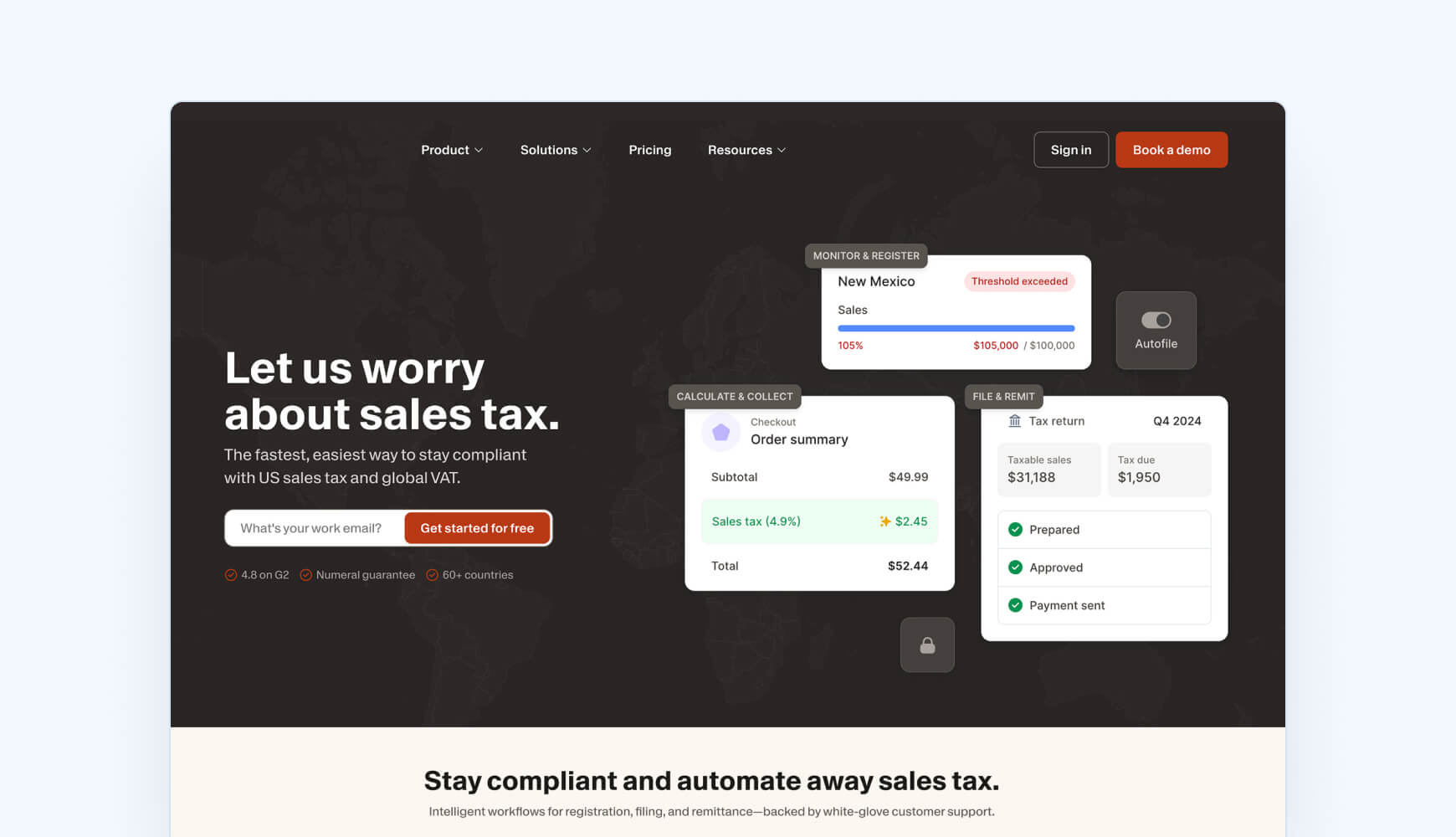
Numeral is a compliance automation platform designed to help finance and operations teams simplify compliance workflows. The software automates rate calculations, return preparation, and reconciliation, so users can maintain a clear view of their tax data without a huge, manual undertaking. The platform offers pricing comparable to Kintsugi or TaxCloud and even offers a guarantee that sales tax will be filed on time, or they will cover the penalties and interest charges.
In terms of audit protection, Numeral offers readiness solutions but no direct defense or representation. The platform organizes transactions, filings, and reports in ways that can make audits easier to manage, but users are responsible for pulling and preparing the data, coordinating with state agencies, and working with external accountants to deal with the audit.
Numeral is largely focused on accuracy and visibility through automation. Real-time reconciliation and reporting features make it a good fit for teams who need tight control of compliance data, and the Numeral guarantee can add extra peace of mind. But, just like Kintsugi and other automation-focused platforms, Numeral stops short of providing dedicated audit support.
7. Sovos

- Audit support level: Audit readiness (no formal support)
- Cost: Custom pricing based on filing volume and entity complexity (Details here.)
- Audit-relevant features: Automated tax calculation, managed returns, exemption certificate management, secure record storage, advanced reporting.
- Best for: Enterprise and high-volume sellers seeking managed compliance with strong audit readiness tools.
Sovos offers tax solutions geared heavily toward larger organizations looking for a mix of automation and managed filing support. The platform can automate sales tax calculation and manage returns while centralizing exemption certificates and records management to improve data accuracy. Many of these features are broken down into modular components, which makes building a Sovos solution more of an “a la carte” experience than selecting a single package.
As with many brands, Sovos provides robust audit readiness tools without offering audit defense or direct representation. In the event of a state audit, Sovos can supply all documentation and filing records through its compliance portal, but customers will need to manually compile that data, communicate with tax authorities, and engage third-party advisors for audit assistance.
In some ways, Sovos’s lack of audit support makes sense. Enterprise teams are likely to have in-house legal and financial teams that can more readily comply with audit requests. For smaller brands who need an extra pair of hands to offset the added workload incurred by an audit, TaxCloud may be a better fit.
8. Stripe Tax

- Audit support level: Audit readiness (no formal support)
- Cost: Per transaction and annual plans available.
- Audit-relevant features: Real-time tax calculation, automated collections and remittance, reporting dashboards.
- Best for: Developers and online businesses looking for lightweight, global tax automation built directly into Stripe.
Stripe Tax shines for its ease of integration and is the second of the Stripe-owned tax companies on our list (the other being TaxJar). The platform automatically calculates sales tax, VAT, and GST transactions processed through Stripe, making it an appealing choice for newer brands who are already integrated with the Stripe ecosystem. Setup requires minimal configuration, and reporting tools are built directly into the Stripe dashboard.
Like most other brands on our list, Stripe Tax only provides data and basic readiness features. Users have access to transaction reports and exportable records (similar to what TaxCloud offers), but Stripe doesn’t provide support when preparing documentation, filing amended returns, or communicating with state and local authorities. Companies are responsible for managing the audit process themselves or working with external partners to reach compliance.
For brands seeking a quick way to calculate and remit taxes as part of Stripe’s payment stack, Stripe Tax is a good fit. The platform provides a simple way to stay compliant with taxes on a global scale, assuming you’re comfortable sticking with Stripe for payment processing. But, for brands seeking structured audit support or dedicated defense, Stripe Tax has little to offer.
9. TaxValet
- Audit support level: Audit defense
- Cost: From $1k-$3k/ month, depending on services.
- Audit-relevant features: Managed filings, real-time rate calculations, exemption certificate management, nexus monitoring.
- Best for: Mid-market and enterprise brands seeking full-service compliance management with hands-on audit representation.
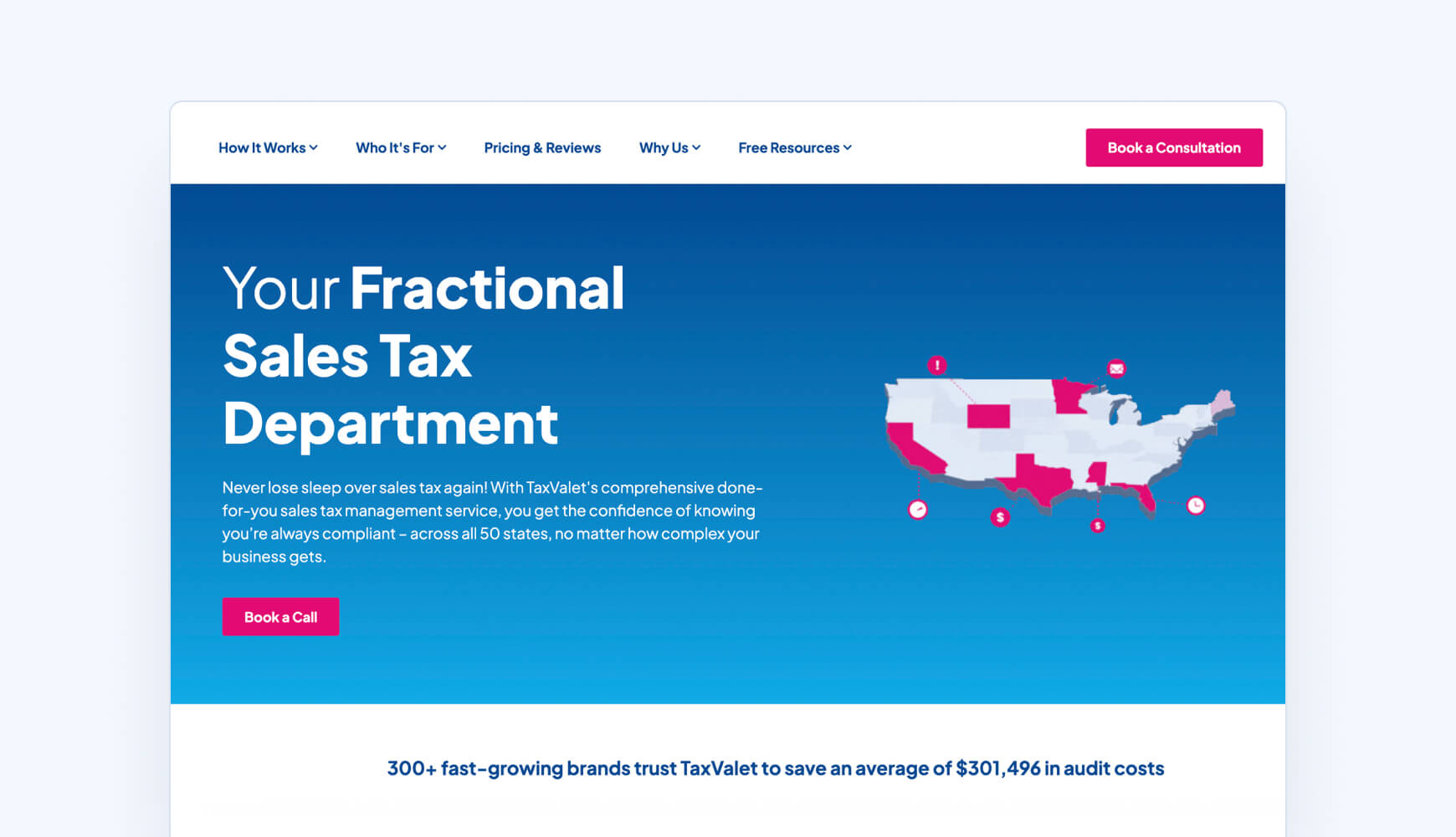
TaxValet takes a managed-service approach to sales tax compliance and bills itself as an all-in-one fractional tax department. Rather than offering a self-serve or DIY platform like many automation-focused solutions, the company acts as an outsourced compliance team that can handle registrations, rate calculations, return filing, and communication with state agencies. Brands hand all of their tax requirements over to TaxValet, and the team takes care of the rest.
Because TaxValet is a fully managed service, audit protection is a core component of their business and a key differentiator for the brand. The company provides full audit defense for clients on eligible plans, which includes document preparation, expert representation, and working directly with state auditors. They’ll also cover any penalties, interest, or taxes that arise as a result of their own work. This makes TaxValet one of the few vendors — alongside TaxCloud — that offers genuine, hands-on defense rather than readiness through tools and systems.
The downside to this approach is that TaxValet’s costs are notably higher than many other competitors in the space. Pricing is structured around filing complexity and volume, which can scale quickly as businesses become more complicated. However, even for smaller companies like e-commerce sellers, the basic costs may exceed budgets and put TaxValet’s audit and tax services out of reach.
10. Vertex

- Audit support level: Audit readiness (no formal support)
- Cost: Custom, enterprise pricing. (Details here.)
- Audit-relevant features: Automated tax determination, global indirect tax support, exemption certificate management, reporting and reconciliation tools.
- Best for: Large enterprise and multinational corporations with complex tax environments.
Vertex is one of the oldest and most established names in the sales tax and indirect tax software market. The platform specializes in enterprise-level automation and is capable of providing advanced tax calculation, global VAT and GST compliance, and deep integrations with ERP systems like SAP, Oracle, or NetSuite. It’s a commonly sought alternative to other big players like Avalara and Sovos, and its multi-faceted solution provides greater flexibility when selecting services.
In terms of audit protection, Vertex offers tools that help to lower risk and raise readiness. Users can take advantage of robust reporting, reconciliation tools, and exemption certificate management to support audit preparation, but Vertex doesn’t provide direct audit representation or communication with government authorities. Large organizations typically handle that work through internal tax departments or existing accounting firms, so Vertex’s lack of support in this area isn’t unexpected.
As a platform, Vertex can easily scale into a global market and integrate with convoluted ERP systems. The automation and reporting that Vertex offers is extensive, but the platform is built for enterprise brands with their own support infrastructure. That, plus the associated costs, puts Vertex out of reach for smaller companies who might want or need hands-on audit assistance.
Checklist: How to choose sales tax software with audit protection
For many brands, choosing the right sales tax solution comes down to automation and integrations. If you have a plan in place for how to handle audits and out-of-scope regulatory issues, focusing on connectivity and automation makes total sense.
However, if you’re looking for audit protection and a sales tax platform that can offer additional protections, the criteria changes.
Here’s a small checklist that you can use to evaluate vendors based on a combination of compliance performance and real-world audit protection:
- Evaluate audit protection scope. Understand whether the platform offers audit readiness, audit defense, or an audit guarantee. Match that level of your risk tolerance and internal resources.
- Confirm data accuracy and documentation. Look for tools that maintain organized transaction records, certificates, and filings so you can easily gather and provide evidence when an audit occurs. Many platforms provide these services, but some do it better than others.
- Check for nexus tracking and alerts. Your provider should notify you when you cross registration thresholds in new states or jurisdictions.
- Review exemption certificate management. If your company sells to resellers, nonprofits, or tax-exempt customers, make sure the provider you choose can capture and store exemption certificates.
- Assess filing automation and reporting. Strong filing workflows reduce late returns and missed payments. Automation can help with filing and remittance, all of which is commonly (but not always!) supported by tax platforms.
- Inquire about audit support or add-on services. Even if you don’t need full defense, having a path to expert help can be a game-changer. Confirm whether audit assistance is available, what it costs, and how it’s delivered.
While it’s not possible to completely eliminate audit risk, the best sales tax software keeps your brand compliant with all regulations and prepared in the event an audit is triggered.
Platforms like TaxCloud combine automation, accurate filings, and optional audit support designed specifically from SMBs, giving you access to affordable, end-to-end compliance coverage when you need it.
Want to learn more?
Sign up for a free 30-day trial or get in touch with a product expert to learn how TaxCloud can help you calculate, collect, and file your sales tax with ease.
Sales tax audit compliance solutions — FAQs
Audit protection typically refers to the level of support a tax platform provides if your business is selected for a state audit.
At the most basic level — what we’ve dubbed as “audit readiness” for the purposes of this article — this includes organized transaction data, filing records, and exemption certificates that make audits easier to manage. Most companies provide this level of support simply by ensuring that your tax data is organized and easily accessible.
Some providers extend support to “audit defense,” where specialists can help prepare documentation or communicate with auditors on your behalf. However, your mileage will vary, depending on how the company chooses to get involved. For example, TaxCloud will assist with gathering documentation but doesn’t correspond with state agencies while TaxValet will represent you directly in their capacity as your managed tax service.
A few services (TaxValet) will even offer an audit guarantee, where they cover penalties or interest if the platform’s calculations or services caused the error.
Only a few of sales tax software provides any kind of hands-on audit defense.
- TaxCloud offers full audit support as an optional add-on for SMBs. We can gather documentation and assist with reconciliations, but can’t provide audit advice or consultation. We also don’t act as the primary contact during an audit unless the company is part of the SST program and the account is managed by TaxCloud.
- TaxValet provides a fractional tax team with full representation as part of its service model. This solution is more expensive than TaxCloud since you’re essentially hiring an offsite tax team, but the service also offers an audit guarantee to cover costs if they created the error.
Most other platforms (listed above), focus on audit readiness rather than defense, meaning they provide clean records but no direct support or representation.
If you’re audited while using any of these platforms, expect to handle the lion’s share of the work alone or through external partners.
It depends on the level of service and how the platform structures these costs.
For example, audit defense with TaxCloud is an optional add-on for $99/month and is a service separate from our standard plans. This allows users who need audit defense to opt-in while brands who have an in-house team or already work with external partners to avoid paying for coverage they don’t need.
Managed compliance services like TaxValet include audit protection and defense as part of their standard pricing, but this also increases cost. Specifically, TaxValet pricing ranges from $1,000 to $3,000 per month and requires a hefty setup fee with variable monthly costs based on tax complexity and total coverage.
That said, most automation-focused tools simply don’t provide audit defense and instead offer “audit readiness” as a perk gained by keeping data organized and accessible.
If you’re registered through the Streamlined Sales Tax (SST) program via a Certified Service Provider (CSP), the CSP handles most of the audit process on your behalf.
TaxCloud, as an SST-certified provider, can act as your primary contact during an audit and coordinate directly with state agencies. This reduces your workload and ensures a consistent, accurate response to state inquiries.
If you aren’t working through a CSP, you’ll need to manage those communications yourself or hire outside help, just as you would for non-SST state audits.
No platform can make your company audit-proof. While some selections are made based on industry or discrepancies and errors in your tax filings, audits can also be initiated at random.
The best tools can help to minimize exposure through accurate calculation and automated filing, but they will never completely eliminate the risk of an audit.
To ensure accurate and timely reporting, consider solutions that include the following:
- Real-time rate calculation to prevent under- or over-collection.
- Nexus tracking and alerts for new obligations.
- Exemption certificate management and storage.
- Automated filings and reporting to catch discrepancies early.
- Audit support for extra assistance if an audit is initiated.
Together, these features reduce the change of mistakes and errors that can trigger an audit. They’ll also make audits easier to resolve, if you’re selected for that process.