How to catch up on unfiled sales tax returns



Missed sales tax filings can happen at any time, and for many reasons. The team might experience gaps when compliance providers or forget to activate an autofile system. The state may increase the required filing frequency, and the company might miss the notice.
Whatever caused the gap, the first instinct is to file the missing returns as quickly as possible. In reality, moving too quickly can cause additional problems, especially if the scope of the problem isn’t clear.
Backfiling sales taxes starts by understanding the problem and what was missed. From there, teams need to determine which returns need to be fixed, what penalties or interest will apply, and whether they need help.
In this guide, we’ll walk you through the steps you need to take to catch up on missing or unfiled sales tax returns and what to expect from the process.
Key takeaways
- A missed filing is fixable, but you’ll need to establish the full scope of the problem before taking action.
- The remediation steps you take will depend on whether you’re behind on registered returns or dealing with historical nexus exposure.
- The scope of the problem will determine if a business can manage the process internally or if a compliance partner is needed.
What is sales tax backfiling?
Sales tax backfiling is the process of preparing and submitting returns for filing periods whose deadlines have already passed. For example, if a business is registered to file quarterly but discovers that the return from the last quarter was never submitted, that return will need to be retroactively filed — backfiled — in order to bring the account current.
That said, backfiling is commonly confused with other retroactive tax solutions. That’s because it isn’t the only process for fixing past-due sales tax issues.
Here’s a quick breakdown:
- Backfiling is only meant to address returns that were required but never filed. This usually applies when a business is already registered in a state but misses one or more filing periods.
- Amending a return is used when a return was filed on time (or late), but the information on it was incorrect or needs to be corrected.
- A voluntary disclosure agreement (VDA) is generally used to address historical sales tax exposure. This approach is common when a business should have registered or collected tax in a state but failed to do so. Depending on the state or jurisdiction, VDAs can also limit lookback periods and offer penalty relief.
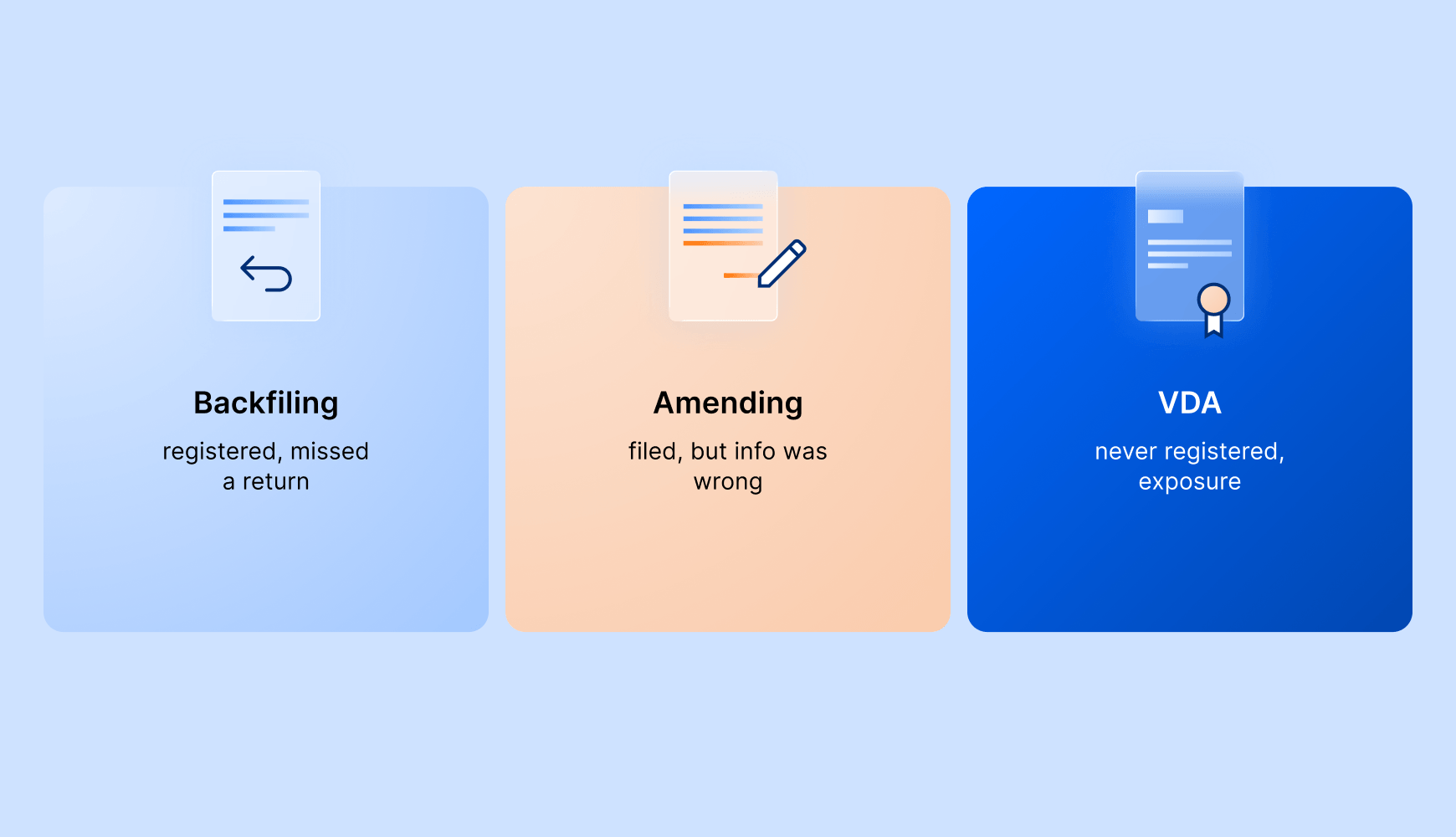
While these situations may look similar, the resolution process for each one is very different. Factors such as registration status, the number of missed returns, state requirements, and how long a business has been out of compliance will all play a role in which process should be used.
The backfiling process can also vary greatly in complexity. Small straightforward gaps can sometimes be handled by an internal finance team. Larger and more complicated problems are often best left to a compliance partner due to the amount of time and effort required to address the issue.
Why do sales tax returns get missed?
There are plenty of ways for a sales tax return to slip through the cracks, especially if a business is operating across multiple states and sales channels.
Those problems aren’t just limited to the business itself. Automated systems might fail or be set to the wrong filing frequency. Switching compliance providers could leave gaps. Someone on the team might get sick or busy, and the filing process might be overlooked.

The ecommerce marketplace problem
Specifically for digital-first and ecommerce brands, marketplaces like Walmart or Amazon can add another opportunity for missed filings.
In some scenarios, the marketplace facilitator will collect and remit tax on sales transacted on its own platform, but the seller may still be responsible for collecting, reporting, and remitting tax on direct and non-marketplace sales. Sellers can also have separate reporting requirements for marketplace transactions, further complicating the process.
The rules and responsibilities vary between marketplaces, which adds another layer where returns can be missed and obligations can be misunderstood.
It’s also possible that team members misunderstand their filing responsibilities, which can lead to missed returns. In many states, registered businesses are still expected to file even if they have had no taxable sales for the designated reporting period. Failure to file a zero-dollar or nil return will count as a missed filing and may incur penalties.
Compliance partners can help to resolve these issues and make sure that they don’t happen in the future. For example, TaxCloud can help to calculate and consolidate transaction data across all sales channels, and automate filing so that returns are never overlooked.
What happens when you miss a sales tax filing
Missing a sales tax return doesn’t trigger an immediate audit or enforcement action. The business may not even receive a notice. At the same time, that infraction is registered in state systems and will have an impact on the company’s standing with regulators.
Once a filing becomes past due, the business could face any of the following:
- Late-filing penalties
- Late-payment penalties
- Interest on unpaid sales tax
- State notices or forced collection activity
- Estimated assessments if the missing return isn’t resolved
- Increased audit risk for compounding or unresolved issues
Exact actions vary by state. Penalties can also apply when little to no sales tax was due. For example, New York imposes a minimum $50 penalty for late sales tax returns, [1] even when no tax is due for that reporting period.
If the business collects sales tax from customers but fails to file and remit that balance, resolving the issue should be a key priority because unpaid balances will continue to accumulate penalties and interests over time. In most cases, the longer a return is outstanding, the more complicated and expensive resolving it will become.
The good news is that discovering a missed return early gives teams the opportunity to address the problem before it spirals out of control. Regardless of when the issue is caught, the business will need to pay its dues, file the return, and take steps to return to good standing before the state takes more decisive action.
How to catch up on unfiled sales tax returns
The first instinct that many teams have when spotting an overdue return is to file immediately and bring the account into good standing.
However, the best approach is to take a step back and begin a review of the entire compliance framework. A missed filing may be part of a much larger problem — one which requires a different process or additional steps. Plus, submitting incorrect information will lead to extra costs later on, as the team will need to file amended returns to correct those mistakes.
Here’s what to do after identifying a missed return.
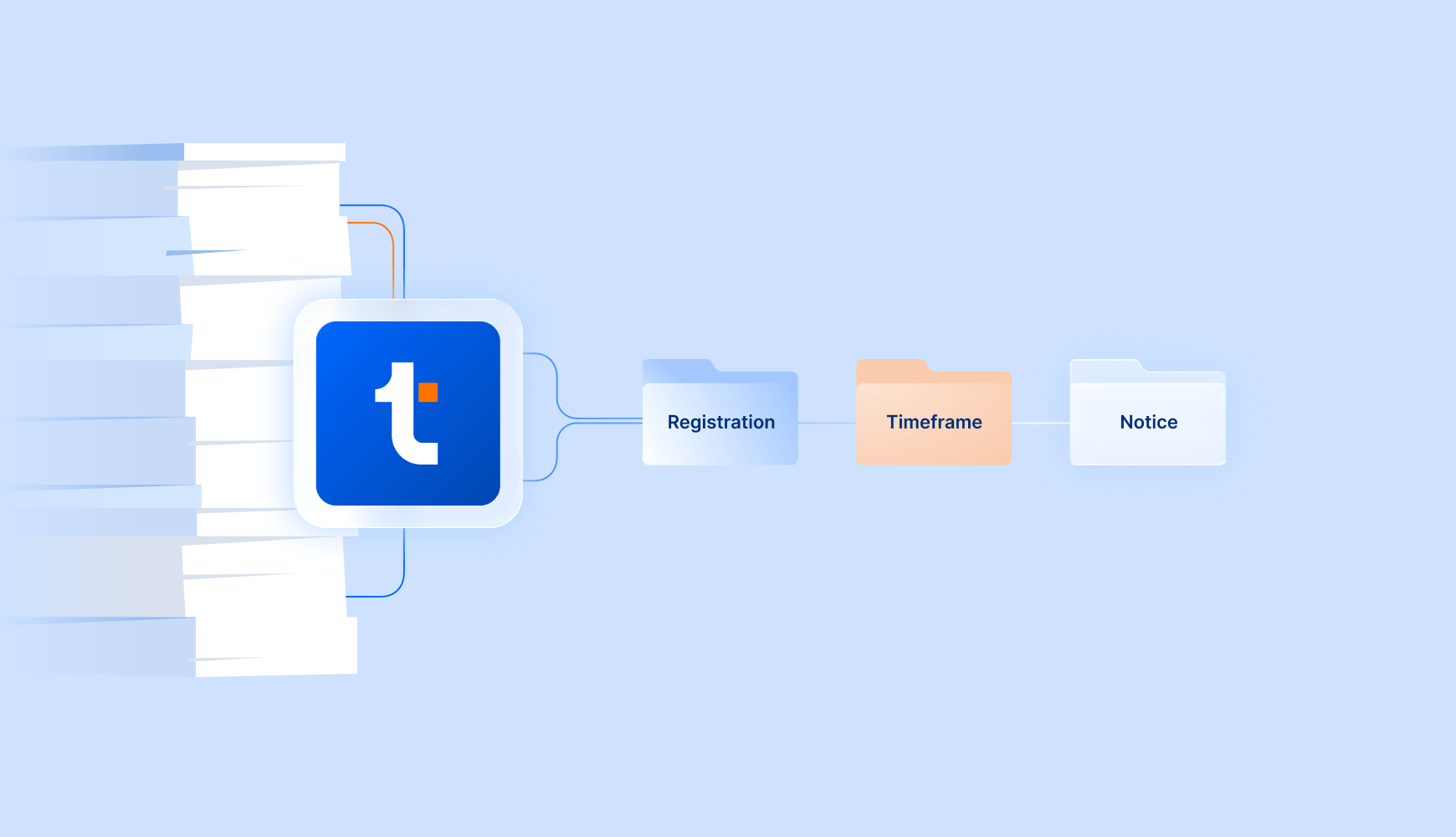
1. Identify every state and filing period you’re missing
Discovering a missed return isn’t always indicative of a larger problem, but it’s too great of a risk to ignore. Before backfiling anything, take the time to review your filing history across every state where your business is registered.
Start by checking all state accounts, previous filing confirmations, and assigned filing frequencies. Teams working with a compliance partner can also check provider records, but it often makes sense to confirm that filings were received by the state source, as it’s possible (although rare) for providers to miss filings.
Avalara filed some of our taxes correctly but missed several filings. They did nothing to help the situation. There was a bug with the shopify connector (their product) and we were stuck with the late fees.
We made the decision to cancel due to their increasing fees, poor customer service, dated user experience and faulty product.

While searching, pay particular attention to periods where a change took place in the filing workflow. For example, if the state escalated the filing frequency or the company switched compliance providers, those periods of transition could be the starting point for problems and errors.
Taking the time to review can help to determine whether a missed filing is an isolated incident or part of a much larger problem, so teams will have a full view of the situation before taking steps to solve it.
2. Confirm whether this is ordinary backfiling or a larger exposure problem
Before collecting and reconciling years of transaction data, it’s worth taking the time to determine the scope of the problem and making sure that backfiling is the right solution.
The best next step will depend on a few things, including registration status, how far back the exposure goes, and whether the state has already contacted the business about the missed filing.
- Use backfiling if the business was registered and simply missed one or more returns.
- Pause and consider a VDA if the business had nexus but never registered in that jurisdiction or if exposure stretches back over several years.
- Follow state notices if the business has already been contacted by state authorities. Some remediation options may still be available, but state contact can impact VDA eligibility.
More complicated problems may open up paths beyond backfiling. VDAs can limit the number of historical periods and provide relief from certain penalties. A state may also have limited or one-time amnesty programs available (like this one) that offer other ways to resolve previous liabilities, such as through simplified or flat-rate tax determination with any penalties or interest waived.
Note: The remainder of the steps in this section cover how to approach ordinary backfiling. Teams seeking alternative paths should review TaxCloud’s VDA benefits or the Sales Tax Radar for information on amnesty programs as they come available.
3. Collect all your sales and tax records
Once it’s clear that backfiling is the correct path and teams know which filing periods have been missed, the next step is to gather the records needed to reconstruct each return. Exactly how this is done will vary based on system configuration. Teams may need to pull transaction data from marketplaces or an accounting software, access a previous tax platform, or gather data from several systems all at once.
Collect as much of the following data as possible:
- Gross sales
- Taxable sales
- Tax collected
- Refunds and returns
- Marketplace transactions
- Exempt transactions (if applicable)
- Credits and adjustments that might affect the return
If possible, pull data from every system that handled transactions during the affected periods. Depending on the setup, one platform may only contain part of the entire picture, unless data from other sales channels was manually imported or integrated.
For example, Stripe Tax will automatically consolidate all sales and transaction data for any transactions processed through Stripe. Teams using Stripe Tax in conjunction with a solution like Shopify, which has its own tax calculation engine, may need to pull data from both sources in order to get a complete list of company transaction data.
This experience will vary between providers. With Stripe Tax, data from non-Stripe sales channels can be manually uploaded via CSV for better monitoring and may carry the required data if the team imported it. Similarly, integrated platforms like TaxCloud actively consolidate all transaction data via automated integrations, making it possible to get all information in one place.
4. Reconcile each missed period
Once all underlying records have been collected, teams will need to reconcile activity for the missing filing period.
Start with gross sales for that period, then separate taxable sales from exempt transactions and other amounts that receive different reporting treatment. Account for any marketplace sales where taxes are filed by the facilitator, as well as any refunds or credits, and the sales tax that was collected. From there, calculate the amount that should have been reported as tax due.
The location of the missed filing will play a role in how specific the breakdown should be. Some states, like California, [2] require that transaction records be broken down by jurisdiction while others are only concerned if the transaction happened within state borders. Similarly, Texas [3] requires that marketplace sales be included in state sales totals but excluded from taxable sales when the marketplace provider collected and remitted the tax.
Reconciliation can be a complicated and tedious process, especially when several sales channels or months of activity are involved. However, it’s better to take the time and submit accurate returns. Otherwise, teams will need to file an amended return later, which will incur additional costs.
5. File the past-due returns
Once all records have been reconciled, teams can prepare and submit any outstanding returns. To do this, someone will need to access the portal, select that filing period, and upload the newly calculated totals into the portal.
Each past-due return should be filed for the reporting period it belongs to using the state or local filing system. Every reporting period should be handled as its own return, both to maintain an accurate filing history and to make sure that penalties and interest are applied to the correct return.
Keep in mind that a missing return needs to be addressed, even if there was no tax to remit. Registered sellers are generally expected to file zero or nil returns for required reporting periods with no taxable activity.
Once each return has been submitted, save the filing confirmations for future reference.
6. Pay the balance and determine any penalty-relief options
Once the returns are filed, the remaining balance may include the original sales tax due, any accrued interest, and separate late-filing and late-payment penalties.
These amounts should be treated separately. The original tax liability is still due, while interest compensates the state for the period where taxes were unpaid. Late fees may be assessed differently depending on the state.
P&I coverage from compliance partners
If the company has been working with a compliance partner, the partner may cover penalties and interest (P&I) if they caused the error.
For example, TaxCloud will cover P&I if a return was filed incorrectly due to a confirmed error, submitted late due to a delay on TaxCloud’s side, or if an amendment is required because of a TaxCloud-related mistake.
Other companies have similar policies, but each one is different. Be sure to review that documentation if you believe that a missed filing occurred due to a partner error.
If the interests and penalties are high, it’s possible that the business may not be able to pay the full amount immediately. However, don’t confuse the ability to pay with the ability to file. Even if the business lacks the funds on hand to cover the cost, delaying the filing will only add to future costs that must be paid down.
If the business can’t pay right away, check to see if the state offers an installment arrangement. Penalty abatement and waiver programs may also be able to reduce a portion of the cost, but these vary by state and will only apply when a business has reasonable cause or meets specific requirements.
7. Confirm that the account is current
While submitting the missing returns and payments will bring the account into good standing, it’s not the end of the process. Teams will need to review every impacted account afterward to make sure that the state has a record of all filings and associated costs.
During this process, check for each of the following:
- All previously missed filing periods show posted returns.
- All payments have been applied to the correct periods
- Any remaining balance, penalty, or interest is visible and accurate.
- Any notices or pending correspondence with the state has been addressed.
Once everything has been cleared, retain the filing confirmation and payment records and confirm the next filing deadline.
If the original problem came from a broken workflow, provider transition, or unclear internal process, take the time to correct the issue before moving forward.
When you can catch up by yourself and when you’ll need help
Although the backfiling process can be tedious and time-consuming, addressing the problem may not require outside assistance.
The amount of work involved will depend on the number of affected states and filing periods, the quality of underlying records, and whether the business is dealing with straightforward backfiling or a broader compliance issue.
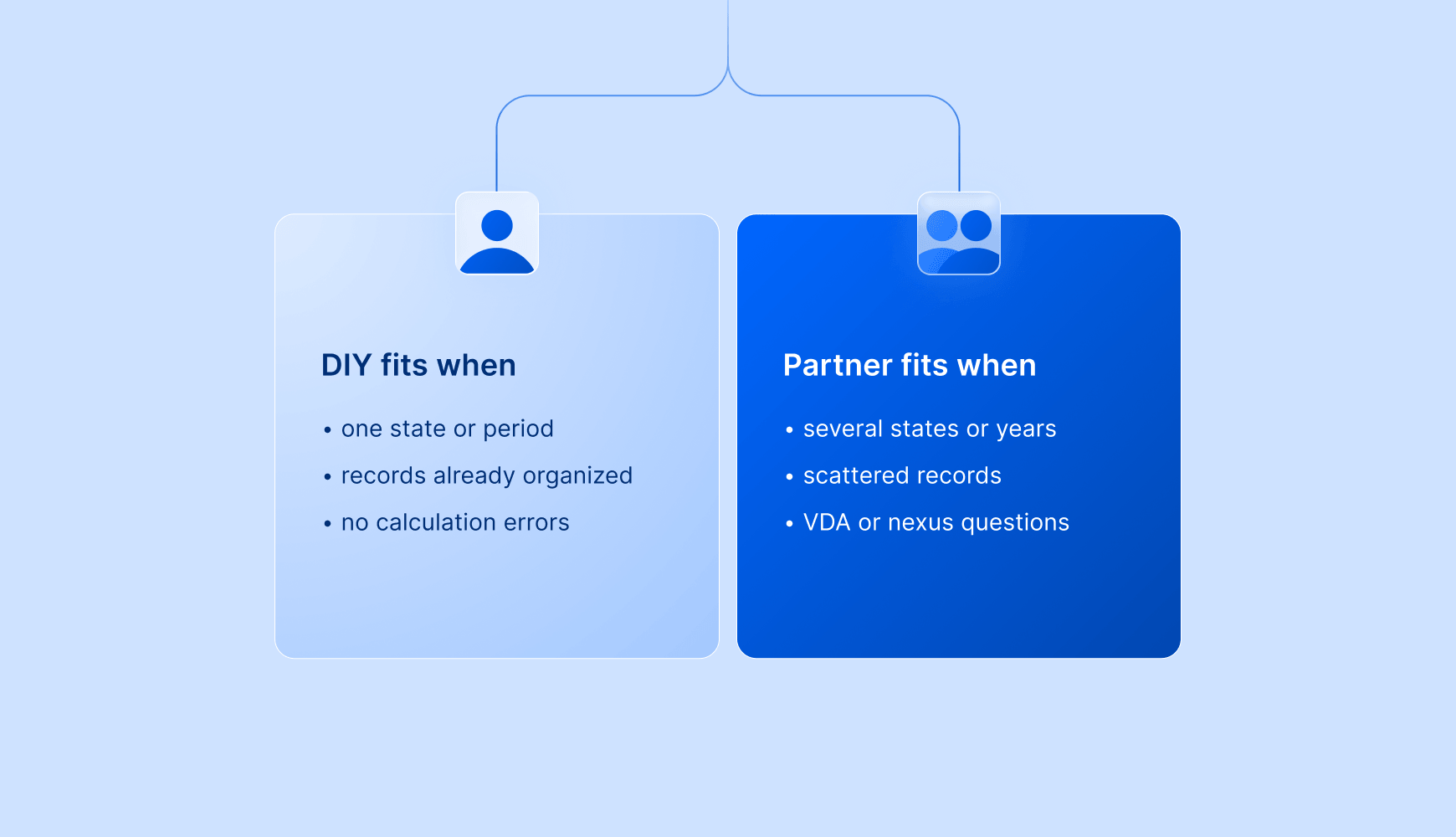
When DIY is practical
When the process is straightforward and the problem is small, it’s possible for a single individual or a small team to make the correction while juggling other tasks. However, the reconciliation process can be a difficult undertaking that forces a finance team to temporarily set aside other duties.
Realistically, an internal team may be able to handle the process when:
- The filing gap is small. Only one state or one or two reporting periods need to be corrected.
- Records are easy to access. Transaction and filing data is already in one place or can be retrieved without rebuilding information across several platforms.
- There are no calculation issues. Sales tax was calculated correctly and only the return was missed.
- Liability is limited. All resulting taxes, penalties, or interest are straightforward and easy to address.
- Remediation is clear. There are no questions about historical filings or past obligations, VDAs aren’t viable, and there are no state notices that complicate the process.
When determining whether to handle the process internally, remember that issues can escalate. What looks like a single missed filing may be the first sighting of a much larger problem.
As with many difficulties around tax compliance, what initially looks like an in-house task can balloon to a point where outside support is the only realistic option to avoid delays to other financial components of the business.
When to consider a filing/compliance partner
Noticeably larger and more complicated issues may be best handled by specialists, experts, and partners.
This could include compliance platforms like TaxCloud but may also include accounting firms or dedicated CPAs or VDA experts who can step in on a temporary basis to bring accounts back into good standing.
- Several jurisdictions need to be corrected at once. Different state requirements can drastically multiply the administrative workload and extend reconciliation timelines.
- The problem extends across multiple filing periods. Months or years of missing returns can require substantial historical reconstruction. For smaller finance teams with daily operational responsibilities, taking on this work may not be feasible.
- Sales data is fragmented and disorganized. Records may need to be combined from marketplaces, ecommerce platforms, payment processors, or accounting software, then organized according to jurisdictional requirements with some data omitted.
- Previous filings can’t be easily verified. A provider transition or incomplete records can make it difficult to establish what transactions and payments were submitted in the past and what data is still outstanding.
- Formal remediation options need to be evaluated. VDA or historical nexus issues add a second layer beyond ordinary return preparation. These paths to compliance are more complicated and often require external or specialized support.
- The underlying filing process is unreliable. Larger issues may be indicative of poor compliance infrastructure or a bad compliance partner. If so, the same issues will happen again if the workflow isn’t addressed.
Teams finding compliance difficult to manage at scale should seriously consider working with a similar sales tax compliance solution once all issues are resolved.
TaxCloud and similar platforms combine automation with dedicated filing and support teams to consolidate sales tax data and manage ongoing filing and remittance.
Get caught up and keep filings accurate with TaxCloud
As companies and filings become more frequent, automated platforms quickly become the only realistic way to accurately track and manage nexus without adding full-time hires or specialized support contracts.
A backfiling project should end with more than a clean filing history. Teams should leave with a process that makes future gaps less likely.
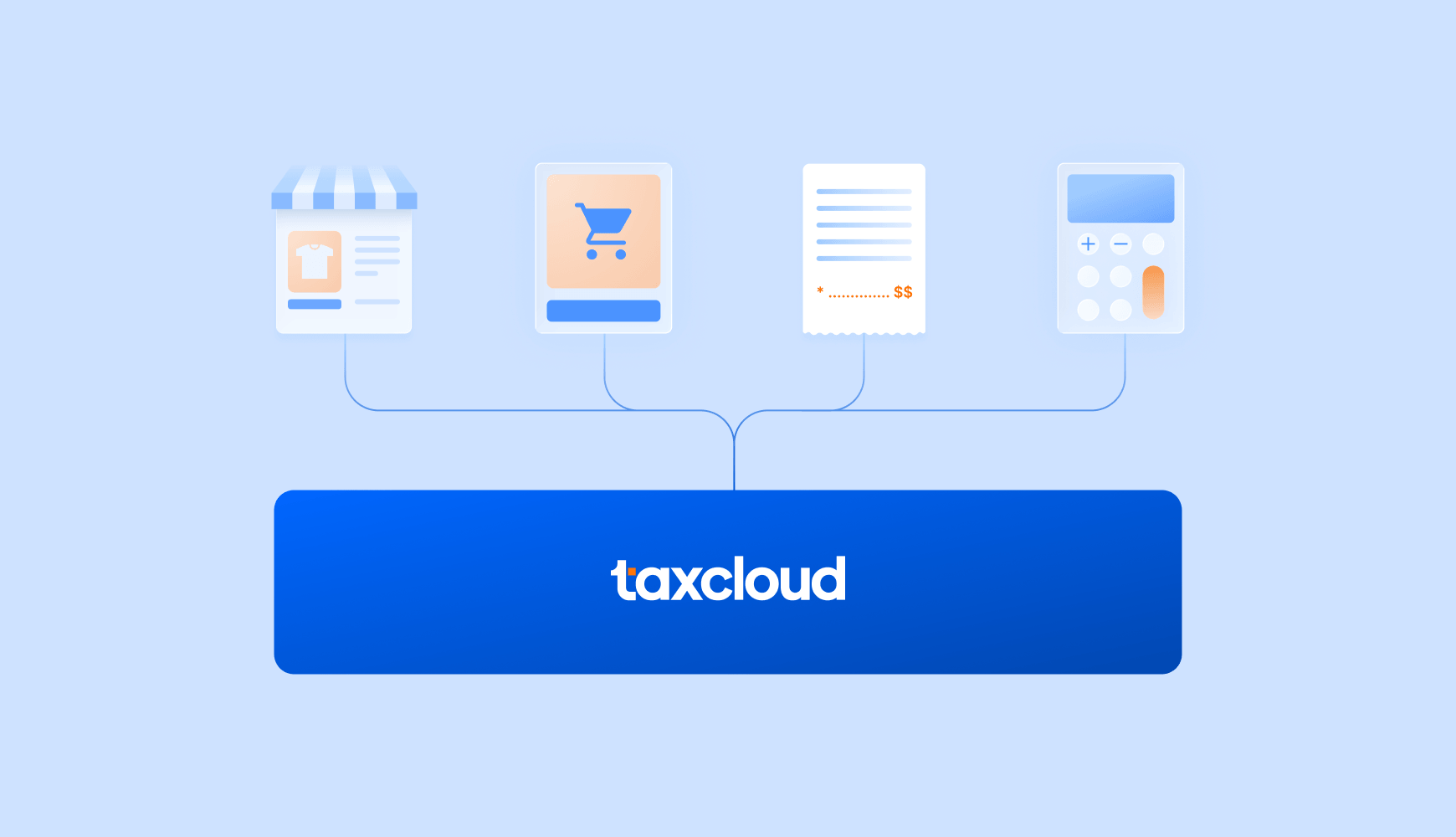
TaxCloud helps businesses centralize both historical and ongoing transaction data, monitor nexus obligations, and manage returns across both the U.S. and Canada. It’s even possible to save thousands in filing costs by enrolling in the Streamlined Sales Tax program with TaxCloud.
Want to learn more?
By partnering with TaxCloud, teams will have access to the tax tools and expert support needed to stay compliant as the business scales. Get in touch with a product specialist to talk more about your compliance needs and get a personalized demo.
Unfiled sales tax returns — FAQs
For both on-time and late filings, businesses can usually file directly through state tax portals without paying a third-party preparation cost or filing fee.
However, filing for free via a state portal doesn’t eliminate what the business owes to the state. Any unpaid sales tax, interest, or applicable penalties are still owed, regardless of whether teams file directly or through a compliance partner.
There is no universal limit. How far back a business needs to address unfilied sales tax will depend on state laws, filing history, registration status, and what remediation process is used.
It’s worth noting that, past a certain point, backfiling may not be the best path forward. VDAs can sometimes shorten the historical period that needs to be addressed, but lookback periods also vary by state and program.
Missed deadlines usually result in fees and penalties. Interest begins to accrue. The state may or may not send a notice to notify the business of a missed deadline.
The problem starts out as a small one and usually doesn’t escalate beyond fees or a notice if handled quickly. If left alone for an extended period, direct action from the state in the form of audits or enforced collection activity may apply.
Usually, yes. If a business is registered, it can still have a filing obligation during a reporting period, even if it has no sales and no sales tax is due.
These are commonly called zero-dollar or nil returns. Failing to submit one can still result in a missed filing or penalties, depending on the state or jurisdiction.
No. Backfiling generally involves submitting missed returns that were never filed in locations where the business was already registered.
A VDA is a formal agreement used to resolve certain historical tax exposures. Depending on the state and circumstances, VDAs can establish a limited lookback period and provide relief from penalties in exchange for filing the required historical returns and paying all applicable tax and interest.
Potentially. Penalties for late payments and interest vary by state, the amount owed, and how long the payment remains outstanding.
It’s also common for filing and payment penalties to be different. For example, the state could charge a late fee for filing and a separate fee if the money owed is more than 30 days late.
Waivers and other relief options can be available in some circumstances, but these programs vary by state and aren’t always available.
Sources:
-
1.
New York Department of Taxation and Finance Tax Bulletin ST-275 (TB-ST-275): Filing Requirements for Sales and Use Tax Returns. Source link
-
2.
California Department of Tax and Fee Administration Online Filing Instructions — Sales and Use Tax Return. Source link
-
3.
Texas Comptroller of Public Accounts Remote Sellers and Marketplace Frequently Asked Questions. Source link