What happened to Avalara Returns for Small Business?

Written by

VP of Business & Corporate Development, TaxCloud

Published
Avalara ends Returns for Small Business (RSB) program
At the end of 2024, Avalara retired its Returns for Small Business (RSB) program, ending a filing tool designed to help smaller companies more easily handle multi-state tax returns. Businesses that relied on RSB were required to migrate to another Avalara product or offboard to a different compliance platform as their subscriptions renewed.
For many former RSB users, this change meant reevaluating how sales tax filings were managed. While the program has been discontinued, some former RSB users are still looking for a workable alternative.
In this article, we’ll look at what the RSB program offered, how the phase-out happened, and what alternatives exist on the market today.
Key takeaways
- Avalara retired Returns for Small Business in 2024, requiring customers to migrate to another Avalara product (usually Managed Returns or DAVO) or leave the platform.
- RSB alternatives still exist in the market, but they are no longer part of Avalara’s product lineup and are part of brands catering to smaller organizations.
- Avalara’s discontinuation of the program reflects a strategic shift toward managed services and enterprise-focused tax compliance solutions at the expense of small- and mid-market companies.
What was Avalara RSB?
Avalara Returns for Small Business was a tax compliance product designed to help smaller businesses prepare multi-state tax returns.
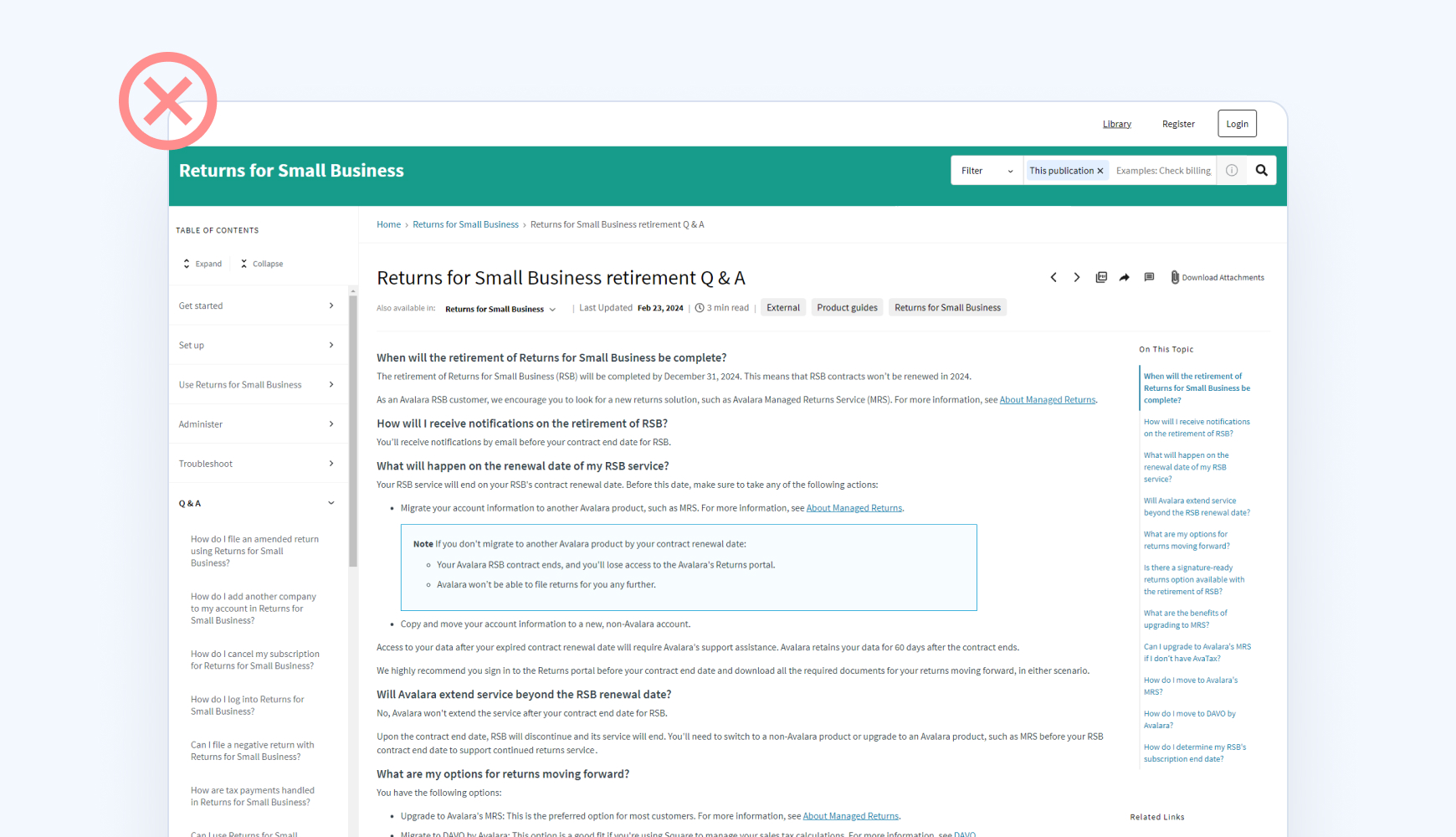
The software pulled transaction data from ecommerce platforms, tracked economic nexus thresholds, and generated preformatted sales tax returns that companies could quickly review and sign. However, RSB didn’t file the return or calculate sales tax without additional Avalara services. It was strictly built to create the correct tax documentation.
Avalara RSB included several useful features:
- Integration with major ecommerce sites to pull sales data.
- Economic nexus tracking and notifications.
- Signature-ready returns generation.
- Affordable costs for small businesses.
Avalara’s RSB program cost $245 for an annual subscription and $25 per return — far less than the current costs for Avalara’s various plans and product solutions — and centered around a self-service workflow. Brands could automate much of the return preparation process and then handle filing themselves.
Key dates in the RSB program lifecycle
- 2019-2020. Avalara launches RSB platform.
- 2022. Vista Equity Partners purchases Avalara and takes the company private.
- 2023. Avalara migrates some smaller filing customers from older tools such as TrustFile into the RSB product platform.
- February 2024. Avalara announces plans to retire the RSB program, with plans to discontinue service by December 31, 2024 and push users to Avalara Managed Services.
- December 2024. Avalara Returns for Small Business is fully retired.
Why was Avalara RSB retired?
While Avalara provided no clear reason for sunsetting the RSB program, the move appears to align with a broader shift in Avalara’s product strategy toward managed services and enterprise-focused tax compliance.
Since retiring RSB, Avalara has not offered any equivalent or replacement solutions for RSB customers. Instead, most customers were forced onto more expensive plans and into services like Avalara Managed Returns or DAVO. Unlike RSB’s self-service workflow, these offerings focus on managed filing services or specialized vertical solutions and typically come with higher costs and more hands-on support.
Avalara has since expanded its enterprise capabilities and managed services portfolio while moving even further away from self-service products and affordable tax compliance solutions for smaller brands. Customers have moved to alternative solutions or migrated to other plans on the Avalara platform.
However, right now, small- to mid-market companies have limited options with Avalara. While some plans still exist for AvaTax and other products in the Avalara lineup, these are custom-configured solutions with high costs and surcharges for things like integrations, most of which are included for free by competing brands.
What sunsetting RSB meant for Avalara small business customers
When Avalara retired the RSB program, existing users were forced to reevaluate how they would handle sales tax filings going forward. In most cases, the decision came down to migrating to another Avalara service or moving to a different compliance platform.
Generally speaking, companies affected by the RSB retirement had three options:
- Avalara’s Managed Returns. This service, still active today, allows Avalara to prepare and file tax returns on the customer’s behalf. While this approach removed some operational work from users, it also introduced higher costs and relies on data found in other Avalara products, like AvaTax.
- Adopt DAVO by Avalara. For brick-and-mortar retail brands, DAVO automates tax collection and remittance. As RSB retired, companies falling into this niche category had a clear alternative, but digital-first companies had no equivalent option.
- Move to a new platform. Some companies chose to migrate to alternative compliance providers that offer self-service return preparation and filing tools similar to what RSB originally provided. Many of these solutions actively cater to smaller brands and offer both lower costs and more specialized toolkits.
Each of these options represents a different approach to tax compliance, with varying levels of automation, cost, and operational involvement. Companies relying on RSB’s self-service model were forced to choose a best-fit option while still juggling their existing tax obligations.
Alternatives for former Avalara RSB users
Retiring the RSB program hasn’t eliminated the need for self-service tax filing tools. Many companies still prefer solutions that automate return preparation while allowing them to review filings themselves or maintain control over the submission process.
While this type of workflow can still be achieved within the Avalara ecosystem, it typically requires combining multiple products (AvaTax, Avalara Returns, etc.) along with any necessary channel or marketplace integrations (Shopify, BigCommerce, etc.). These configurations often involve custom pricing and additional integration fees, which can push annual costs into the thousands or tens of thousands of dollars for some businesses.
Many companies that previously relied on RSB chose to move to other tax compliance platforms that offered simpler workflows, lower costs, and tools designed specifically for small and mid-market brands.
Here’s a short list of some of the best solutions for former RSB customers:
- TaxCloud is one of the closest functional replacements for Avalara RSB. The platform provides automated sales tax calculation, return-ready reports, and automated filing options (starting at $39 per return) in a single system. Integrations are built in, and advanced users can rely on API services for deeper connections with specialized software.
- TaxJar provides automated sales tax calculation, reporting, and AutoFile services designed primarily for ecommerce brands. This platform integrates with most major marketplaces and shopping carts, so companies can automate tax collection and filings while maintaining a relatively lightweight compliance workflow.
- Stripe Tax allows businesses already using Stripe for payments to automatically calculate and report sales tax, VAT, and GST across multiple jurisdictions. Because Stripe Tax primarily handles tax calculation, it can serve as part of a broader workflow where returns are created by partner brands using tax data calculated by Stripe Tax.
- Kintsugi focuses on automated sales tax for ecommerce and SaaS brands. The platform provides nexus monitoring, automated tax calculations, and filing support while leveraging AI and only charging for filing and registrations.
- Numeral offers automated sales tax compliance tools targeted toward startups and SMBs. The platform simplifies nexus tracking and tax calculation while also guaranteeing that they’ll file taxes on time or pay the penalties on your behalf.
While Avalara RSB removed one option from the market, several alternative platforms still provide similar workflows for smaller brands. Companies seeking a similar solution to Avalara RSB will need to decide how much automation, control, and integration support they need from their tax platform.
For a more detailed look at the major competitors in this space, check out our full guide to Avalara alternatives.
Next steps for former RSB users
Most companies affected by Avalara RSB’s retirement have already migrated to other solutions. However, many brands continue to evaluate whether their current tax compliance platform provides the right mix of automation, flexibility, and cost.
For some businesses, the transition to a new provider may have introduced additional complexity or higher operating costs when compared to the self-service workflow that RSB provided. Others may have adopted interim solutions during the migration process and are now exploring platforms that best align with their long-term compliance strategy.
Here’s what we’d suggest.
Review the current tax compliance workflow
Companies should periodically revisit how their tax compliance tools fit into their broader tech and operational stacks.
As new sales channels, platforms, and jurisdictions are added, workflows that previously worked well may become more complex than necessary. Many smaller or niche tax solutions may not have the tools to accommodate an expanding workflow.
Example:
Stripe Tax is a great solution for companies processing payment through Stripe. However, it can’t capture tax data or calculate tax outside of Stripe.
If a company suddenly switches to another payment processor, users will need to figure out another way to capture and consolidate all tax information prior to filing.
In order to make that work, Stripe Tax may need to be combined with another solution, adding another layer of complexity when solutions like TaxCloud might provide everything without the added hassle.
As companies continue to gauge their growth opportunities and expansion options, ensuring that the compliance workflow doesn’t get too complicated can save major headaches down the road.
Evaluate long-term platform costs
Tax compliance platforms typically implement pricing models that increase gradually as a company grows. Entry level plans might appear affordable, but costs can increase quickly as additional services, integrations, and higher transaction volumes are introduced.
Some providers charge separately for core components like tax calculation, return preparation, or filing services. Businesses may also need to pay additional fees for marketplace integrations, API access, or specialized reporting tools to manage multi-state compliance. (All of these added charges are very common in Avalara pricing plans.)
Unfortunately, many tax solutions focused toward smaller brands obfuscate their costs by overly simplifying the solution.
Kintsugi charges based on filing and registration fees. While simple, the filing rate is much higher when compared to other platforms.
For a business filing in 20 states, 12 times per year, the cost with Kintsugi would be:
20 states x 12 filings x $75 per filing = $18,000 per year
TaxCloud uses a pay-as-you-go filing structure. A company on the Premium plan ($799 per year) can add filing options for as low as $39 per return.
Here’s how that might break down:
20 states x 12 filings = $6,499/year + $799 Premium Plan = $7,298 per year
Naturally, TaxCloud pricing will vary based on transaction volume. A company that transacts $240,000 orders per year would see an additional add-on cost of roughly $9,200, replacing the $799 annual plan costs. However, even in that scenario, TaxCloud is still a more cost effective option by comparison.
Additionally, if a TaxCloud user enrolls in the Streamlined Sales Tax program, filing costs in many of those states may disappear, further lowering compliance costs.
For growing brands, reviewing how pricing scales over time can help prevent surprises while making sure that the compliance platform remains cost-effective over time.
Decide how much filing control is needed
Most platforms try to offer some form of automation that would appeal to teams that preferred RSB’s self-service approach, but some solutions offer fully managed services. In those cases, the platform prepares and submits the filing on the customers’ behalf.
For companies that previously relied on Avalara RSB, automation with built-in oversight can provide a strong middle ground. Brands can automate the return preparation process while maintaining visibility into their tax obligations and retaining control over when and how filings are submitted.
Example:
Avalara Managed Returns, as well as brands like TaxValet or Zamp remove most of the operational workload from teams but also reduce oversight in the filing process.
While this approach can be useful for smaller teams, it’s also more expensive and removes the opportunity for a manual internal review or coordination with an external CPA.
Other solutions, like TaxJar, use automated filing services that allow for some level of manual review. TaxCloud is often a good middle ground, because brands who want to file for themselves can simply elect not to pay for filing costs and just use TaxCloud to calculate sales tax and monitor nexus obligations.
If evaluating post-RSB, companies should consider how much control they want over the compliance workflow and whether an automated, self-service, or fully managed approach is the best fit.
Still looking for an Avalara RSB alternative?
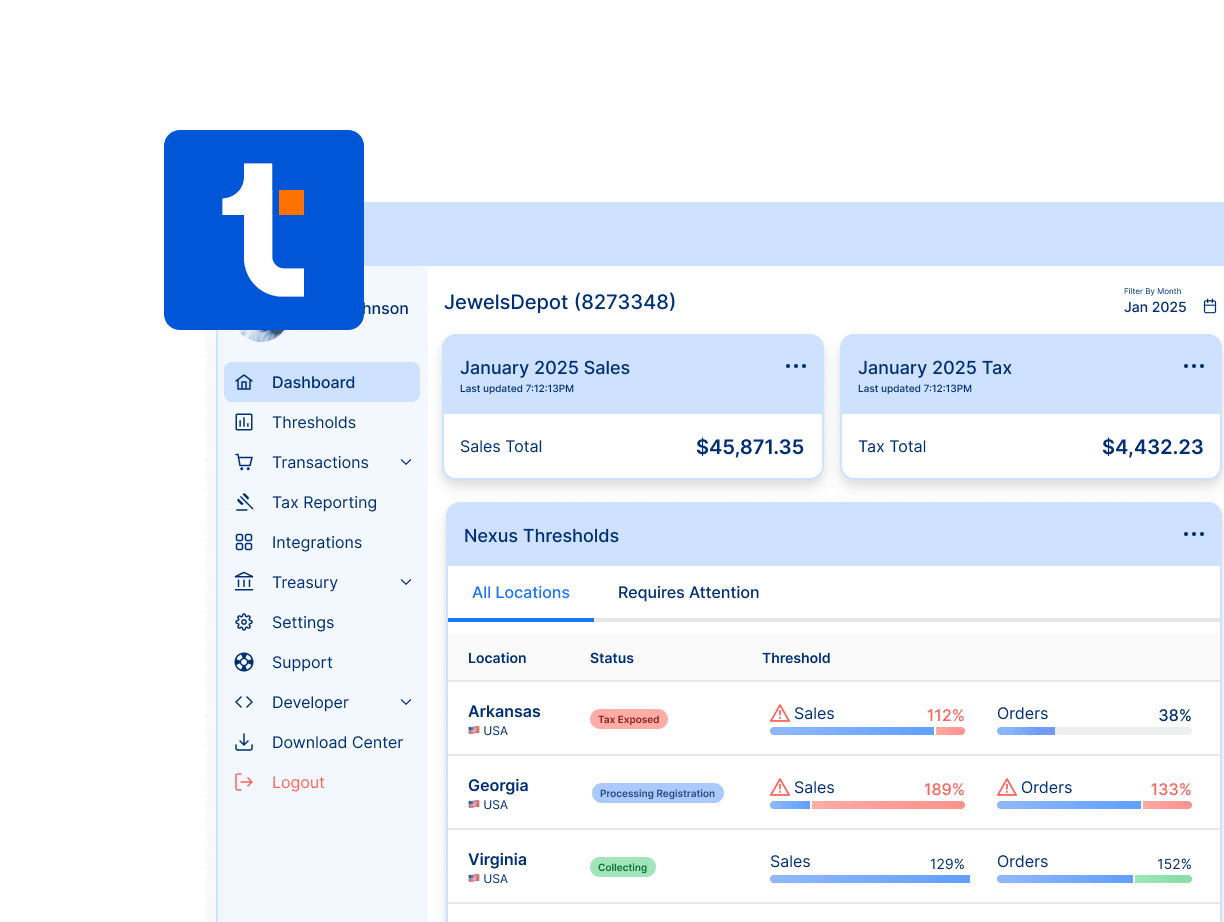
TaxCloud is designed to support the kind of self-service compliance workflow that many former Avalara Returns for Small Business users enjoyed and relied on. Our platform combines automated tax calculator, signature-ready returns, and flexible filing options with human-powered, accessible support.
Pricing is transparent, and plans are an affordable option for most small to mid-market brands. Plus, eligible companies can enroll in the SST program to drastically reduce filing costs and save time.
Want to give it a try?
Start a free 30-day trial with TaxCloud or schedule a personalized demo to explore how the platform can work for your business.
Avalara Returns for Small Business — FAQs
Avalara announced plans to retire the Returns for Small Business (RSB) program in early 2024 and phased out the service throughout the year.
The product was fully discontinued on Dec. 31, 2024.
Avalara RSB helped smaller businesses prepare multi-state sales tax returns. The platform imported transaction data, tracked economic nexus thresholds, and generated returns that companies could review, sign, and file themselves.
Nothing. Avalara never introduced a direct replacement to the RSB program, instead pushing users toward their Managed Returns services or toward DAVO, a brick-and-mortar POS system integration.
Neither solution adequately offers what Avalara RSB provided.
Of course. Several platforms still offer self-service workflows that allow companies to prepare and review returns before filing.
For example, TaxCloud can automate tax calculations and prepare reports while giving users control over the filing process. Teams can then review and file via TaxCloud or export and file themselves or with the help of an external CPA.
The company continues to offer solutions for companies of all sizes, but the current product lineup places strong emphasis on managed services and enterprise-level compliance.
At the highest level of tax compliance, Avalara is one of only a handful of brands that can provide deep integrations across multiple sales channels, ERPs, and financial systems.
While Avalara does well in that area, many of those enterprise-level costs have trickled down to mid-market and smaller brands, forcing customers in those groups to pay premium rates that are easily undercut by smaller and more niche competitors like TaxCloud.
Avalara never provided a detailed explanation for retiring the program.
However, the move appears to align with the company’s broader enterprise-level focus, seen since their acquisition by Vista Equity Partners in 2022, which took them private after their initial IPO in 2018.