SaaS sales tax cleanup after an acquisition: a playbook for finance teams

Written by

Director of Growth, TaxCloud

Published
Sales tax surprises are common in SaaS acquisitions — here’s how to clean them up fast
SaaS acquisitions move quickly. But once the deal closes, buyers often discover something diligence missed: unpaid sales tax. For finance teams, that exposure isn’t abstract—it shows up immediately in delayed escrow releases, mounting penalties, and uncomfortable calls with investors.
The problem is common. SaaS companies expand across states quickly, triggering tax obligations they never registered for. Add in unfiled returns, messy exemption certificates, or misclassified products, and liabilities can snowball within weeks of closing.
This playbook breaks down the most frequent post-acquisition sales tax problems in SaaS, what they cost if ignored, and the steps buy-side teams can take to resolve them fast while preserving deal value.
Why sales tax liabilities surface post-close
Even though most diligence processes try to uncover liability pitfalls, it’s common for sales tax issues to go unnoticed. Typically, this happens due to a combination of time pressure and a tendency to focus on more prevalent issues within the acquisition.
Here are a few reasons that sales tax exposure commonly surfaces after an acquisition is complete:
- Gaps and limited visibility during diligence. Buyers often rely on seller-provided data in order to make decisions, which may or may not include full transaction histories or accurate nexus tracking. As a result, states where the company has already triggered obligations may go unnoticed until after the deal closes, creating immediate exposure for the buy-side team.
- Complex and inconsistent SaaS taxability rules. Some states treat SaaS as taxable software, while others exempt it entirely. A few even apply hybrid rules by classifying SaaS as a “data processing service” or something similar. These inconsistencies can make it easy for finance teams to overlook jurisdictions where sales tax should have been collected.
- Post-close deadlines from auditors and investors. Many portfolio companies and private equity firms implement a 100-day plan [1] where they review company financials and operating procedures in order to demonstrate compliance and readiness. Often, any overlooked tax problems present themselves during this review period, and those outstanding liabilities can delay reporting and integration efforts.
- Obligations triggered mid-transaction. Due to the hectic nature of acquisitions, it’s easy to forget that the business continues to operate in the background. SaaS revenue can grow quickly, and companies may cross economic nexus thresholds in new states between the start of diligence and the actual close date. These obligations may not exist at signing but appear by the time integration begins.
- Sales tax usually isn’t the focus of the business or part of its typical products and responsibilities. It’s easy to overlook. That, combined with the fact that SaaS taxability rules can vary widely across states, often means that tax liabilities and obligations aren’t even considered until the deal is done.
By understanding these root causes, buy-side finance teams can identify potential blind spots earlier and take faster action on cleanup once the deal is complete.
Common post-acquisitions SaaS sales tax problems
Even when diligence uncovers potential exposure, the full scope of sales tax problems may not become apparent until the deal is closed.
For SaaS companies, this is particularly true because tax rules vary so widely across states. Plus, many sellers don’t have processes in place to track nexus obligations or to resolve outstanding problems with speed. Once the buyer takes ownership, these unresolved issues surface quickly and can become a distraction from integration priorities until properly addressed.
And these problems add up. What might look like a small collection of administrative oversights (unregistered states, missing exemption certificates, etc.) can quickly escalate into significant liabilities with penalties, interest, and reporting complications.
Unregistered nexus states
A common post-acquisition surprise is discovering that a newly acquired SaaS company holds economic nexus in multiple unregistered states.
These laws create filing obligations once revenue or transaction thresholds are crossed. Because SaaS doesn’t ship physical products and subscriptions can apply anywhere within a region, it’s easy for brands to expand into new markets and hit threshold limits without even realizing that it happened.
Physical nexus is another common trap. Even one remote employee in a state can create a filing obligation, but many SaaS sellers overlook this until it surfaces in diligence or post-close reviews. For acquisitive buyers, a small distributed workforce can translate into unexpected registration requirements across several states.
What might look like a simple oversight during a diligence review can create months or years of exposure, complete with penalties and interest. Left unresolved, these obligations can delay escrow release, complicate investor reporting, and slow down integration or merger proceedings.
Once the deal is closed, the buyer inherits these problems and must work to resolve them.
Unfiled back returns
Another common problem is the discovery that a SaaS company registered in certain states but never actually filed the required sales tax returns.
In some cases, the company may have assumed that no tax was due and skipped filings altogether. In others, the filings may have lapsed as the company scaled and internal processes failed to keep up.
Unfiled returns can be a bright, red flag for auditors and investors. Even if no tax should have been collected, states can seek penalties for late or missing filings. Over time, these missed returns create a backlog of liabilities that begin to compound with interest.
This snowball effect makes unfiled returns an urgent cleanup task for buyers. Until these issues are addressed, the company may face escalating penalties and be unable to demonstrate compliance to audits, investors, and portfolio managers.
Missing or invalid exemption certificates
If the acquired SaaS company sells to resellers, nonprofits, or government agencies, it should maintain valid exemption certificates to explain why sales tax hasn’t been collected. However, problems with missing, expired, or incorrectly completed certificates can turn originally exempt transactions into taxable sales during an audit.
Poorly managed certificates create double exposure for brands. Sellers may need to pay tax on sales that were originally exempt, but they often have no way to recover these amounts from customers after the fact. For investors and auditors, messy exemptions create additional hurdles that can slow down compliance reviews.
Because of this, cleaning up exemption documentation becomes a high-priority task for buy-side teams.
Centralizing exemption certificates management, validating completeness, and implementing a repeatable process for new accounts can protect the company from future exposure and unnecessary penalties. Unfortunately, without the right digital infrastructure in place, this can take some time to set up.
Misclassification of SaaS products
SaaS faces widely inconsistent tax treatment across the U.S., which creates confusion during the filing process. Right now, 25 states impose sales tax on SaaS services while others either exempt them or have specific stipulations surrounding their taxability.
When a seller misclassifies its product, this problem compounds itself. Customers may have been charged incorrectly. Filings may be inconsistent across states. Without anyone realizing it, liabilities can build up over time. Because these issues are buried inside billing systems, they’re easy to miss until they surface in post-close reviews or in-depth audits.
Correct classification is essential to protecting deal value. For buy-side teams, revisiting SaaS product taxability across all states is an essential part of the post-acquisition cleanup process.
For SaaS businesses considering an acquisition, this session is a must-watch. Lydia Stone, Chief Accounting Officer at Chargebee, shared firsthand lessons from navigating multiple acquisitions — from compliance hurdles to the detailed preparation required before deals could close. Her perspective highlights the behind-the-scenes work that can make or break a smooth transition. If you’re a SaaS founder or operator planning for growth through M&A, you’ll find valuable insights in the video below.
The cost of delaying sales tax cleanup
Sales tax issues don’t fix themselves. The longer that buyers and their teams wait to address exposure and liability problems, the greater the financial and operational risks become.
Post-acquisition delays can directly impact deal value and cause stalls during the integration process at a time when momentum is absolutely critical. Plus, any existing issues become more costly and complicated as time goes on, especially if lapsed or overlooked remits trigger an audit from state authorities.
Here’s a quick breakdown of the consequences that can accompany delays during the cleanup process:
- Escrow release delays. Escrow funds are often contingent upon clearing known liabilities. Outstanding sales tax obligations can hold back capital that other buyers expected to deploy into growth and integration strategies.
- Penalties and interest. States move quickly when unpaid tax is discovered. Missing registrations, back returns, and unpaid liabilities continue to accumulate penalties and interest until resolved.
- Valuation clawbacks. Unaddressed tax exposure can lead to valuation adjustments, escrow clawbacks, or reductions in portfolio value, eroding returns from investors who lose interest or don’t want to find themselves bogged down in legal wrangling.
- Eroded confidence from investors. Boards, LPs, and auditors expect compliance readiness shortly after close. Lingering sales tax issues raise red flags and can undermine confidence in a company’s financial controls.
For buyers, delaying cleanup only increases the overall costs and prolongs uncertainty. Acting quickly on post-acquisition sales tax obligations is essential to preserving value and keeping newly acquiring companies in good standing with both investors and authorities.
How buy-side teams can resolve issues quickly

Once sales tax liabilities become known, buyers need to move to align fixes with post-close deadlines in order to prove compliance readiness and preserve deal value.
Successful buy-side teams will often address sales tax cleanup using a structured, step-by-step process. This approach allows teams to identify exposure, resolve it, and prevent the same issue from resurfacing in the future.
Below, you’ll find a common approach for dealing with this issue.
Conduct a nexus and liability assessment
One of the first steps in any cleanup effort is to understand the scope of exposure. Nexus rules vary by state, but most establish filing obligations once a company crosses certain revenue or transaction thresholds within a specific measurement period (usually: last 12 months or previous calendar year).
For SaaS brands, this can happen rapidly since subscriptions are sold across multiple states without a physical presence. A post-acquisition nexus review helps buyers identify which states require registration, which thresholds have already been crossed, and how much liability has accumulated.
Without this baseline, it’s difficult to know whether exposure is limited to a handful of states or widespread across the company’s entire customer base. Uncertainties in this liability can make it difficult to address the problem.
charRegister in missing states and backfill compliance
Once nexus obligations have been confirmed, the next step is to bring the company into good standing with states where it should already be registered.
Economic nexus laws require a business to register and begin collecting sales tax once the minimum thresholds are met, regardless of whether or not the company has taken action. Those obligations create the exposure that teams need to address. Brands that failed to collect and remit tax are still on the hook for those funds and will end up paying more due to penalties and accrued interest.
Before any payment can be made, however, buyers need to submit registrations properly either by themselves or via a partner like TaxCloud. This is the first step in preventing penalties and interest from compounding even further. Taking the time to properly register also demonstrates to auditors and investors that the company is taking proactive steps to resolve inherited liabilities and move toward improved compliance.
File past returns or negotiate VDAs
After registering in missing states, the challenge becomes dealing with past-due filings. SaaS brands may have skipped returns entirely or misreported because they assumed no tax was due. If those gaps aren’t solved before closing, they roll over to the buyer.
In states where liabilities are significant, filing past due returns is unavoidable. Buyers may also have the option to negotiate a voluntary disclosure agreement (VDA). Essentially, brands can use VDAs to reduce liabilities to a limited lookback period and minimize or eliminate outstanding penalties.
By confronting past returns immediately and managing VDAs (where possible), buyer teams can work to reduce the overall financial hit, satisfy state authorities, and return to good standing with tax authorities.
Update billing systems
Cleanup is only effective if the same problems don’t resurface at a later date. After liabilities have been addressed, buyers need to update the company’s billing and accounting systems to calculate and collect sales tax correctly going forward.
For SaaS brands, this usually means configuring platforms like Stripe, Chargebee, NetSuite, or QuickBooks Online to apply the right tax code in each state or by integrating the brand and billing systems with a platform like TaxCloud to consolidate filing and processing. This approach ensures that tax is appropriately collected across all nexus-obligated states and streamlines tax data for fast and easy reporting.
Misclassifications and outdated settings in billing and reporting systems are a common reason for exposure. Updating these systems prevents new liabilities while also providing finance teams with cleaner, more reliable data for filings, audits, and investor reporting. Without this step, even the best post-acquisition cleanup initiatives will be short-lived because the problem is never truly solved.
Centralize documentation
Registrations and filings are only the beginning of the compliance process. Buyers also need to make sure that all supporting documentation like exemption certificates and past returns are properly collected, stored, and easy to access. Taking steps early on can also help in the event of a sales tax audit, where this and other documentation may be requested by state auditors.
SaaS acquisitions can be messy, and incomplete documentation creates a source delays during reviews. If records are scattered across multiple systems or buried in old email chains, finance teams will lose time tracking them down.
By taking steps to confine documentation to a single, organized system, teams can reduce risk, build a repository for easy access, and create repeatable processes for managing compliance in the future. The added transparency can also ease tensions and nerves from investors and outside parties as buy-side teams move to do more with the newly acquired company.
Present a compliance-ready posture
Ultimately, sales tax cleanup is about more than satisfying state requirements. Coming in with strong financial controls and a clear compliance plan shows boards, auditors, and investors that the company intends to resolve outstanding issues and operate with transparency in the future.
Having a strong compliance mindset in place and taking steps helps to prove that tax liabilities are resolved and won’t interfere with future plans or company valuations. This also positions the company more favorably for growth, which is particularly important if capital raises or acquisitions are on the horizon.
For finance teams, maintaining compliance isn’t just about filing the paperwork. Any process needs to be clear and orderly, with easy-to-follow processes and safeguards in place. However, all of this doesn’t have to be done by hand. Platforms like TaxCloud provide features like automated filing and real-time nexus tracking that make it easier to stay on top of complex tax obligations.
TaxCloud for SaaS businesses
TaxCloud is designed for growing SaaS businesses. Gain control over compliance, reduce reliance on spreadsheets, and spend less time chasing tax filings.
How TaxCloud supports M&A timelines
While post-acquisition cleanups help to resolve old liabilities and put the brand into a ready state, time is a major factor.
Private equity firms and buy-side teams don’t have the luxury of drawn-out compliance projects. They need reliable partners who can assess exposure quickly, file across multiple states, and put a long-term system in place without stalling other priorities.
TaxCloud supports this approach by combining expert guidance with automated tools that can help buyers resolve issues, improve compliance, and stay audit-ready.
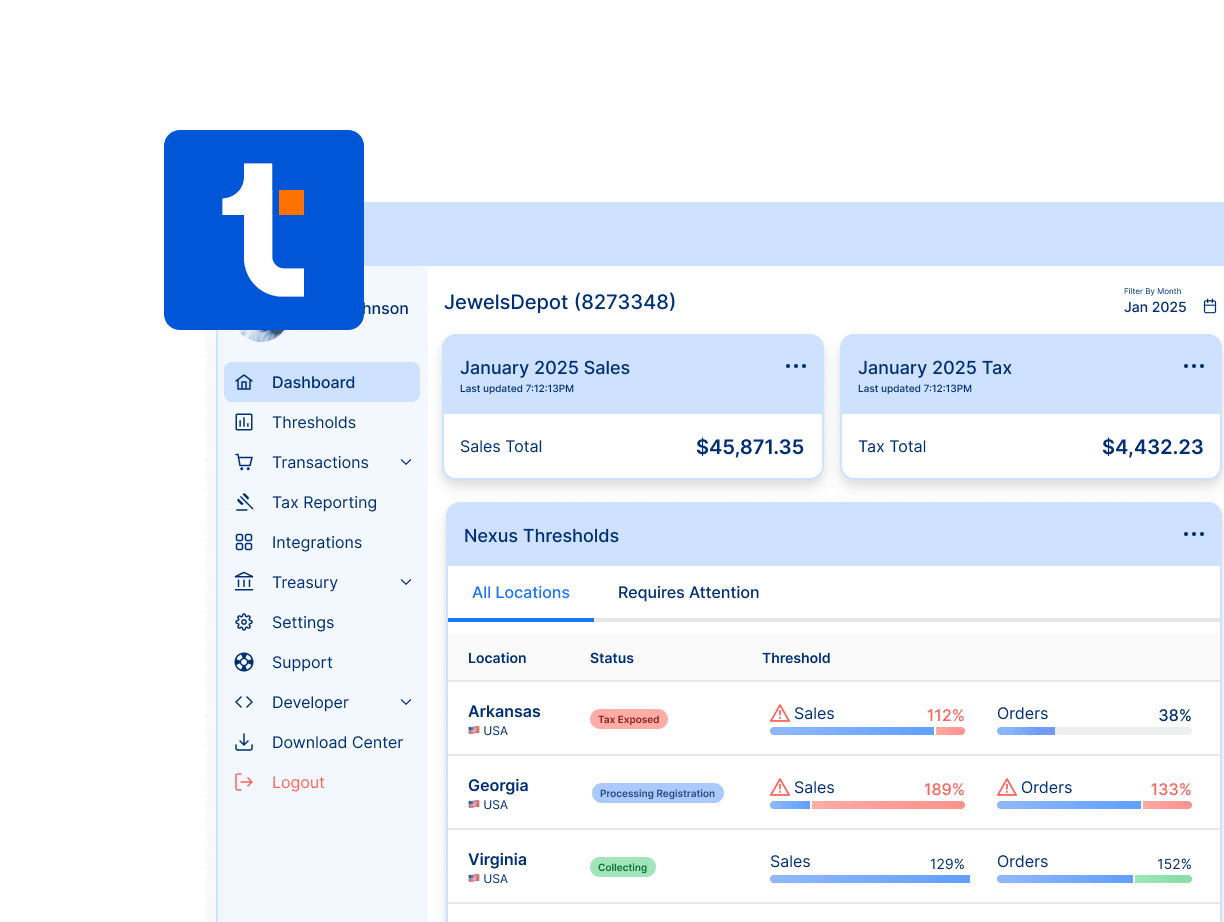
- Fast-turnaround nexus and liability analysis. TaxCloud’s economic nexus dashboard tracks state thresholds in real time and alerts teams when the company is approaching or exceeding filing obligations. This level of monitoring enables fast, data-driven exposure assessments across all districts and jurisdictions.
- Automated multi-state filings. Registrations and return filings across the U.S. can be handled by TaxCloud’s automated systems. Premium members can also participate in the Streamlined Sales Tax (SST) program for fast and free filing across participating states. Overall, working with TaxCloud means fewer manual filings and a lower risk of missed deadlines.
- Seamless SaaS-specific billing integrations. TaxCloud integrates directly with billing platforms like Stripe and Chargebee. Using this data, teams can track nexus, reconcile invoices, and see real-time tax calculations all in one place. All data is kept accessible for fast access during critical moments.
- Dedicated onboarding and support. Especially for smaller teams, it’s easy for outstanding tax burdens to feel overwhelming. TaxCloud offers U.S.-based, human-powered onboarding and support to help you get started, assist with system integration, and more.
By combining real-time insights, automated filings, seamless integration, and hands-on support, TaxCloud can help M&A teams eliminate potential liabilities for good. That makes it easier to preserve value and demonstrate audit readiness as deals move forward.
Resolve SaaS sales tax exposure fast with TaxCloud
Hidden tax liabilities shouldn’t stall the acquisition process. Especially for teams with 100-day plans and tight timelines, sales tax gotchas can lead to massive headaches and painful outcomes.
With TaxCloud, buy-side teams can uncover exposure quickly, resolve it efficiently, and put scalable systems in place to prevent future issues. By combining expert onboarding, automated filings, SaaS-specific integrations, and more, teams will have the tools they need to file quickly, demonstrate compliance, and shift attention back to growth.
Stay focused on the bigger picture with TaxCloud.
Book a consultation today with a product expert or sign up for a free 30-day trial and take the platform for a test drive.
Sources:
- 1.